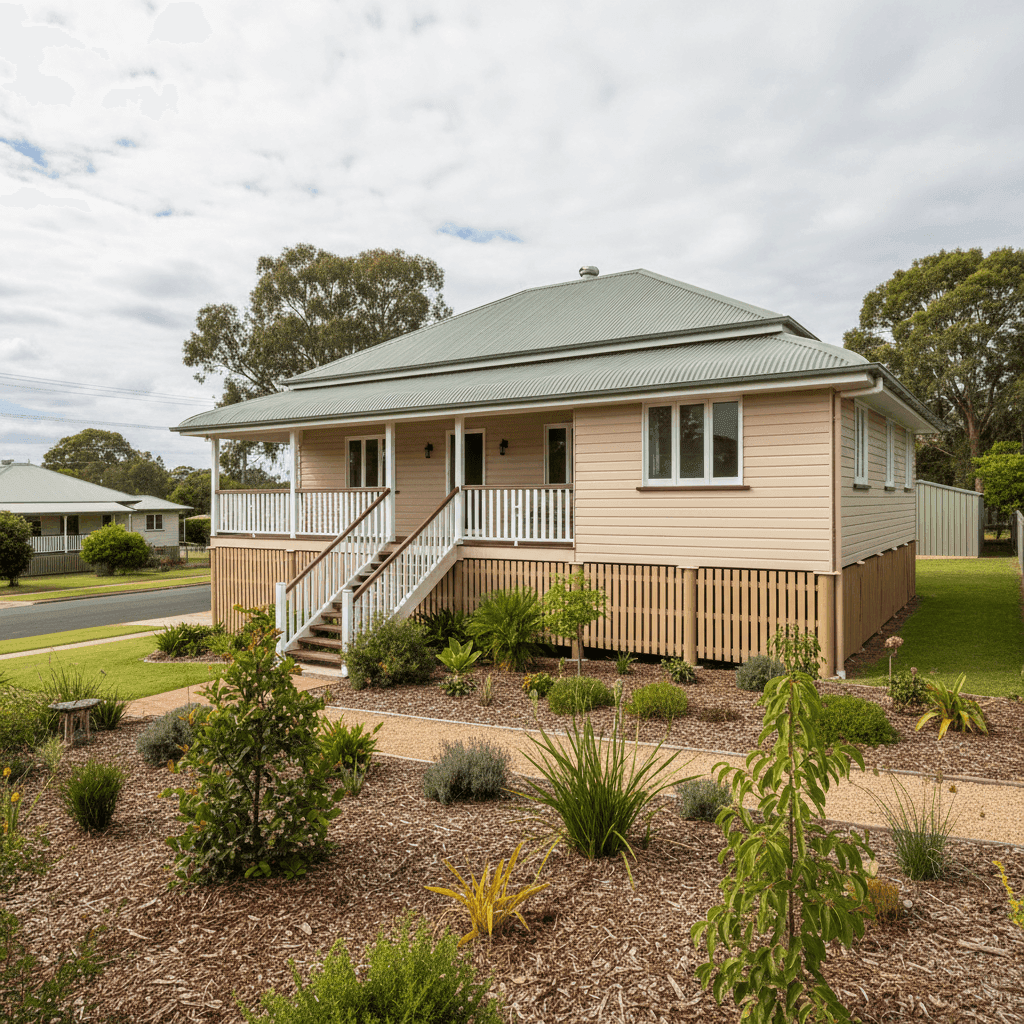
If you own a free standing home in Nanango, QLD 4615, you're probably well aware that insurance costs can vary wildly depending on your property's age, construction, and location. This article breaks down a real home and contents insurance quote for a 3-bedroom, 1-bathroom weatherboard home in Nanango — and puts it into context against suburb, state, and national benchmarks — so you can judge whether you're getting a fair deal.
---
Is This Quote Fair?
The quote in question comes in at $2,896 per year (or $278/month) for combined home and contents cover, with a building sum insured of $746,000 and $50,000 in contents cover. Both the building and contents excess are set at $1,000.
Our price rating for this quote is Expensive (Above Average).
To understand why, it helps to look at what other homeowners in the same postcode are paying. Based on 29 quotes collected for Nanango (4615):
- Suburb average: $2,129/yr
- Suburb median: $2,088/yr
- Suburb 25th percentile: $1,302/yr
- Suburb 75th percentile: $2,629/yr
At $2,896/yr, this quote sits above the 75th percentile for the suburb — meaning it's more expensive than at least three-quarters of comparable quotes in the area. That's a meaningful gap. The quote is roughly $768 more per year than the suburb average, which over a five-year period adds up to nearly $3,800 in extra premiums.
That said, it's worth noting that the building sum insured of $746,000 is on the higher end, and the property's specific characteristics (more on those below) do play a role in pushing the premium upward.
---
How Nanango Compares
Zooming out to a broader view helps put the Nanango market in perspective. You can explore the full QLD state insurance data and national averages on CoverClub.
| Benchmark | Average Premium | Median Premium |
|---|---|---|
| Nanango (4615) | $2,129/yr | $2,088/yr |
| LGA (Gympie) | $5,581/yr | — |
| Queensland | $9,129/yr | $3,903/yr |
| National | $5,347/yr | $2,764/yr |
A few things stand out here. First, the LGA average for Gympie is $5,581/yr — considerably higher than the Nanango suburb average of $2,129/yr. This suggests that Nanango itself is a relatively affordable pocket within the broader Gympie local government area, likely because it sits outside high-risk flood or cyclone zones.
Second, the Queensland state average of $9,129/yr is extraordinarily high compared to both the suburb and national figures. This is largely driven by coastal and cyclone-prone areas in Far North Queensland, which dramatically skew the state average upward. The QLD median of $3,903/yr is a more representative figure for most Queensland homeowners — and Nanango sits comfortably below even that.
On a national level, the median of $2,764/yr means this quote is slightly above what the typical Australian homeowner pays, reinforcing the "expensive" rating despite QLD's overall higher risk profile.
---
Property Features That Affect Your Premium
Several characteristics of this property are likely influencing the premium — some pushing it higher, others potentially keeping it in check.
Weatherboard Timber Walls
Weatherboard wood is one of the most common external wall materials in older Queensland homes, but it comes with a catch: timber is more susceptible to fire, rot, and termite damage than brick or rendered masonry. Insurers typically price timber-clad homes at a higher rate to account for this increased vulnerability.
Construction Year (1975)
A home built in 1975 is now over 50 years old. Older homes often have ageing plumbing, wiring, and structural components that haven't been upgraded, which can increase the likelihood of a claim. Unless there's documented evidence of major renovations, insurers tend to apply a loading to pre-1980s properties.
Stump Foundation
The home sits on stumps, which is very typical for Queensland homes of this era. While stumped homes offer good airflow and can be easier to inspect underneath, they can also be more vulnerable to movement, settlement, and flooding — all of which factor into an insurer's risk assessment.
Timber/Laminate Flooring
Combined with a stumped foundation, timber flooring can be more susceptible to moisture damage. This is a known risk factor in South East Queensland, where heavy rainfall events are not uncommon.
Above-Average Fittings Quality
The property is listed with above-average fittings, which means the cost to repair or replace internal fixtures, joinery, and finishes is higher than a standard home. This is directly reflected in the higher building sum insured of $746,000.
Ducted Climate Control
The presence of ducted climate control adds to the replacement cost of the home and is factored into the sum insured. Systems like these can be expensive to repair or replace, and their inclusion in the policy is appropriate.
No Pool, No Solar
The absence of a pool and solar panels removes two common sources of additional premium loading — a minor positive in the overall pricing picture.
---
Tips for Homeowners in Nanango
1. Review Your Building Sum Insured
At $746,000, the building sum insured is a significant figure for a 130 sqm home in a regional Queensland town. It's worth getting an independent quantity surveyor's report or using an online building calculator to confirm this figure accurately reflects your rebuild cost — not your market value. Over-insuring can mean unnecessarily high premiums.
2. Compare Multiple Quotes
The gap between the 25th percentile ($1,302/yr) and this quote ($2,896/yr) is enormous. Even moving from the 75th to the 50th percentile would save you over $800 per year. Use CoverClub to compare quotes from multiple insurers side by side — it takes just a few minutes and could save you hundreds.
3. Consider Your Excess Level
Both the building and contents excess are set at $1,000. In many cases, opting for a higher excess (say, $2,000 or $2,500) can meaningfully reduce your annual premium. If you have a solid emergency fund and are unlikely to make small claims, this trade-off can work in your favour.
4. Document Renovations and Upgrades
If you've updated the electrical wiring, plumbing, or roof on this 1975 home, make sure your insurer knows. Documented improvements can reduce the risk loading applied to older properties and may result in a lower premium at renewal.
---
Ready to Find a Better Deal?
Whether you're renewing your current policy or shopping around for the first time, comparing home insurance quotes is one of the easiest ways to save money. CoverClub makes it simple to see what Nanango homeowners are actually paying — and to find a policy that fits your home and your budget. Check out the Nanango suburb stats to see how your quote stacks up, or explore QLD-wide data for a broader picture.