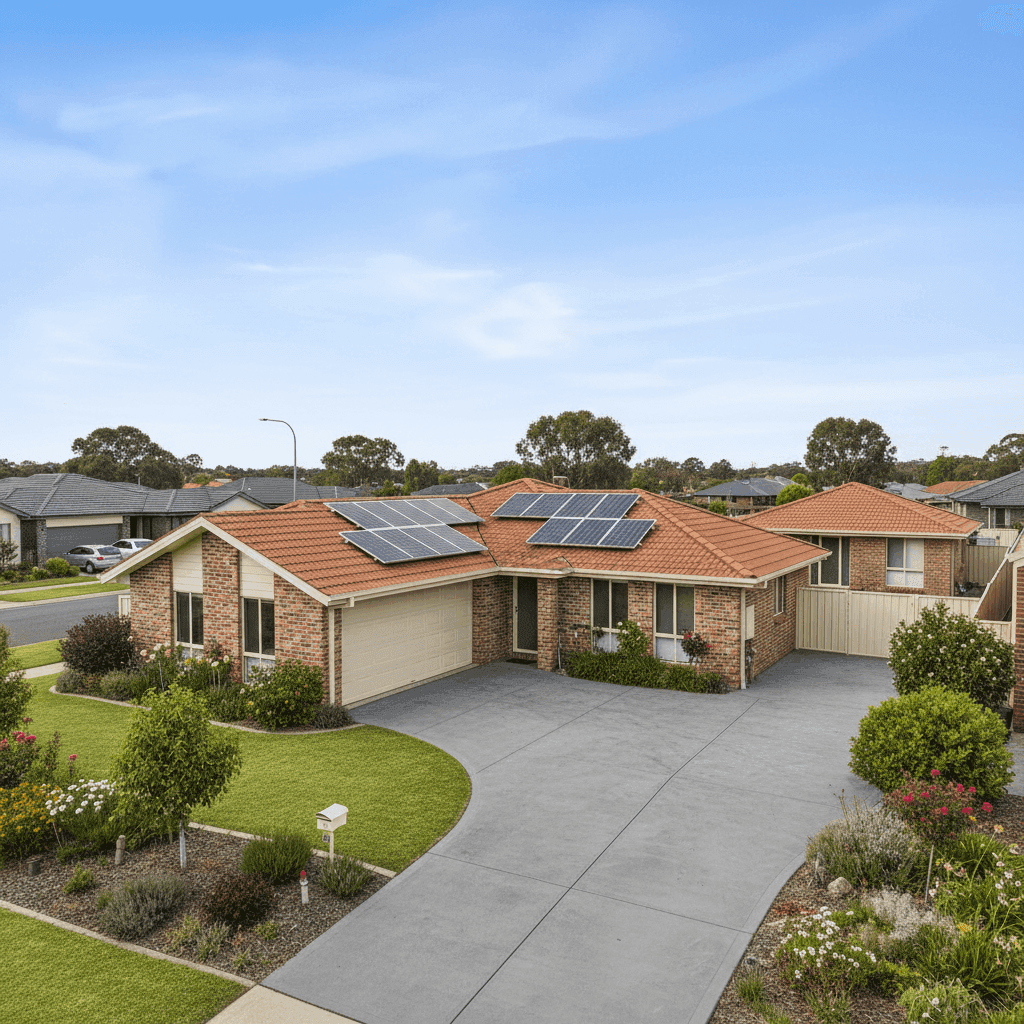
Narellan Vale is a well-established residential suburb in Sydney's south-west, sitting within the Campbelltown local government area. Known for its family-friendly streets and a mix of brick homes built largely through the late 1990s and early 2000s, it's the kind of suburb where home insurance is a serious consideration — particularly as building costs and extreme weather events continue to push premiums upward across New South Wales. This article takes a close look at a building-only insurance quote for a five-bedroom free-standing home in Narellan Vale, and what it tells us about the local insurance landscape.
---
Is This Quote Fair?
The quote in question comes in at $1,374 per year (or $135 per month) for building-only cover on a five-bedroom home with a sum insured of $809,000 and a building excess of $2,000. CoverClub's pricing engine rates this as Fair — Around Average, which is a reasonable outcome for a property of this size and specification.
To put that in context: the suburb average premium for Narellan Vale sits at $1,768 per year, with a median of $1,525 per year (based on 17 quotes in our dataset). This particular quote falls below both figures, landing closer to the 25th percentile of $1,082 — meaning it's on the more competitive end of what's available locally, without being a rock-bottom outlier.
A "Fair" rating doesn't mean you couldn't do better — it means the price is broadly in line with what similar properties are paying, and there's no obvious red flag suggesting you're being significantly overcharged. That said, given the quote sits below the suburb median, there's a reasonable case that this is actually a solid result.
---
How Narellan Vale Compares
One of the more striking takeaways from the data is just how much cheaper Narellan Vale premiums are compared to broader benchmarks. Here's a quick snapshot:
| Benchmark | Average Premium | Median Premium |
|---|---|---|
| Narellan Vale (suburb) | $1,768/yr | $1,525/yr |
| Campbelltown LGA | $2,555/yr | — |
| New South Wales | $3,801/yr | $3,410/yr |
| National | $2,965/yr | $2,716/yr |
The suburb average of $1,768 is less than half the NSW state average of $3,801 — a remarkable gap that reflects the relatively low-risk profile of Narellan Vale compared to coastal, flood-prone, or cyclone-affected areas of the state. Compared to the NSW state average, homeowners here are paying significantly less, which is good news for those budgeting for household expenses.
Even against the national average of $2,965, Narellan Vale comes out well ahead. The suburb's inland location, established drainage infrastructure, and lower exposure to extreme weather events all contribute to this favourable pricing environment.
You can explore the full breakdown of local premiums on the Narellan Vale suburb stats page.
---
Property Features That Affect Your Premium
Every home is different, and insurers weigh up a range of property characteristics when calculating a premium. Here's how the features of this particular home are likely influencing the quote:
Brick veneer construction with a tiled roof is generally viewed favourably by insurers. Brick veneer offers solid fire resistance and structural integrity, while tiled roofs are durable and less susceptible to wind damage than some alternatives like corrugated iron or Colorbond in older condition. Together, these features typically attract lower premiums compared to timber-framed or clad homes.
Slab foundation is standard for homes of this era in south-west Sydney and doesn't carry the same subsidence or moisture concerns sometimes associated with older pier-and-beam foundations. It's a neutral-to-positive factor from an underwriting perspective.
Built in 1998, the home sits in a comfortable middle ground — old enough that the original construction costs are well behind it, but modern enough that it was built to relatively contemporary building codes. Homes from this era generally don't attract the age-related loading that can affect pre-1970s properties.
Solar panels are worth flagging. While they add value to the property, they also add replacement cost in the event of a claim — particularly relevant if the sum insured hasn't been updated to reflect their installation. It's worth confirming with your insurer that solar panels are explicitly covered under your policy.
A granny flat on the property is another important consideration. Granny flats can add meaningful value to a building sum insured, and some policies have specific provisions (or exclusions) around secondary dwellings. Homeowners should verify that the granny flat is captured in the $809,000 sum insured and that the policy wording covers it appropriately.
No pool, no ducted climate control, and not in a cyclone risk zone — all of these reduce the complexity and potential claims exposure of the property, which helps keep the premium competitive.
---
Tips for Homeowners in Narellan Vale
1. Review your sum insured regularly — especially with a granny flat and solar panels Building costs have risen sharply in recent years. A sum insured that was adequate two or three years ago may no longer be sufficient to fully rebuild your home, particularly when you factor in the granny flat and solar system. Use a building cost calculator or speak with a quantity surveyor to make sure you're not underinsured.
2. Check what your policy says about secondary dwellings Not all building insurance policies automatically cover a granny flat as part of the main dwelling. Some require it to be listed separately or have specific conditions around whether it's tenanted. Read the Product Disclosure Statement (PDS) carefully and ask your insurer directly if you're unsure.
3. Compare quotes before your renewal date The 17-quote sample for Narellan Vale shows a wide spread — from $1,082 at the 25th percentile up to $2,058 at the 75th percentile. That's nearly a $1,000 difference for broadly similar properties. Shopping around at renewal time could save you a meaningful amount each year.
4. Consider your excess level strategically This policy carries a $2,000 building excess. A higher excess typically lowers your premium, but make sure it's an amount you could comfortably cover out of pocket in the event of a claim. If cash flow is a concern, a lower excess with a slightly higher premium might be a better fit for your situation.
---
Ready to Compare?
Whether you're renewing your current policy or shopping for cover on a new property, it pays to compare. CoverClub makes it easy to see quotes side by side so you can find the right cover at a competitive price. Get a home insurance quote today and see how your options stack up.