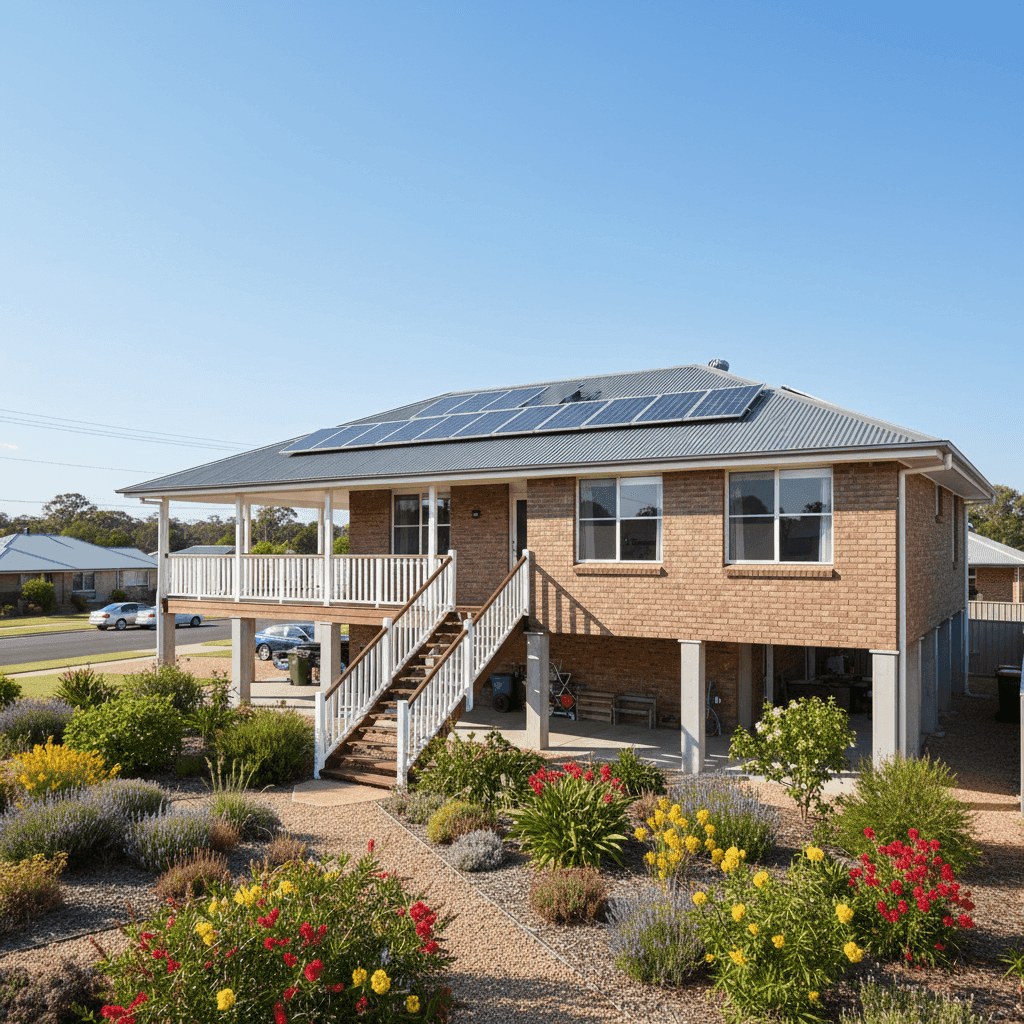
Narrabri is a regional town in north-west New South Wales, sitting in the heart of the Liverpool Plains and surrounded by rich agricultural land. It's a community of hardworking families and long-term homeowners — and like many regional NSW towns, it comes with its own unique set of insurance considerations. This article breaks down a real home and contents insurance quote for a four-bedroom free-standing home in Narrabri (NSW 2390), examines whether the price stacks up, and offers practical guidance for local homeowners looking to get better value on their cover.
---
Is This Quote Fair?
The quote in question sits at $16,277 per year (or $1,588/month) for combined home and contents insurance, with a building sum insured of $883,000 and contents valued at $50,000. The building excess is $3,000 and the contents excess is $2,000.
Our price rating for this quote is Expensive — Above Average.
To put that in context: the average annual premium for comparable properties in the Narrabri suburb sits at $7,796, with a median of $7,366. This quote comes in at more than double the local average, which is a significant gap worth understanding before simply accepting the figure at face value.
That said, several property-specific factors (explored below) go a long way toward explaining the elevated premium. It's not necessarily a case of being overcharged — but it is absolutely worth shopping around to confirm you're getting competitive pricing for the risk profile involved.
---
How Narrabri Compares
Understanding where Narrabri sits relative to broader benchmarks helps put any individual quote into perspective.
| Benchmark | Average Premium | Median Premium |
|---|---|---|
| Narrabri (NSW 2390) | $7,796/yr | $7,366/yr |
| New South Wales | $9,528/yr | $3,770/yr |
| National | $5,347/yr | $2,764/yr |
| LGA (Gwydir) | $43,287/yr | — |
A few things stand out here. First, Narrabri's suburb-level averages are notably higher than the national median of $2,764 — a reflection of the elevated risk environment that regional NSW can present, including flood exposure, storm activity, and the cost of rebuilding in areas with limited local trades. Second, the NSW state average of $9,528 is skewed upward by high-risk and high-value properties across the state, while the median of $3,770 is far more modest — suggesting a wide spread of premiums across the state. You can explore national insurance cost benchmarks for further comparison.
Perhaps most striking is the LGA (Gwydir) average of $43,287 — an extraordinarily high figure that likely reflects a small number of very high-value rural and agricultural properties within the broader local government area pulling the average up significantly. This quote, while expensive by suburb standards, is well below that LGA average.
With only 35 quotes in the suburb sample, the local data set is relatively small, so individual property characteristics carry more weight than in high-density urban areas.
---
Property Features That Affect Your Premium
Several features of this property have a meaningful impact on the insurance premium — both positively and negatively.
Elevated Foundation (Stumps)
The home is elevated by at least one metre on a stump foundation. In flood-prone or high-rainfall regions like parts of north-west NSW, elevation can actually be a positive risk factor, reducing the likelihood of inundation damage. However, elevated homes can also be more expensive to repair structurally, and some insurers apply loadings for this construction type.
Brick Veneer Walls & Colorbond Roof
Brick veneer is a widely accepted construction type in Australia and generally attracts standard pricing. The steel/Colorbond roof is durable and low-maintenance, and is typically viewed favourably by insurers — particularly in areas exposed to hail or high winds.
High Building Sum Insured ($883,000)
At 214 square metres with above-average fittings, a sum insured of $883,000 works out to roughly $4,126 per square metre — which is on the higher end but not unreasonable for a well-appointed home with quality fixtures and fittings. This figure is a primary driver of the premium. It's worth periodically reviewing your sum insured to ensure it reflects current rebuild costs without being significantly over-insured.
Solar Panels
The presence of solar panels adds modest replacement value to the building and can introduce additional risk (e.g., fire from inverter faults). Most insurers include solar panels under building cover, but it's worth confirming this explicitly in your policy documents.
Ducted Climate Control
Ducted air conditioning is a significant fixed asset and typically covered under building insurance. It adds to the overall replacement cost of the home, contributing to a higher sum insured — and therefore a higher base premium.
Above-Average Fittings
Above-average fittings — think stone benchtops, quality cabinetry, premium appliances — increase the cost to rebuild or repair and are reflected in a higher sum insured. If your fittings have changed since you last updated your policy, it's worth reassessing.
---
Tips for Homeowners in Narrabri
1. Review Your Sum Insured Annually
With building costs fluctuating due to labour shortages and material price increases, your sum insured can quickly become outdated. Use an independent building cost calculator or speak to a local builder to sanity-check your figure. Being over-insured by a significant margin means you're paying a premium you don't need to.
2. Compare Multiple Quotes — Every Year
Insurance premiums are not static. Insurers re-price risk regularly, and the market can shift substantially from one year to the next. Even if you're happy with your current insurer, running a comparison at renewal time could save you hundreds — or in this case, potentially thousands — of dollars. Get a quote through CoverClub to see what the current market looks like for your property.
3. Consider Your Excess Strategy
This policy carries a $3,000 building excess and a $2,000 contents excess. Opting for a higher excess is one of the most straightforward ways to reduce your annual premium. If you have the financial capacity to absorb a larger out-of-pocket cost in the event of a claim, increasing your excess can meaningfully lower what you pay each year.
4. Ask About Discounts for Security and Safety Features
Many insurers offer discounts for properties with monitored alarm systems, deadbolts, and other security measures. If your home has these features, make sure they're disclosed when getting quotes — and ask each insurer directly what discounts apply.
---
Ready to Compare?
Whether this quote is the best available for your property or there's a better deal out there, the only way to know for sure is to compare. CoverClub makes it easy to benchmark your premium against real quotes from across the market. Enter your address and get started today — it takes just a few minutes and could save you a significant amount at renewal.