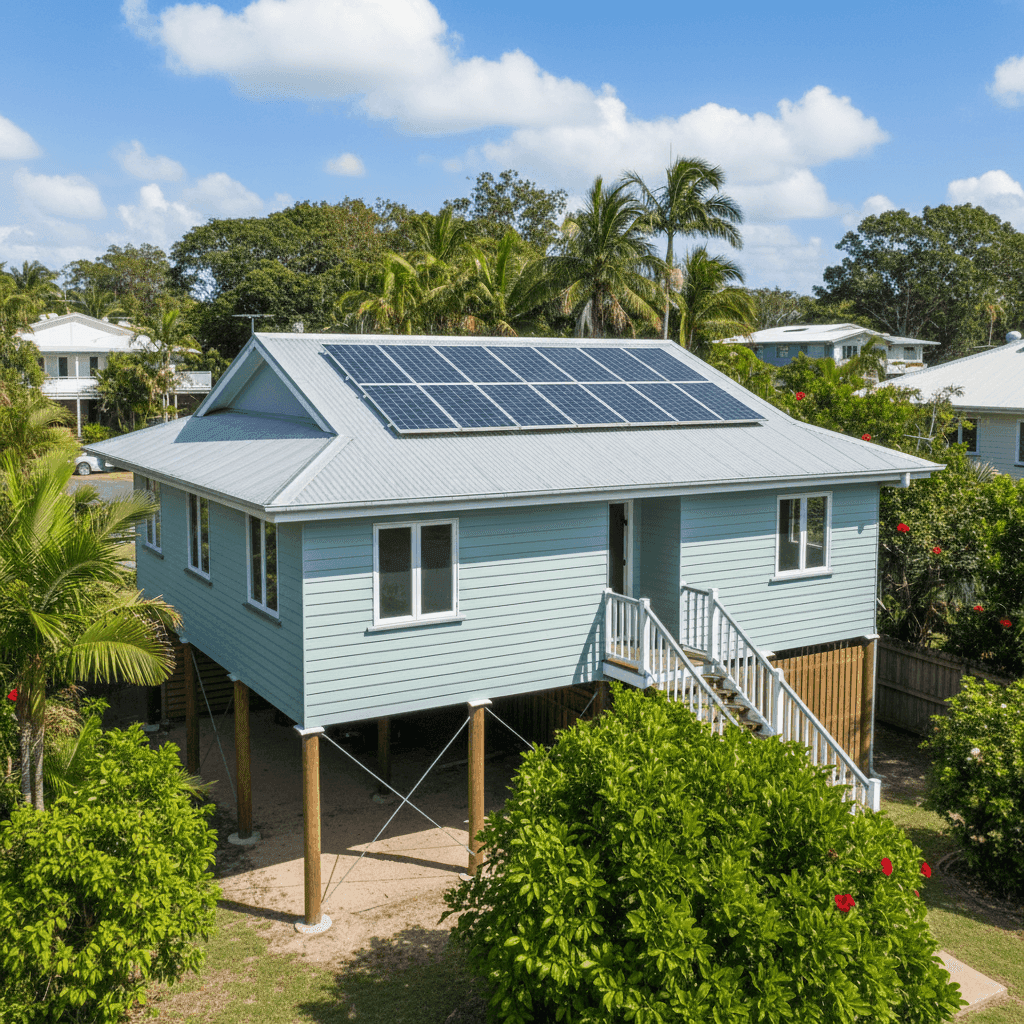
Nelly Bay is one of Magnetic Island's most sought-after pockets — a relaxed, sun-drenched suburb on an island that sits just a short ferry ride from Townsville. But living in paradise comes at a cost, and for homeowners here, building insurance is one of the more significant annual expenses to plan for. This article breaks down a real building-only insurance quote for a 3-bedroom, free-standing home in Nelly Bay (postcode 4819), examines how it compares to local, state, and national benchmarks, and offers practical tips for managing your premium.
---
Is This Quote Fair?
The quote in question sits at $5,833 per year (or $559 per month) for building-only cover on a 3-bedroom weatherboard home, with a sum insured of $592,000 and a $1,000 building excess.
Our price rating for this quote is Expensive — above average for the suburb.
To put that in perspective, the suburb average for Nelly Bay sits at $3,862 per year, with a median of $3,815. This quote comes in roughly 51% above the suburb average — a meaningful gap that warrants a closer look.
That said, context matters enormously here. Insurance pricing is driven by a complex mix of property-specific risk factors, and this particular home carries several characteristics that insurers treat as high-risk. The elevated stumps foundation, weatherboard timber walls, and — most significantly — the property's location in a designated cyclone risk area all push premiums upward. Insurers operating in North Queensland price cyclone exposure heavily into their models, and Magnetic Island is squarely within that zone.
So while the quote is above average for the suburb, it's not without explanation. Whether it represents the best available price is a different question — and one worth exploring by comparing multiple insurers.
---
How Nelly Bay Compares
Here's how this quote stacks up across different comparison points:
| Benchmark | Annual Premium |
|---|---|
| This Quote | $5,833 |
| Nelly Bay Suburb Average | $3,862 |
| Nelly Bay Suburb Median | $3,815 |
| Nelly Bay 25th Percentile | $3,468 |
| Nelly Bay 75th Percentile | $4,340 |
| QLD State Average | $4,547 |
| QLD State Median | $3,931 |
| National Average | $2,965 |
| National Median | $2,716 |
| Townsville LGA Average | $7,258 |
A few things stand out. First, this quote exceeds the QLD state average of $4,547 — which itself is already well above the national average of $2,965. Queensland's elevated premiums reflect the state's exposure to cyclones, flooding, and severe storms, risks that are far less prevalent in southern states.
Second, and perhaps most striking, this quote is actually well below the Townsville LGA average of $7,258. That figure includes properties across the broader Townsville local government area — many of which are on the mainland and face similar cyclone risk. Viewed through that lens, $5,833 for an island property starts to look more competitive, even if it remains above the immediate suburb average.
The suburb sample size of just 5 quotes means the local averages should be interpreted with some caution — a small dataset can shift significantly with a few outliers. Broader comparison across multiple insurers is always advisable.
---
Property Features That Affect Your Premium
Several characteristics of this property have a direct bearing on its insurance cost:
Cyclone Risk Zone
This is the single biggest premium driver. Magnetic Island — and by extension Nelly Bay — sits within North Queensland's cyclone belt. Insurers apply significant loadings for properties in these areas, and some insurers apply specific cyclone excess provisions on top of the standard excess. At $1,000, the building excess here is relatively standard, but it's worth checking whether a separate cyclone or storm excess applies under the policy terms.
Weatherboard Timber Walls
Timber weatherboard construction is considered higher risk than brick or rendered masonry by most insurers. Timber is more susceptible to fire, termite damage, and storm damage, all of which contribute to a higher base premium. That said, it's also the most common construction type in older Queensland homes, so most insurers are well-versed in pricing it.
Elevated on Stumps
The home is elevated by at least one metre on stumps — a classic Queenslander-style design. While elevation can actually reduce flood risk (a positive for premiums), stumped foundations introduce their own considerations around structural integrity, subfloor exposure, and maintenance. Insurers weigh these factors differently.
Steel/Colorbond Roof
Colorbond roofing is generally viewed favourably by insurers. It's durable, fire-resistant, and performs well in high-wind events compared to older roofing materials like terracotta tiles or fibrous cement sheeting. This likely provides a modest offset against some of the other risk factors.
Solar Panels & Ducted Climate Control
Both of these features are noted on the policy. Solar panels add to the replacement cost of the building (contributing to the $592,000 sum insured) and can be a point of vulnerability during storm events. Ducted climate control similarly adds to the rebuild value. Ensuring these are accurately captured in your sum insured is important — underinsurance is a common and costly mistake.
Construction Year: 1981
At over 40 years old, this home predates many modern building codes. Older homes can attract higher premiums due to the increased likelihood of wear-related claims and the higher cost of like-for-like restoration using period-appropriate materials.
---
Tips for Homeowners in Nelly Bay
1. Shop the market annually Insurance loyalty rarely pays off. Premiums can vary significantly between insurers for the same property — sometimes by thousands of dollars. Make a habit of comparing quotes at renewal time. CoverClub makes this easy by aggregating quotes in one place.
2. Review your sum insured carefully With a sum insured of $592,000, it's important to ensure this figure reflects the true cost of rebuilding your home — not its market value. Factor in demolition costs, debris removal, architect fees, and the current cost of labour and materials, which have risen sharply in recent years. Underinsurance is particularly risky in remote and island locations where rebuild costs can be higher due to access and logistics.
3. Ask about cyclone-specific excess and exclusions In cyclone-prone areas, some policies include a separate cyclone excess that kicks in on top of your standard excess. Read the Product Disclosure Statement (PDS) carefully and ask your insurer directly. Knowing what you're covered for before a cyclone season begins is far better than discovering gaps during a claim.
4. Maintain your property proactively Insurers may reduce claims — or dispute them — if damage is linked to poor maintenance. For a weatherboard home on stumps, this means keeping timber in good condition, checking for termite activity, ensuring gutters and downpipes are clear, and confirming that your roof fixings meet current cyclone standards. Some insurers offer discounts for properties with documented cyclone-mitigation improvements.
---
Compare Your Options with CoverClub
Whether you're renewing your policy or shopping for the first time, it pays to see what the broader market has to offer. Get a building insurance quote through CoverClub and see how your current premium stacks up — you might be surprised by the difference a comparison can make. For detailed suburb-level data on Nelly Bay, visit our Nelly Bay insurance stats page.