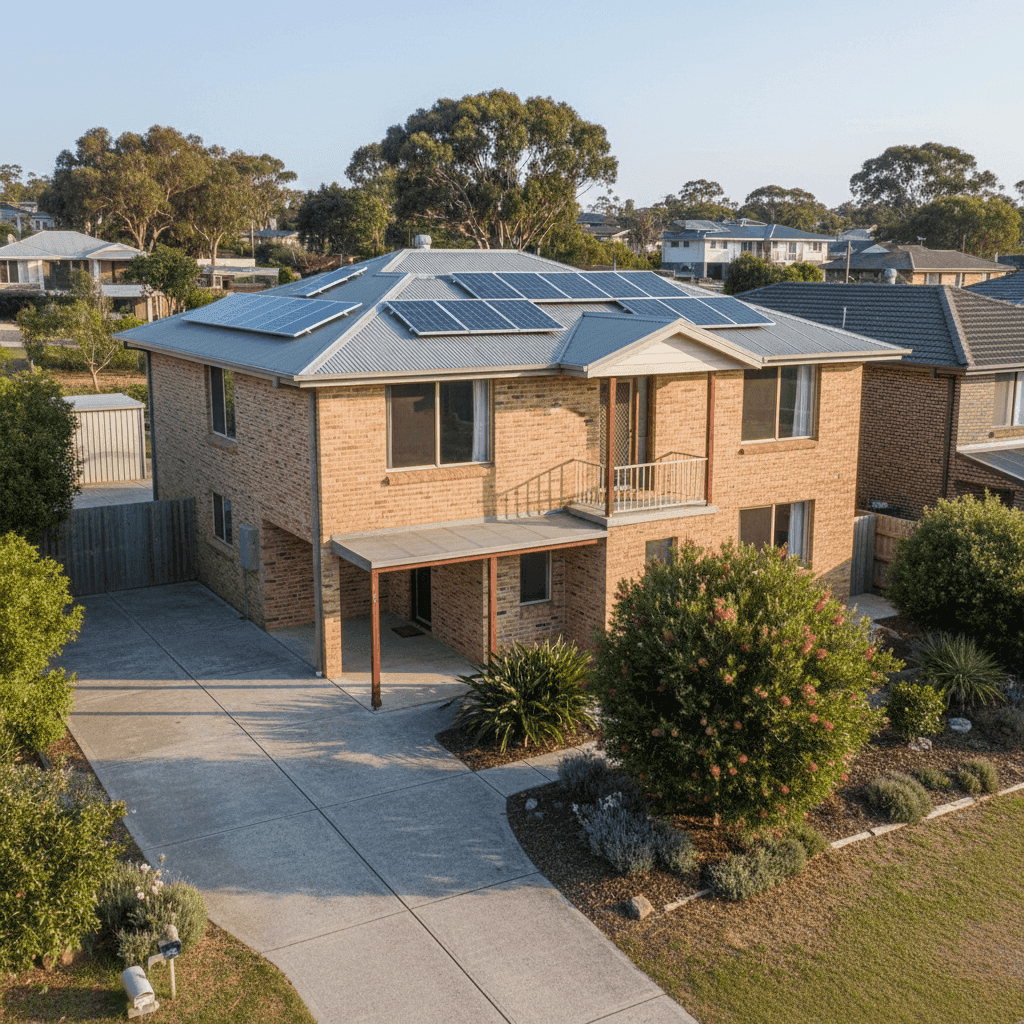
Nelson Bay is one of the Port Stephens region's most sought-after coastal addresses — and for good reason. Nestled along the shores of Port Stephens, this vibrant NSW town attracts both permanent residents and holiday homeowners who value its natural beauty and relaxed lifestyle. But coastal living comes with its own set of insurance considerations, and understanding what you're paying — and why — can make a real difference to your budget.
This article breaks down a real home and contents insurance quote for a three-bedroom, two-bathroom free-standing home in Nelson Bay (postcode 2315), helping you understand whether the premium stacks up and what factors are likely driving the cost.
---
Is This Quote Fair?
The annual premium for this property came in at $5,629 per year (or $539/month), covering both building (sum insured: $955,000) and contents ($80,000), with a $1,000 excess on each.
Our price rating for this quote is Expensive — Above Average.
To put that in context, the suburb average for Nelson Bay sits at just $2,314/year, with a median of $2,173/year. This quote is more than double the local average, which warrants a closer look. Even at the 75th percentile — meaning only 25% of comparable quotes in the suburb are higher — the figure is $2,778/year, still well below this premium.
That said, it's worth noting that our Nelson Bay sample covers 25 quotes, so individual property characteristics can push premiums significantly higher or lower than the suburb average. In this case, several features of the property — which we'll explore below — help explain the elevated cost.
---
How Nelson Bay Compares
Understanding where a suburb sits in the broader insurance landscape is useful context for any homeowner.
| Benchmark | Average Premium | Median Premium |
|---|---|---|
| Nelson Bay (2315) | $2,314/yr | $2,173/yr |
| Port Stephens LGA | $3,116/yr | — |
| NSW | $9,528/yr | $3,770/yr |
| National | $5,347/yr | $2,764/yr |
A few things stand out here. First, Nelson Bay's suburb average of $2,314/year is notably lower than the national average of $5,347/year — suggesting that, in general, insuring a home in this postcode is reasonably affordable compared to the rest of the country. You can explore NSW insurance benchmarks and national averages in more detail on CoverClub.
The Port Stephens LGA average of $3,116/year falls between the suburb median and this particular quote, reflecting the diversity of property types and risk profiles across the broader local government area.
The quote in question, at $5,629/year, sits above the national average — but is well below the NSW state average of $9,528/year. NSW premiums are heavily influenced by high-risk postcodes (particularly flood-prone and bushfire-exposed areas), which can skew state-level figures upward. So while this quote is expensive relative to Nelson Bay, it's not out of step with broader NSW pricing for a property with above-average features and a high sum insured.
---
Property Features That Affect Your Premium
Several characteristics of this property are likely contributing to the higher-than-average premium.
High building sum insured ($955,000) This is one of the most significant drivers. At $955,000, the building sum insured is substantial — reflecting above-average fittings quality and a 153 sqm footprint. Insurers price premiums proportionally to the cost of rebuilding, so a higher sum insured directly increases your premium.
Above-average fittings quality The property is noted as having above-average fittings, which means kitchen appliances, bathroom fixtures, flooring, and finishes are likely of a higher standard. These cost more to repair or replace, and insurers factor this into their pricing.
Elevated foundation (at least 1 metre) The home is elevated by at least one metre, which is common in coastal and flood-adjacent areas. While elevation can actually reduce flood risk, it may also indicate the insurer has assessed the property as being in an area where such design features are warranted — which can influence risk ratings.
Brick veneer construction with Colorbond roof Brick veneer walls are generally well-regarded by insurers for fire resistance, while a steel/Colorbond roof is durable and low-maintenance. These are broadly neutral-to-positive factors, though Colorbond roofs in coastal environments may require monitoring for corrosion over time.
Solar panels and ducted climate control Both of these features add to the overall replacement value of the home. Solar panel systems can cost thousands to replace after storm or hail damage, and ducted air conditioning systems are similarly expensive. Insurers include these in their rebuild cost assessments.
Coastal location Nelson Bay's proximity to the water means properties in the area can be exposed to salt air, storm surge risk, and strong coastal winds. These environmental factors are typically reflected in insurer risk models for the postcode.
---
Tips for Homeowners in Nelson Bay
1. Review your sum insured regularly Building costs fluctuate, and being underinsured can be just as costly as overpaying. Use a building cost calculator to verify your sum insured reflects current construction costs — especially given the above-average fittings in this property.
2. Shop around and compare multiple quotes With this quote sitting well above the suburb median, it's worth getting competing quotes. Different insurers assess coastal and elevated properties differently, and you may find a more competitive premium for the same level of cover. Get a quote at CoverClub to compare options side by side.
3. Consider your excess strategically Both the building and contents excess are set at $1,000. Opting for a higher voluntary excess (e.g., $2,000 or $2,500) can meaningfully reduce your annual premium — particularly useful if you're unlikely to make small claims and want to lower your ongoing costs.
4. Check what's included for solar and climate systems Not all policies automatically cover solar panels or ducted air conditioning as part of the building sum insured. Review your Product Disclosure Statement (PDS) carefully to confirm these are covered, and that the replacement values are adequate.
---
Compare Your Home Insurance Today
Whether you're a long-term Nelson Bay local or new to the area, it pays to understand what's driving your premium and whether you're getting value for money. CoverClub makes it easy to compare home and contents insurance quotes from multiple insurers in one place — so you can make a confident, informed decision.
Start comparing quotes at CoverClub →
You can also explore detailed insurance statistics for Nelson Bay and the 2315 postcode to see how your quote stacks up against your neighbours.