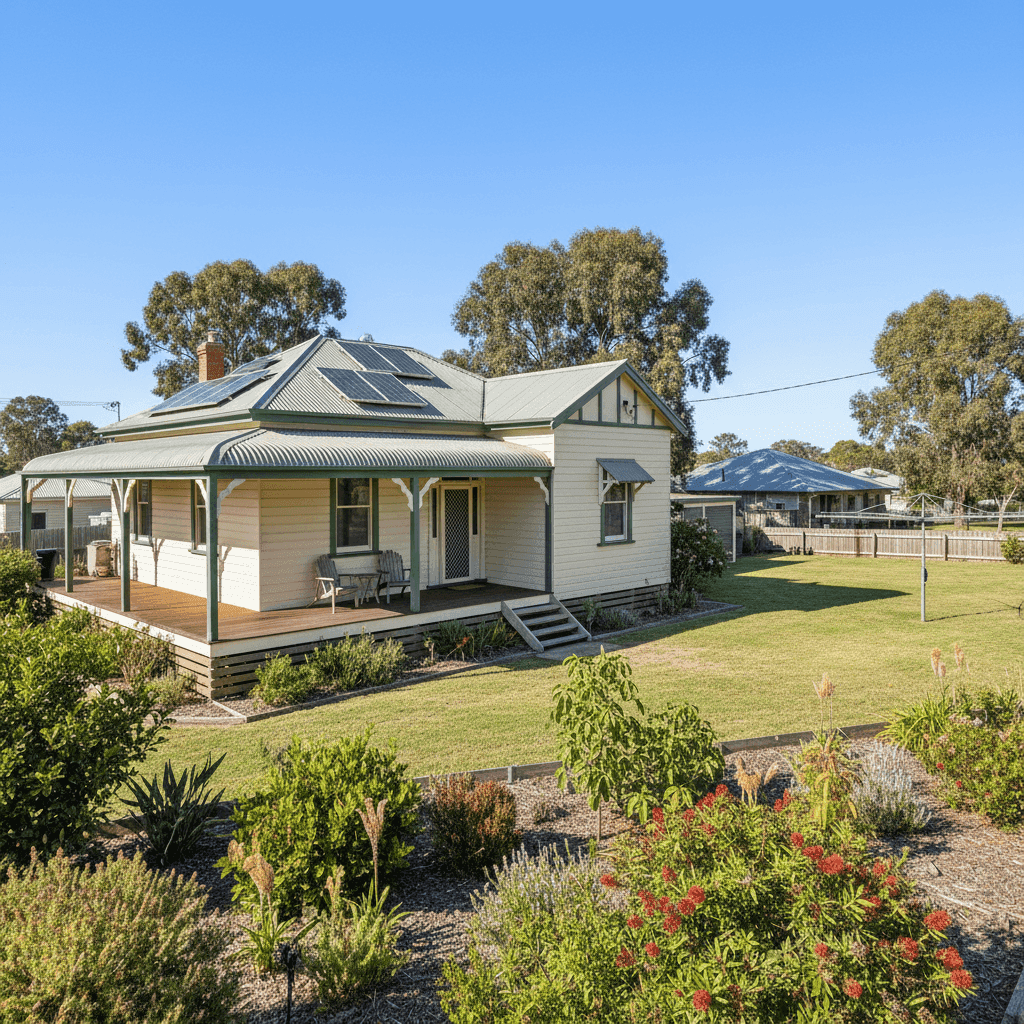
Nemingha is a quiet residential suburb sitting just east of Tamworth in the New England region of New South Wales. Known for its relaxed rural-fringe lifestyle and spacious blocks, it's a popular choice for families looking for room to breathe without straying too far from urban conveniences. If you own a free standing home here, understanding what you should be paying for home and contents insurance — and why — can save you a meaningful amount of money each year.
This article breaks down a real insurance quote for a 4-bedroom, 2-bathroom free standing home in Nemingha, compares it against local, state, and national benchmarks, and offers practical tips to help you get the best value cover.
---
Is This Quote Fair?
The quote in question comes in at $3,631 per year (or $355 per month) for combined home and contents insurance, covering a building sum insured of $650,000 and contents valued at $80,000. Both the building and contents excess are set at $1,000.
Our pricing analysis rates this quote as CHEAP — below average for the area. That's genuinely good news for the homeowner. It suggests the premium is competitive relative to comparable properties and risk profiles in the region, and there's no immediate red flag that the cover is being underpriced to the point of concern.
It's worth noting that a "cheap" rating doesn't mean inadequate cover — it simply means the premium sits favourably when benchmarked against what others are paying for similar protection. That said, it's always worth reviewing the policy's Product Disclosure Statement (PDS) to ensure the level of cover matches your needs, particularly for a property with some distinctive features (more on those below).
---
How Nemingha Compares
Putting this quote into context with broader market data paints an interesting picture. Unfortunately, there isn't enough suburb-level data available to produce a precise Nemingha average, but we can draw meaningful comparisons using NSW state figures and national benchmarks.
| Benchmark | Average Premium | Median Premium |
|---|---|---|
| LGA (Liverpool Plains) | $2,851/yr | — |
| NSW State | $9,528/yr | $3,770/yr |
| National | $5,347/yr | $2,764/yr |
A few things stand out here:
- Against the NSW state average of $9,528/yr, this quote of $3,631 is dramatically lower — less than 40% of the average. The NSW state average is heavily influenced by high-risk coastal and flood-prone areas, particularly in Sydney and along the coast, which pushes the mean upward significantly.
- Against the NSW median of $3,770/yr, this quote sits just below, confirming the "cheap" rating is well-founded.
- Against the national average of $5,347/yr, the quote is again well below, though it sits above the national median of $2,764/yr — which reflects the relatively modest risk profile of inland NSW compared to cyclone-prone Queensland or bushfire-exposed Victoria.
- The Liverpool Plains LGA average of $2,851/yr is actually lower than this quote, which is worth noting. This could reflect differences in sum insured amounts, contents cover inclusions, or the specific risk characteristics of this particular property.
You can explore more localised data for this postcode at the Nemingha suburb stats page as more data becomes available.
---
Property Features That Affect Your Premium
Several characteristics of this property have a direct bearing on how insurers price the risk. Here's how the key features stack up:
Weatherboard Timber Walls
Weatherboard timber construction is one of the most common wall types in older Australian homes, and this property — built in 1960 — is a classic example. Timber-clad homes are generally considered a higher fire risk than brick or rendered masonry, which can push premiums up. However, they're also well-understood by insurers, and many offer competitive rates for well-maintained weatherboard properties.
Steel/Colorbond Roof
A Colorbond steel roof is actually a positive from an insurance perspective. It's durable, low-maintenance, and highly resistant to ember attack — a meaningful consideration even in areas not classified as high bushfire risk. Colorbond roofs are also less prone to hail damage compared to older tile roofs, which can contribute to a more favourable premium.
Stump Foundation
The property sits on stumps, which is typical for homes of this era in regional NSW. Stumped foundations can be more vulnerable to movement and moisture-related issues over time, but they also offer practical advantages — easier access for maintenance and better airflow beneath the floor. Insurers generally account for this construction type without a significant loading, provided the stumps are in good condition.
Timber and Laminate Flooring
The flooring type can influence contents and building claims, particularly in the event of water damage. Timber and laminate floors can be costly to replace if damaged by flooding or burst pipes, so it's worth ensuring your sum insured adequately reflects this.
Solar Panels
The presence of solar panels adds value to the property and can complicate replacement cost calculations. Most home insurance policies cover rooftop solar as part of the building, but it's worth confirming this with your insurer — particularly for panel replacement after storm or hail damage.
Ducted Climate Control
Ducted air conditioning systems are expensive to repair or replace and are typically covered under building insurance. With a system-wide replacement potentially running into the tens of thousands of dollars, having adequate building cover is essential.
Building Size and Sum Insured
At 214 sqm, this is a generously sized home. The building sum insured of $650,000 appears reasonable for a property of this size and construction type in regional NSW, though it's always worth revisiting your sum insured annually to account for rising construction costs.
---
Tips for Homeowners in Nemingha
1. Review Your Sum Insured Annually
Construction costs across Australia have risen sharply in recent years. A sum insured that was accurate two or three years ago may no longer be sufficient to fully rebuild your home. Use a building replacement cost calculator — many insurers offer these for free — to check you're not underinsured.
2. Confirm Solar Panel Coverage
With solar panels on the roof, ask your insurer explicitly whether they're covered under your building policy, what events are included (e.g., storm, hail, fire), and whether there's any sublimit that applies. This is a common gap that catches homeowners off guard at claim time.
3. Maintain Your Weatherboard Exterior
Insurers can reduce or deny claims if a loss is attributed to lack of maintenance. Regularly inspect and repaint your weatherboard cladding to prevent rot and deterioration. A well-maintained exterior also signals lower risk to insurers when you're shopping around for cover.
4. Compare Quotes Before Renewing
Even if your current premium is already rated as competitive, the home insurance market changes every year. Insurers reprice risk constantly, and loyalty doesn't always pay. Taking 15 minutes to compare quotes at renewal could reveal a better deal — or at least give you confidence you're already on a good rate.
---
Ready to Compare?
Whether you're reviewing your existing policy or shopping for cover for the first time, CoverClub makes it easy to see what home insurance should cost for your property. Get a quote today and compare your options side by side — it only takes a few minutes and could save you hundreds of dollars a year.