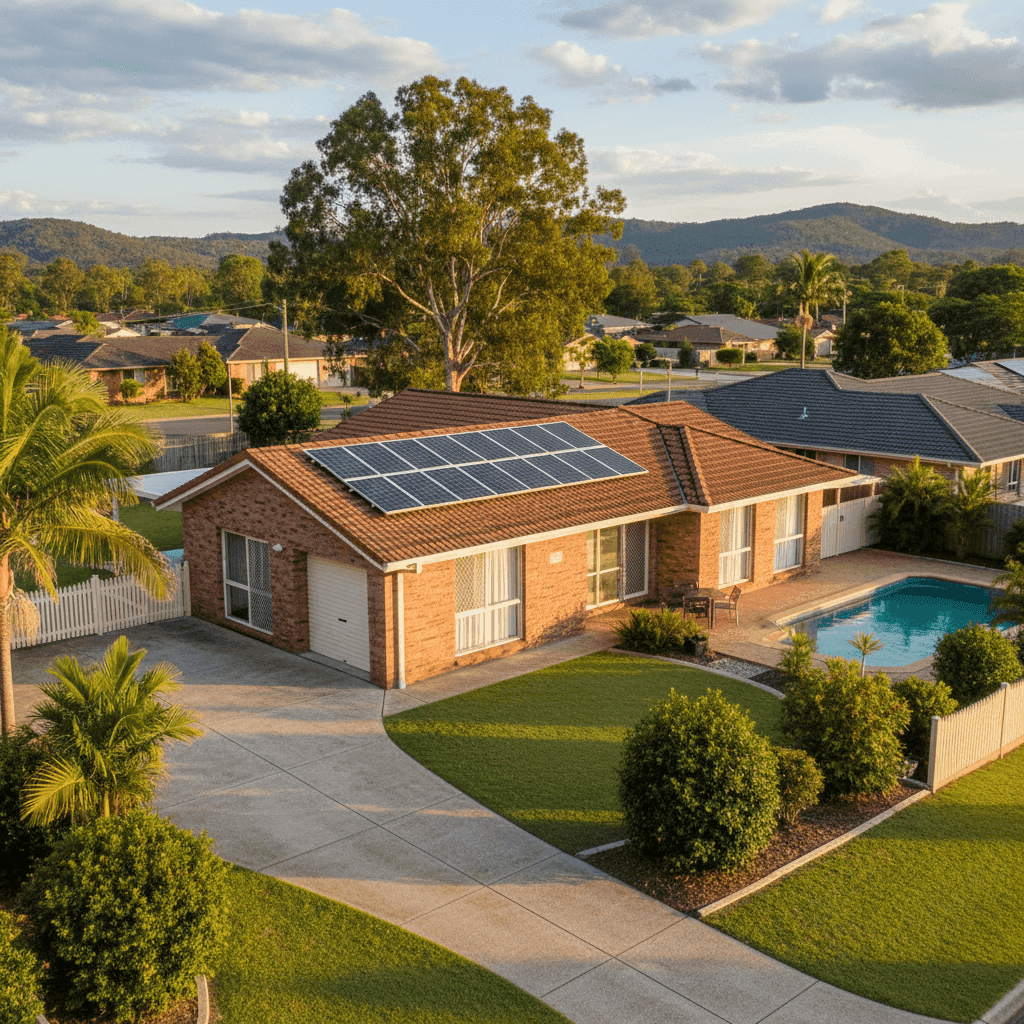
If you own a free standing home in Nerang, QLD 4211, you've probably noticed that home insurance premiums can vary enormously — sometimes by thousands of dollars — depending on your property's features, your insurer, and even your street. This article breaks down a real home and contents insurance quote for a three-bedroom brick veneer home in Nerang, compares it against local, state, and national benchmarks, and offers practical advice to help you get the best value cover.
---
Is This Quote Fair?
The annual premium for this quote comes in at $3,823 per year (or $374/month), covering both building (sum insured: $1,090,000) and contents ($50,000), each with a $1,000 excess. Our independent price rating for this quote is FAIR — around average.
So what does "fair" actually mean in practice? It means the premium sits in a reasonable range for the property type and location — not suspiciously cheap (which can signal underinsurance or gaps in cover), but not excessively expensive either. For a 1986-built home with a pool, solar panels, and ducted climate control, this is a realistic reflection of the risk profile.
That said, "fair" doesn't mean you can't do better. Insurance markets are competitive, and the same property can attract very different premiums across providers. It's always worth shopping around.
---
How Nerang Compares
To put this quote in proper context, here's how it stacks up against suburb, state, and national data:
| Benchmark | Average Premium | Median Premium |
|---|---|---|
| Nerang (4211) | $4,043/yr | $3,069/yr |
| Queensland | $9,129/yr | $3,903/yr |
| National | $5,347/yr | $2,764/yr |
At $3,823/yr, this quote sits:
- Below the Nerang suburb average of $4,043 — a positive sign
- Above the Nerang median of $3,069 — meaning more than half of quotes in the area come in cheaper
- Well below the QLD state average of $9,129 — reflecting Nerang's comparatively lower risk profile versus higher-exposure regional Queensland areas
- Below the national average of $5,347
It's worth noting that Queensland's sky-high state average is heavily skewed by cyclone-prone regions in North Queensland, where premiums can be extreme. Nerang, located on the Gold Coast hinterland fringe, is not classified as a cyclone risk area, which is a meaningful factor keeping premiums more manageable here.
For a deeper look at how premiums are trending in the postcode, visit the Nerang suburb insurance stats page, or explore the broader Queensland insurance data for context.
The suburb data is based on a sample of 67 quotes, which provides a reasonably reliable picture. The 25th–75th percentile range runs from $1,898 to $5,197 — a wide spread that underscores just how much individual property factors and insurer pricing models can move the needle.
---
Property Features That Affect Your Premium
Every property tells a story to an insurer's underwriting model. Here's how the key features of this home likely influence its premium:
Brick Veneer Walls & Tiled Roof
Brick veneer construction is generally well-regarded by insurers — it's durable, fire-resistant, and relatively straightforward to repair or rebuild. Combined with a tiled roof, this home presents a solid risk profile from a structural standpoint. Both materials have proven longevity, which typically translates to more competitive premiums compared to, say, weatherboard or fibrous cement homes.
Built in 1986
Homes from the mid-1980s occupy an interesting middle ground. They're old enough that some systems (plumbing, electrical wiring, roof membranes) may be approaching the end of their serviceable life, which can nudge premiums upward. However, they're generally well past the era of asbestos-containing materials in standard residential construction, and most have been updated over the decades. Insurers will weigh the age carefully.
Slab Foundation & Timber/Laminate Flooring
A concrete slab foundation is a neutral-to-positive factor for insurers — it's stable and not susceptible to subfloor moisture issues. Timber and laminate flooring, however, can be more costly to repair or replace after a water damage event compared to tiles, which may be reflected in the contents or building premium.
Swimming Pool
A pool adds both value and liability to a property. From an insurance perspective, it increases the replacement cost of the building (contributing to the higher sum insured), and some policies treat pool equipment and surrounds as a specific item. It's worth checking your policy's fine print to confirm exactly what's covered.
Solar Panels
Solar panel systems are increasingly common in Queensland, and most modern home insurance policies include them as part of the building sum insured — but not all. With panels typically costing $5,000–$15,000+ to replace, it's essential to confirm they're explicitly covered and that your building sum insured accounts for their value.
Ducted Climate Control
Ducted air conditioning systems are expensive to repair or replace — a full system can run to $10,000 or more. This is factored into the building sum insured and is one reason why a higher sum insured (like the $1,090,000 here) is important for a well-appointed home, even one of modest size.
Building Size & Sum Insured
At 130 sqm, this is a modest-sized home, but the $1,090,000 building sum insured reflects current construction costs in South East Queensland, which have risen sharply in recent years. Underinsurance is one of the most common and costly mistakes homeowners make — always base your sum insured on what it would actually cost to rebuild, not the market value of the land.
---
Tips for Homeowners in Nerang
1. Review Your Sum Insured Annually
Construction costs in Queensland have increased significantly since the pandemic-era supply chain disruptions. A sum insured that was adequate two years ago may no longer cover a full rebuild today. Use a building cost calculator or ask your insurer to reassess — many offer this as a free service.
2. Confirm Solar Panels and Pool Equipment Are Covered
Don't assume — ask your insurer directly whether your solar panel system and pool equipment (pumps, filters, heating) are included under your building cover and to what limit. Some policies cap these items or exclude storm damage to panels unless specified.
3. Shop Around at Renewal Time
The insurance market is competitive, and loyalty doesn't always pay. Insurers often offer better rates to new customers than to long-standing ones. Set a reminder to compare quotes each year — even a small saving compounds significantly over time. Get a new quote at CoverClub to see what's available for your property.
4. Consider Your Excess Level Strategically
This policy carries a $1,000 excess on both building and contents. Opting for a higher excess (say, $2,000) can reduce your annual premium noticeably — but only makes sense if you'd comfortably cover that amount out of pocket in a claim scenario. Run the numbers before adjusting.
---
Compare Your Home Insurance Today
Whether you're reviewing an existing policy or shopping for the first time, understanding how your premium compares to others in Nerang and across Queensland is a powerful starting point. CoverClub makes it easy to see real quotes side by side, so you can make a confident, informed decision.
Get a home insurance quote for your Nerang property and find out whether you're getting fair value — or whether there's a better deal waiting for you.