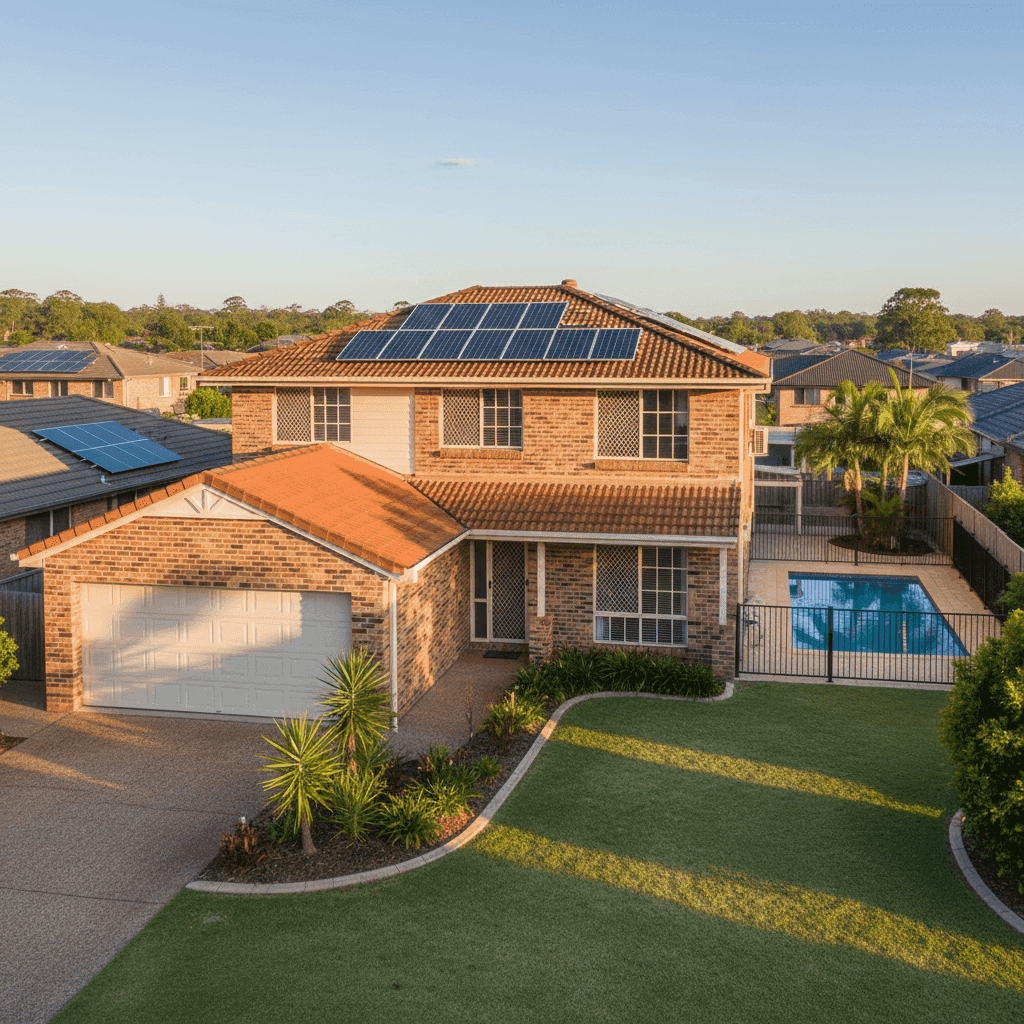
If you own a free standing home in Nerang, QLD 4211, you've probably wondered whether you're paying a fair price for your building insurance — or leaving money on the table. Nerang sits in the heart of the Gold Coast hinterland, a suburb that blends suburban convenience with proximity to some of Queensland's most beautiful natural landscapes. It's a desirable place to own property, but like anywhere in South East Queensland, insurance costs can vary significantly depending on your property's features, age, and the insurer you choose.
This article breaks down a real building insurance quote for a four-bedroom, two-bathroom free standing home in Nerang, comparing it against local, state, and national benchmarks so you can make a truly informed decision.
---
Is This Quote Fair?
The quote in question comes in at $2,897 per year (or $278 per month) for building-only cover, with a sum insured of $900,000 and a building excess of $2,000. Our price rating for this quote is FAIR — Around Average.
That rating holds up well under scrutiny. The suburb median for Nerang sits at $3,069 per year, meaning this quote is roughly $172 below the midpoint of what other homeowners in the area are paying. It's not the cheapest quote you'll ever see — the 25th percentile of Nerang quotes comes in at $1,898 per year — but it's comfortably below the suburb average of $4,043 and well clear of the upper end, where premiums can reach $5,197 or more.
In short: this isn't a bargain-basement price, but it's a reasonable outcome for a well-appointed property with a high sum insured. Homeowners paying in this range are generally getting competitive coverage without being stung by the premium spikes that affect higher-risk properties in the region.
---
How Nerang Compares
To put this quote in proper context, it helps to zoom out and look at the broader picture. You can explore the full data on the Nerang insurance stats page, but here's a snapshot:
| Benchmark | Premium |
|---|---|
| This quote | $2,897/yr |
| Nerang suburb median | $3,069/yr |
| Nerang suburb average | $4,043/yr |
| QLD state median | $3,903/yr |
| QLD state average | $9,129/yr |
| National median | $2,764/yr |
| National average | $5,347/yr |
| Scenic Rim LGA average | $8,744/yr |
A few things stand out here. First, Queensland's state average of $9,129 is extraordinarily high — a figure dragged upward by cyclone-prone and flood-affected regions across Far North Queensland and other high-risk LGAs. The state median of $3,903 is a more representative figure for most South East Queensland homeowners, and this quote sits comfortably below it.
The Queensland-wide insurance data tells a clear story: insurance costs across the state are deeply uneven, shaped by geography and natural hazard exposure. Nerang, while not immune to weather events, benefits from not being classified as a cyclone risk area — a significant factor in keeping premiums more manageable.
Interestingly, this quote also sits just above the national median of $2,764, which reflects how competitive the Nerang market can be relative to the rest of Australia. For a full picture of how the country compares, see the national home insurance stats.
The Scenic Rim LGA average of $8,744 is worth noting — it's dramatically higher than what's quoted here, underscoring that even within the broader Gold Coast and hinterland region, premium outcomes can diverge sharply based on specific suburb risk profiles.
---
Property Features That Affect Your Premium
This particular property has a number of characteristics that insurers weigh carefully when calculating premiums. Understanding them can help you anticipate future changes and negotiate more effectively.
Brick veneer construction and tiled roof are generally viewed favourably by insurers. Brick veneer offers solid fire and impact resistance, while tiles are durable and perform well in most weather conditions. Compared to properties with timber or fibrous cement cladding, or metal roofing susceptible to hail damage, this combination tends to attract more competitive pricing.
Slab foundation is another positive signal. Slab-on-ground construction is structurally straightforward, with fewer entry points for pests and moisture compared to raised or suspended floor systems. It's a common foundation type in Queensland and generally well-understood by underwriters.
Timber and laminate flooring can influence claims costs if water damage occurs — these materials are more susceptible to warping and swelling than tiles. However, this is a relatively minor factor in overall premium calculation and is already baked into the quote.
Above-average fittings quality increases the rebuild cost of the home, which is reflected in the $900,000 sum insured. Higher-spec kitchens, bathrooms, and finishes cost more to replace, so it's important that the sum insured accurately reflects today's construction costs — not the purchase price of the property.
The swimming pool, solar panels, and ducted climate control all add to the insurable value of the property and may attract specific policy conditions. Solar panels, in particular, are worth checking in your policy wording — some insurers cover them as part of the building, while others require a separate endorsement. Ducted systems can be expensive to repair or replace, so confirming they're explicitly included in your cover is worthwhile.
At 214 sqm, this is a generously sized home for Nerang, and the 1995 construction year means it's approaching 30 years old. Older homes can sometimes attract higher premiums due to ageing electrical wiring, plumbing, and roofing — though a well-maintained brick veneer home of this era is generally considered low-to-moderate risk.
---
Tips for Homeowners in Nerang
1. Review your sum insured annually. Construction costs in South East Queensland have risen significantly in recent years. A sum insured set even two or three years ago may no longer reflect the true cost of rebuilding your home to the same standard. Underinsurance is one of the most common — and costly — mistakes homeowners make.
2. Check what's covered under your building policy. Building-only cover protects the structure of your home, but not your contents. Make sure you understand exactly what's included — particularly for items like solar panels, the pool, fixed appliances, and the ducted air conditioning system. If any of these are excluded or capped, it may be worth adding contents cover or a specific endorsement.
3. Ask about excess options. The $2,000 building excess on this quote is on the higher end. Some insurers will offer a lower premium in exchange for a higher excess, or vice versa. If you have a strong emergency fund and are unlikely to make small claims, a higher excess can reduce your annual outgoings. If you'd prefer more predictable out-of-pocket costs, negotiating a lower excess is worth exploring.
4. Compare quotes at renewal time — every year. The insurance market shifts constantly. The quote that was competitive last year may not be the best available today. With 67 quotes in our Nerang dataset, there's clear evidence that premiums vary widely across insurers for the same property. Taking 15 minutes to compare at renewal could save you hundreds of dollars annually.
---
Ready to Compare?
Whether you're reviewing your current policy or shopping for the first time, CoverClub makes it easy to see how your premium stacks up. Get a home insurance quote today and find out if you're paying a fair price — or if there's a better deal waiting for you.