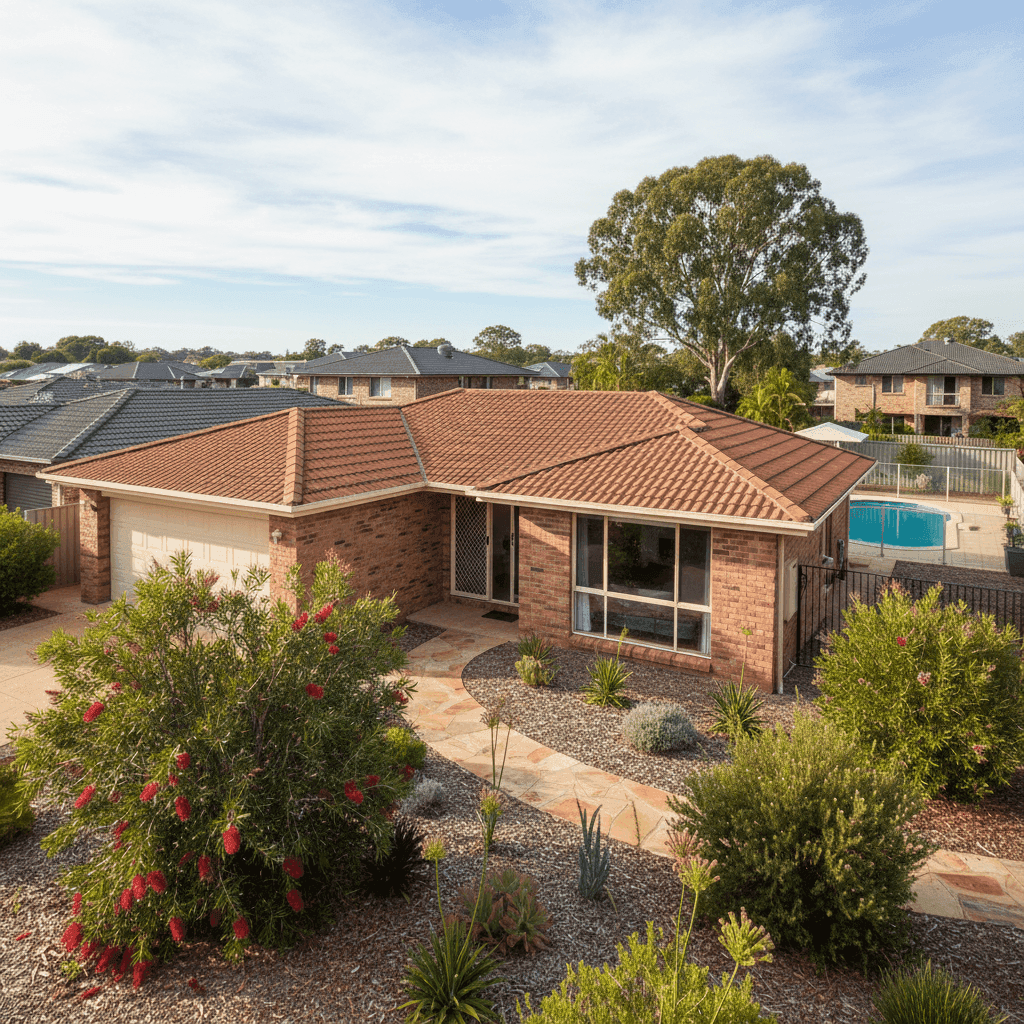
If you own a free standing home in Nerang, QLD 4211, you've probably wondered whether you're paying a fair price for home and contents insurance — or whether there's a better deal waiting to be found. Nerang sits in the heart of the Gold Coast hinterland, a suburb that blends suburban convenience with a relaxed Queensland lifestyle. But like anywhere in South East Queensland, insurance pricing here can vary dramatically depending on your property's characteristics and the insurer you choose.
In this article, we break down a real home and contents insurance quote for a 3-bedroom, 2-bathroom brick veneer home in Nerang, comparing the premium against local, state, and national benchmarks to help you understand what's driving the cost — and what you can do about it.
---
Is This Quote Fair?
The quote in question comes in at $1,998 per year (or around $191 per month) for combined home and contents cover, with a building sum insured of $481,000 and contents valued at $50,000. Both the building and contents excess are set at $1,000.
Our price rating for this quote is FAIR — Around Average, and the data backs that up. Based on 67 quotes collected for the Nerang 4211 postcode, the suburb's 25th percentile sits at $1,898 per year — meaning this quote is only marginally above the cheapest quarter of premiums seen in the area. The suburb median is $3,069/yr, and the average climbs to $4,043/yr, so at $1,998 this homeowner is comfortably below both of those figures.
In plain terms: this is a competitive quote. It's not the cheapest possible outcome, but it's well below what many Nerang homeowners are paying, and significantly under the suburb average. For a property with a pool and ducted climate control — both of which can push premiums higher — landing under $2,000 a year represents solid value.
---
How Nerang Compares
To put this quote in broader context, it helps to look at how Nerang stacks up against Queensland as a whole and the national picture.
| Benchmark | Average Premium | Median Premium |
|---|---|---|
| Nerang (4211) | $4,043/yr | $3,069/yr |
| Queensland (State) | $9,129/yr | $3,903/yr |
| National | $5,347/yr | $2,764/yr |
| LGA (Scenic Rim) | $8,744/yr | — |
A few things stand out here. Queensland's state average of $9,129/yr is extraordinarily high — a figure heavily skewed by cyclone-prone regions in Far North Queensland, where premiums can be eye-watering. The state median of $3,903/yr is a more representative figure for South East Queensland homeowners, and this quote still comes in well under that.
Nationally, the median sits at $2,764/yr, which is actually lower than the Nerang suburb median. This reflects the elevated risk profile of Queensland compared to southern states, driven by storm, flood, and hail exposure across much of the state.
The LGA (Scenic Rim) average of $8,744/yr is notably high, likely influenced by properties in flood-prone or bushfire-risk areas within the broader local government area. Nerang itself benefits from not being classified as a cyclone risk area, which keeps premiums more manageable than many Queensland counterparts.
---
Property Features That Affect Your Premium
Several characteristics of this property work in the homeowner's favour from an insurance pricing perspective — and a couple add some complexity.
Brick Veneer Walls & Tiled Roof Brick veneer construction is generally viewed favourably by insurers. It's durable, fire-resistant, and less susceptible to wind damage than lightweight cladding. Combined with a tiled roof, this home sits in a relatively low-risk construction category, which typically translates to more competitive premiums.
Slab Foundation A concrete slab foundation is standard for Queensland homes built in the 2000s and is considered structurally sound. It eliminates the underfloor moisture and pest access issues that can affect older homes on stumps, which insurers tend to price more favourably.
Built in 2004 At just over 20 years old, this home is in the sweet spot for insurers — modern enough to meet contemporary building standards, but not so new that replacement costs are at a premium. Homes built after 1990 generally comply with improved cyclone and storm-resistance codes introduced following disasters like Cyclone Tracy.
Swimming Pool A pool adds liability exposure and increases the overall replacement cost of the property, which can nudge premiums upward. It's worth ensuring your policy explicitly covers pool-related liability and that the pool's rebuild cost is factored into your sum insured.
Ducted Climate Control Ducted air conditioning systems are a meaningful contents and building item. If the system is built-in, it may be covered under the building policy; if it's a split system or portable unit, it may fall under contents. It's worth confirming with your insurer exactly how this is classified to avoid a gap in cover.
Standard Fittings & 139 sqm Floor Area Standard-grade fittings and a modest floor area of 139 sqm help keep the replacement cost — and therefore the premium — in check. Homes with high-end finishes or larger footprints typically attract higher building sums insured and proportionally higher premiums.
---
Tips for Homeowners in Nerang
1. Review your sum insured regularly Construction costs in South East Queensland have risen sharply over the past few years. A building sum insured of $481,000 for a 139 sqm brick veneer home may be appropriate today, but it's worth cross-checking against a building cost calculator annually to ensure you're not underinsured — especially if you've made improvements like a new kitchen or bathroom.
2. Clarify pool and outdoor structure coverage Pools, fences, garden sheds, and pergolas are sometimes excluded or sub-limited in standard policies. Ask your insurer specifically what's covered for your pool — including the pump, filtration equipment, and surrounding paving — and whether any sub-limits apply.
3. Compare quotes before renewal The spread of premiums in Nerang is wide — from $1,898/yr at the 25th percentile to $5,197/yr at the 75th percentile. That's a difference of over $3,000 per year for broadly similar properties. Shopping around at renewal time is one of the most effective ways to avoid drifting into the expensive end of that range. Get a quote at CoverClub to see what competing insurers are offering.
4. Check for discounts on your excess This policy carries a $1,000 excess on both building and contents. Opting for a higher excess — say, $2,000 — can reduce your annual premium meaningfully. If you have a healthy emergency fund and are unlikely to make small claims, a higher excess is often a smart trade-off.
---
Compare Your Own Quote
Whether you're renewing an existing policy or shopping for the first time, it pays to know where your premium sits relative to the market. CoverClub aggregates real quote data from Australian homeowners to give you transparent, suburb-level benchmarks — so you can walk into any renewal negotiation with confidence.
See how your suburb compares or get a fresh quote today to make sure you're not paying more than you need to for quality home and contents cover.