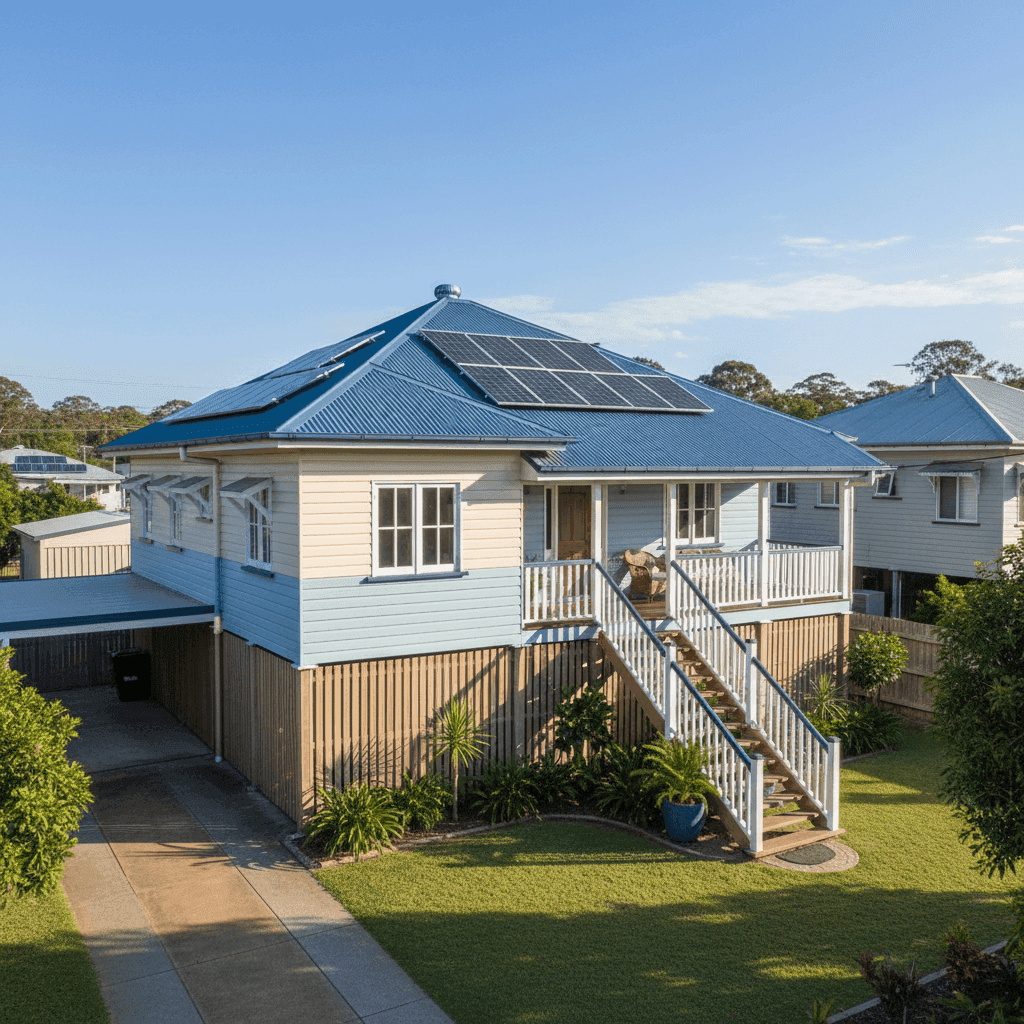
If you own a free standing home in New Auckland, QLD 4680, you've probably noticed that home insurance isn't cheap — and working out whether you're getting a fair deal can feel like guesswork. This article breaks down a real home and contents insurance quote for a three-bedroom weatherboard property in the suburb, comparing it against local, state, and national benchmarks so you can see exactly where it sits.
---
Is This Quote Fair?
The quote in question comes in at $2,518 per year (or $246 per month) for combined home and contents cover, with a building sum insured of $505,000 and contents valued at $35,000. The building excess is $2,000 and the contents excess is $600.
Our pricing data rates this quote as Fair — Around Average, which is actually a reasonably positive outcome for a property in this part of Queensland.
Here's why: Queensland is one of the most expensive states in the country for home insurance, driven by extreme weather events, flooding risk, and cyclone exposure across much of the state. The QLD state average sits at $4,547 per year, meaning this quote comes in well below what many Queensland homeowners are paying. Compared to the national average of $2,965 per year, it's also sitting comfortably below the Australian benchmark — a meaningful saving of around $447 annually.
So while "Fair" might not sound thrilling, in the context of Queensland insurance pricing, landing below both the state and national average is a genuinely solid result.
---
How New Auckland Compares
Looking specifically at New Auckland suburb insurance data, the picture becomes even clearer. Based on 45 quotes collected for this postcode:
| Benchmark | Annual Premium |
|---|---|
| This Quote | $2,518 |
| Suburb 25th Percentile | $1,990 |
| Suburb Median | $2,726 |
| Suburb Average | $3,333 |
| Suburb 75th Percentile | $4,158 |
| QLD State Average | $4,547 |
| National Average | $2,965 |
| National Median | $2,716 |
At $2,518, this quote sits just below the suburb median of $2,726 and significantly below the suburb average of $3,333. The gap between the median and average in New Auckland is notable — it suggests a portion of homeowners in the area are paying substantially more (the 75th percentile reaches $4,158), which pulls the average upward. This quote avoids that upper tier comfortably.
It's worth noting the quote is above the suburb's 25th percentile of $1,990, meaning roughly one in four quotes in the area come in cheaper. That's a useful reminder that there may be room to shop around — but it also reflects the specific characteristics of this property, which we'll explore below.
---
Property Features That Affect Your Premium
Several features of this property have a meaningful influence on what insurers charge. Understanding them helps you make sense of your premium — and potentially identify levers to pull.
Weatherboard Timber Construction
The external walls are weatherboard wood, which is common in older Queensland homes but is generally considered higher risk by insurers than brick or rendered masonry. Timber is more susceptible to fire, rot, and termite damage, which typically pushes premiums up compared to brick equivalents.
Elevated on Stumps
This home is elevated by at least one metre on stumps — a classic Queenslander design feature. The good news is that elevation can actually work in your favour for flood risk, as water is more likely to pass underneath rather than inundate the living areas. However, stumped foundations can attract slightly higher premiums due to the added complexity of the structure and potential for subfloor issues.
Steel/Colorbond Roof
A Colorbond steel roof is generally viewed positively by insurers. It's durable, fire-resistant, and performs well in high-wind conditions — all of which can moderate your premium compared to older roofing materials like terracotta tiles or asbestos sheeting.
Age of Construction (1985)
Built in 1985, this home is approaching 40 years old. Older properties can attract higher premiums due to ageing electrical systems, plumbing, and building materials that may be more costly to repair or replace to current standards.
Solar Panels
The property has solar panels, which add to the replacement value of the building and can slightly increase the insured sum. It's important to ensure your building sum insured accounts for the cost of replacing the solar system — something that's easy to overlook.
No Pool, No Ducted Climate Control
The absence of a pool and ducted air conditioning keeps the insurable risk profile relatively lean, which helps moderate the premium.
---
Tips for Homeowners in New Auckland
Whether you're reviewing an existing policy or shopping for a new one, here are four practical steps worth taking:
- Review your building sum insured regularly. With construction costs rising sharply across Queensland, the cost to rebuild a 130 sqm weatherboard home has increased significantly in recent years. Make sure your $505,000 sum insured reflects current labour and material costs — being underinsured can leave you seriously out of pocket after a claim.
- Check your flood cover explicitly. New Auckland sits in the Gladstone region, an area that has experienced significant flood events historically. Don't assume flood is included — read your Product Disclosure Statement carefully and confirm whether flood (as distinct from storm surge or rainwater runoff) is covered under your policy.
- Consider your excess strategically. This quote carries a $2,000 building excess. A higher excess generally lowers your premium, but make sure it's an amount you can genuinely afford to pay at short notice. If $2,000 would be a stretch, it may be worth adjusting.
- Shop around at renewal. Insurers don't always reward loyalty — in fact, long-standing customers are sometimes paying more than new customers for equivalent cover. Use a comparison tool like CoverClub at each renewal to make sure you're not drifting into the upper price tiers without realising it.
---
Get a Better Deal on Home Insurance
Whether this quote is yours or you're simply benchmarking what's possible in New Auckland, the best way to ensure you're not overpaying is to compare. CoverClub makes it easy to see multiple quotes side by side, with suburb-level pricing data to help you understand what's genuinely competitive in your area. Start comparing home insurance quotes today — it takes just a few minutes and could save you hundreds.