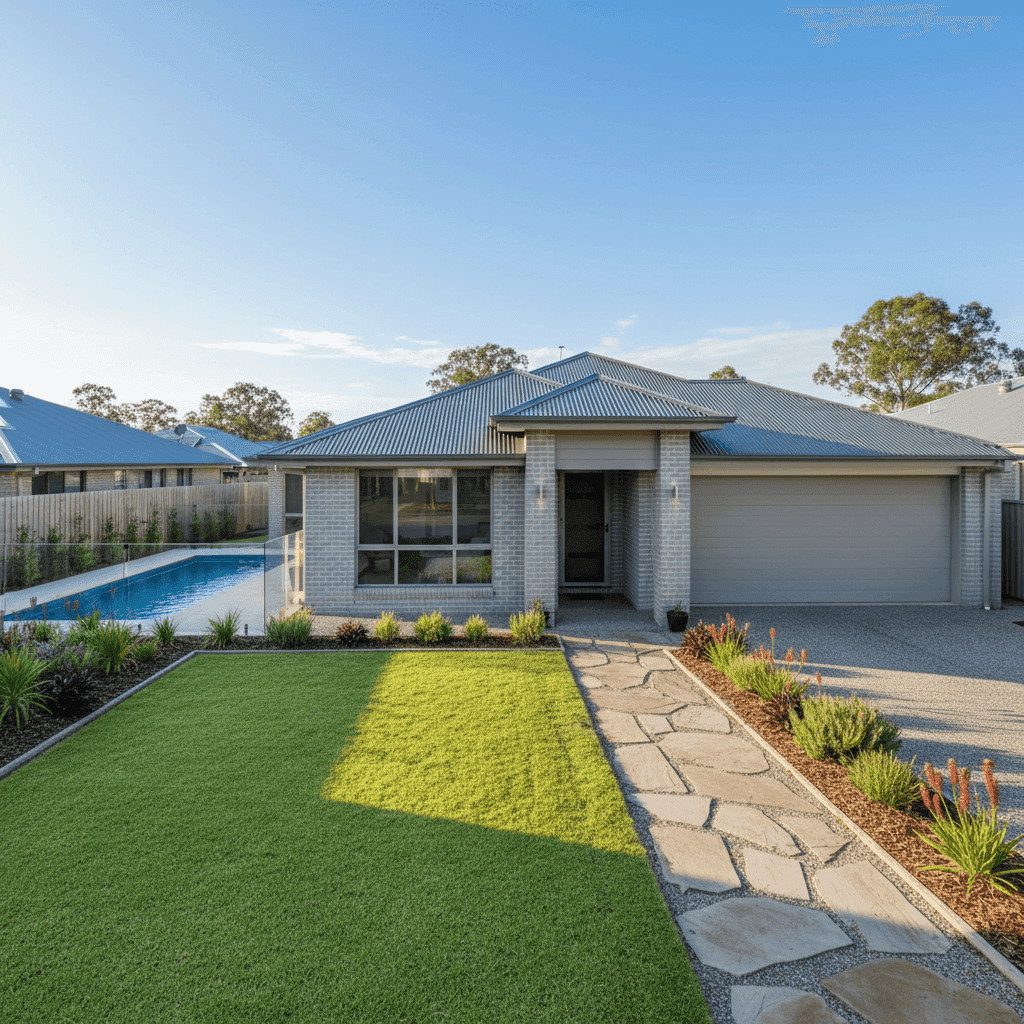
If you own a four-bedroom free standing home in New Beith, QLD 4124, you're probably curious about whether you're paying a fair price for building insurance — or leaving money on the table. New Beith is a semi-rural suburb in the Ipswich local government area, sitting on the fringe of Greater Brisbane. Properties here tend to be spacious, and that size comes with real replacement costs if things go wrong.
This article breaks down a recent building-only insurance quote for a brick veneer home in New Beith, compares it against local, state and national benchmarks, and offers practical tips to help you get the best value cover.
---
Is This Quote Fair?
The quote in question comes in at $2,266 per year (or about $210 per month) for building-only cover on a 214 sqm, four-bedroom, two-bathroom home built in 2001, with a sum insured of $591,000 and a $1,000 building excess.
Our price rating for this quote is CHEAP — below average for the area. That's genuinely good news for the homeowner. To put it in perspective:
- The suburb average for New Beith is $4,451/yr, meaning this quote is roughly 49% below what most locals are paying.
- Even compared to the suburb median of $4,024/yr, this quote sits well under the midpoint.
- The suburb's 25th percentile — the cheapest quarter of quotes — sits at $3,055/yr. This quote falls below even that threshold, placing it among the most competitively priced policies seen in the area.
For a homeowner in New Beith, securing cover at this price point represents meaningful savings. At the suburb average, you'd be paying over $2,100 more per year for the same property. Over a decade, that's a significant difference.
---
How New Beith Compares
New Beith sits within the Ipswich LGA, which carries an average premium of $8,901/yr — one of the higher local government averages in Queensland. That figure is heavily influenced by flood-prone pockets across Ipswich, which push premiums up across the board even for properties that aren't directly at risk.
Here's how the numbers stack up across different benchmarks (based on our collected quote data):
| Benchmark | Annual Premium |
|---|---|
| This quote | $2,266 |
| New Beith suburb average | $4,451 |
| New Beith suburb median | $4,024 |
| QLD state average | $9,129 |
| QLD state median | $3,903 |
| National average | $5,347 |
| National median | $2,764 |
Queensland's state average of $9,129/yr is dramatically higher than the national average of $5,347/yr, largely due to the state's exposure to cyclones, flooding, and severe storm events in many regions. However, the QLD median of $3,903/yr tells a more nuanced story — it's far lower than the mean, which indicates a relatively small number of very high-risk properties are pulling the average upward.
New Beith itself is not a cyclone risk area, which is a meaningful factor in keeping premiums more manageable compared to coastal or far north Queensland properties.
You can explore more local data on the New Beith suburb stats page, compare it against all of QLD, or see how it stacks up on the national stats page.
---
Property Features That Affect Your Premium
Several characteristics of this particular property work in the homeowner's favour when it comes to insurance pricing:
Brick veneer construction is generally viewed favourably by insurers. While not as robust as full double brick, brick veneer offers solid fire resistance and structural durability, which typically translates to lower premiums compared to weatherboard or timber-framed homes.
Colorbond steel roofing is another tick in the right column. Steel roofs are durable, fire-resistant, and perform well in high-wind events. Insurers often price them more competitively than tile roofs, which can crack or dislodge during storms.
Slab foundation is standard for Queensland homes of this era and is generally considered low-risk from an insurance perspective — there's no underfloor space that could harbour moisture damage or pest issues.
Vinyl flooring is relatively inexpensive to replace compared to hardwood timber floors or high-end tiles, which can reduce the overall cost of a claim and may subtly influence how insurers assess the property.
Standard fittings quality keeps the replacement cost estimate realistic. Homes with premium or luxury fittings often attract higher sums insured and correspondingly higher premiums.
The swimming pool is worth noting — pools can add minor complexity to a home insurance policy, particularly around liability. It's worth confirming with your insurer that the pool structure itself is covered under building insurance, and checking whether your policy includes any public liability protection for pool-related incidents.
The absence of solar panels simplifies the policy somewhat, as solar systems can raise questions around sum insured adequacy and electrical risk.
---
Tips for Homeowners in New Beith
1. Review your sum insured regularly At $591,000 for a 214 sqm home, the sum insured here reflects current rebuild costs in South East Queensland. Building costs have risen sharply in recent years, so it's worth reassessing your sum insured annually. Being underinsured at claim time can leave you significantly out of pocket — insurers may apply a co-insurance penalty if your coverage falls short of the true rebuild cost.
2. Understand what "building only" cover means This policy covers the physical structure — walls, roof, floors, fixed fittings, and permanently attached structures like the pool. It does not cover your contents (furniture, appliances, personal belongings). If you haven't already, consider whether a combined building and contents policy might offer better overall value and protection.
3. Ask about flood and storm water definitions Even though New Beith is not a high-flood-risk suburb, parts of the Ipswich LGA have experienced significant inundation in the past. Make sure you understand exactly how your policy defines "flood" versus "storm water" — these are treated differently by many insurers, and gaps in coverage can be costly.
4. Keep maintenance records Insurers can reduce or deny claims if damage is attributed to gradual deterioration or poor maintenance. For a home built in 2001, keeping records of roof inspections, gutter cleaning, and any repair work demonstrates due diligence and can support your claim if issues arise.
---
Compare Quotes and Save
Whether you're renewing your policy or shopping around for the first time, comparing quotes is one of the simplest ways to ensure you're not overpaying. The quote analysed here is a strong example of what's possible — well below the suburb average and competitive even against national benchmarks.
Get a building insurance quote for your New Beith home at CoverClub and see how your current premium stacks up in seconds.