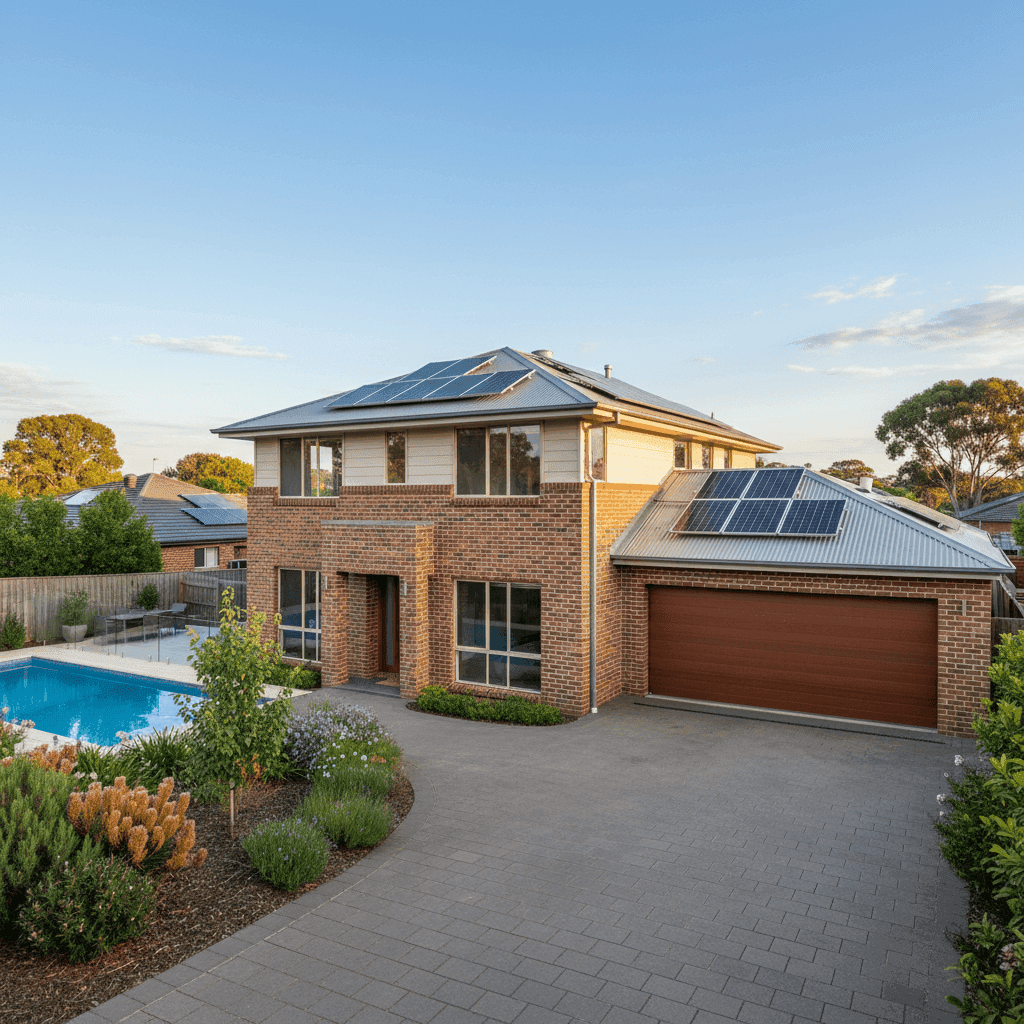
New Gisborne is a leafy, semi-rural township nestled in the Macedon Ranges — one of Victoria's most sought-after lifestyle corridors. With its mix of established family homes, rolling hills, and easy freeway access to Melbourne, it's no surprise that property values here are strong. But what does it actually cost to insure a free standing home in this part of Victoria? This article breaks down a real home and contents insurance quote for a 4-bedroom property in New Gisborne (postcode 3438), and puts it in context against suburb, state, and national benchmarks.
---
Is This Quote Fair?
The annual premium on this quote comes in at $2,199 per year (or $232/month), covering a building sum insured of $946,000 and contents valued at $155,000. The building excess is $3,000, and the contents excess is $1,000.
Our price rating for this quote is FAIR — Around Average, and the data backs that up. At $2,199/yr, this premium sits just above the suburb median of $2,165/yr, meaning roughly half of comparable quotes in New Gisborne come in lower — but also that half come in higher. It's a solid, mid-market result rather than a standout bargain.
It's worth noting that the suburb average premium is considerably higher at $3,455/yr, which is pulled upward by outlier quotes at the top end of the market. When the median and the quote price are this close together, it's generally a reliable signal that the pricing is representative of what most homeowners in the area are actually paying.
For a property of this size and value — 214 sqm of living space, a $946,000 building sum insured, with features like a pool, solar panels, and ducted climate control — landing near the median is a reasonable outcome.
---
How New Gisborne Compares
To put this quote in broader perspective, here's how New Gisborne stacks up against Victorian and national benchmarks:
| Benchmark | Average Premium | Median Premium |
|---|---|---|
| New Gisborne (3438) | $3,455/yr | $2,165/yr |
| Victoria (VIC) | $3,000/yr | $2,718/yr |
| Australia (National) | $5,347/yr | $2,764/yr |
| Macedon Ranges LGA | $2,890/yr | — |
A few things stand out here. First, the national average of $5,347/yr is dramatically higher than both the Victorian and New Gisborne averages — largely driven by high-risk coastal and cyclone-prone regions in Queensland and Western Australia, which push the mean upward significantly. The national median of $2,764/yr is a more useful comparison point for most homeowners.
New Gisborne's median of $2,165/yr actually sits below both the Victorian median ($2,718/yr) and the national median ($2,764/yr), suggesting that the suburb is relatively affordable to insure compared to the broader market. The Macedon Ranges LGA average of $2,890/yr also sits above this quote's premium, reinforcing the "fair value" assessment.
You can explore the full pricing data for this suburb at the New Gisborne insurance stats page, or browse Victoria-wide home insurance statistics and national benchmarks for a wider view.
> Note: The suburb sample size for this analysis is 9 quotes. While directionally useful, a larger sample would give even greater confidence in these benchmarks. We recommend using this data as a guide alongside your own quote comparisons.
---
Property Features That Affect Your Premium
Every home is unique, and insurers price risk based on a combination of location, construction, and features. Here's how the specific characteristics of this New Gisborne property are likely influencing the premium:
Brick Veneer Walls & Colorbond Roof
Brick veneer is one of the most common — and insurer-favoured — wall materials in Victoria. It offers good fire resistance and structural durability, which typically attracts more competitive premiums than timber-framed or clad exteriors. The steel Colorbond roof is similarly well-regarded: it's lightweight, non-combustible, and highly durable in variable weather conditions. This combination generally signals a lower-risk build to underwriters.
Concrete Slab Foundation
A slab-on-ground foundation is standard for homes built in this era and is generally considered low-risk from an insurance perspective. Unlike homes on stumps or piers, slabs are less susceptible to subsidence and pest-related structural damage — both factors that can push premiums higher.
Timber & Laminate Flooring
While aesthetically popular, timber and laminate flooring can be more costly to replace than tiles following water damage events. This is a modest upward factor on contents and building claims, though for a standard-quality fit-out it's unlikely to be a significant premium driver.
Swimming Pool
Pools add both value and liability to a property. From an insurance standpoint, they increase the potential for third-party injury claims and can add to building replacement costs. Homeowners with pools should ensure their policy includes adequate liability cover.
Solar Panels
Solar panels are a growing consideration for insurers. They add to the building's replacement value (which should be reflected in the sum insured), and some policies have specific conditions around solar system damage. It's worth confirming with your insurer that panels are explicitly covered under the building section of your policy.
Ducted Climate Control
Ducted heating and cooling systems are a fixed building feature and should be included in the building sum insured — which at $946,000 for a 214 sqm home appears to account for a well-appointed fit-out. Underinsuring a property with premium features like this is a common and costly mistake.
---
Tips for Homeowners in New Gisborne
1. Review Your Building Sum Insured Regularly
Construction costs in regional Victoria have risen sharply in recent years. A sum insured of $946,000 for a 214 sqm brick veneer home is substantial, but rebuilding costs — including demolition, council approvals, and materials — can escalate quickly. Use a building cost calculator annually to make sure you're not underinsured.
2. Check Bushfire Risk Ratings in the Macedon Ranges
The Macedon Ranges is a designated Bushfire Prone Area under Victorian planning regulations. While New Gisborne itself has a lower urban density, properties on the fringes or with significant vegetation nearby may attract higher premiums or specific policy conditions. Check your property's Bushfire Attack Level (BAL) rating and discuss it with your insurer.
3. Bundle Home and Contents for Potential Savings
This quote already combines home and contents cover — a smart move. Many insurers offer multi-policy discounts when you bundle both under one policy. If you're currently holding them separately, it's worth requesting a combined quote to see if you can reduce your total premium.
4. Consider Your Excess Settings
This policy carries a $3,000 building excess and a $1,000 contents excess. Opting for a higher excess is one of the most direct levers for reducing your annual premium — but only makes sense if you could comfortably cover that excess out of pocket in the event of a claim. Review your financial position and adjust accordingly.
---
Compare Quotes and Find Better Value
Whether you're renewing your current policy or shopping around for the first time, comparing multiple quotes is the single most effective way to ensure you're getting fair value. Premiums for the same property can vary by hundreds — sometimes thousands — of dollars between insurers.
Get a home insurance quote for your New Gisborne property at CoverClub and see how your current premium stacks up against the market in minutes.