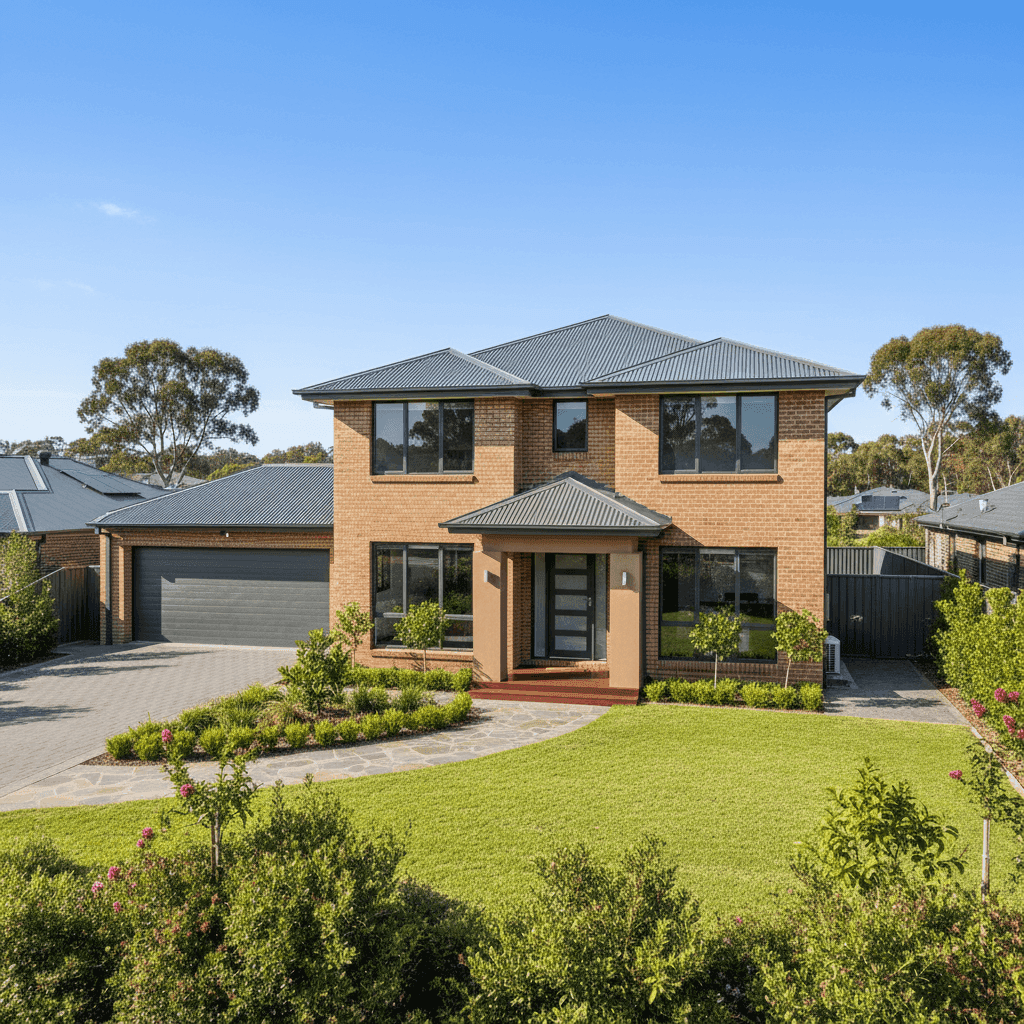
Nestled in the rolling hills of the Macedon Ranges, New Gisborne is a popular semi-rural suburb that attracts families and professionals seeking space, greenery, and a relaxed lifestyle within commuting distance of Melbourne. If you own a free standing home here, understanding what you should be paying for home and contents insurance — and why — can save you hundreds of dollars a year.
This article breaks down a real home and contents insurance quote for a five-bedroom, two-bathroom free standing home in New Gisborne VIC 3438, helping you benchmark it against local, state, and national data.
---
Is This Quote Fair?
The quote in question comes in at $2,985 per year (or $286/month) for combined home and contents cover, with a $1,500,000 building sum insured and $50,000 in contents cover. Both the building and contents carry a $1,000 excess.
Our pricing analysis rates this quote as Expensive (Above Average).
To put that in perspective, the median home insurance premium in New Gisborne sits at $2,165 per year — meaning this quote is around $820 above the local median, or roughly 38% more expensive than the midpoint of what other homeowners in the suburb are paying.
That said, "expensive" doesn't automatically mean "wrong." A five-bedroom home with above-average fittings, a 277 sqm footprint, and a $1.5 million building sum insured is a substantial asset to protect. Larger, better-appointed homes will naturally attract higher premiums — the question is whether the margin above the median is justified, or whether there's room to shop around.
At the 75th percentile for the suburb, premiums reach $2,666/year, meaning roughly a quarter of New Gisborne homeowners are paying more than that. This quote sits above even that threshold, which suggests it's worth comparing alternatives before renewing.
---
How New Gisborne Compares
Understanding where your suburb sits in the broader insurance landscape is key to making an informed decision. Here's how New Gisborne stacks up:
| Benchmark | Premium |
|---|---|
| This Quote | $2,985/yr |
| New Gisborne Suburb Median | $2,165/yr |
| New Gisborne Suburb Average | $3,455/yr |
| Macedon Ranges LGA Average | $2,890/yr |
| VIC State Median | $2,718/yr |
| VIC State Average | $3,000/yr |
| National Median | $2,764/yr |
| National Average | $5,347/yr |
A few things stand out here. The Victorian state average of $3,000/year is very close to this quote, suggesting the premium is broadly in line with what many Victorian homeowners pay. The national average of $5,347 is considerably higher — driven upward by high-risk regions like cyclone-prone Queensland and flood-affected areas of NSW — so New Gisborne homeowners are in a relatively favourable position nationally.
Locally, the suburb average of $3,455 is notably higher than the median of $2,165, which indicates a skewed distribution — a small number of higher-value properties pulling the average up. With only nine quotes in our New Gisborne sample, these figures should be treated as directional rather than definitive, but they still offer a useful reference point.
The Macedon Ranges LGA average of $2,890 sits just below this quote, reinforcing the "above average" rating.
---
Property Features That Affect Your Premium
Several characteristics of this property are likely influencing the premium — both positively and negatively.
Features That May Increase the Premium
- Five bedrooms and 277 sqm of floor space — Larger homes cost more to rebuild, which directly raises the building sum insured and, in turn, the premium.
- Above-average fittings quality — Higher-spec kitchens, bathrooms, and finishes increase the cost of reinstatement, which insurers factor into their pricing.
- Timber and laminate flooring — While attractive and common in this style of home, timber floors can be more susceptible to water damage and may cost more to replace than tiles or concrete.
- Stump foundations — Homes on stumps can be more exposed to subfloor moisture and pest damage, and some insurers price this risk accordingly.
- Ducted climate control — A whole-home ducted system is a significant fixed asset. If it's damaged in a storm or fire, replacement costs can be substantial, and this is reflected in premiums.
Features That May Help Keep Costs Down
- Brick veneer construction — Brick veneer is one of the most common and well-regarded wall materials in Australian home insurance. It's fire-resistant, durable, and generally viewed favourably by insurers.
- Steel/Colorbond roof — Metal roofing is highly regarded for its durability, resistance to fire, and low maintenance. Insurers typically price Colorbond roofs more competitively than older tile or asbestos alternatives.
- Built in 2005 — A relatively modern construction means the home is likely to meet current building codes, reducing the risk of structural issues that can arise in older properties.
- No pool, no solar panels — Both of these features can add complexity and cost to a policy. Their absence simplifies the risk profile.
- Not in a cyclone risk area — New Gisborne is well outside Australia's cyclone belt, removing one of the most significant premium drivers seen in northern states.
---
Tips for Homeowners in New Gisborne
1. Review Your Building Sum Insured Carefully
A $1,500,000 building sum insured is significant. Make sure this figure reflects the cost to rebuild, not the market value of your property. Over-insuring can push your premium unnecessarily high, while under-insuring leaves you exposed at claim time. Use a building cost calculator or speak with a quantity surveyor to validate your figure.
2. Compare at Least Three Quotes Before Renewing
With this quote sitting above the suburb median and the 75th percentile, there's a reasonable chance a comparable policy is available at a lower price. Platforms like CoverClub make it straightforward to compare multiple insurers side by side without the legwork.
3. Consider Bushfire Preparedness
The Macedon Ranges has a history of bushfire risk. While New Gisborne itself isn't classified as a high-risk zone, properties in the region may still attract bushfire-related loading. Maintaining a well-cleared property perimeter, installing ember guards, and having a documented home fire plan can sometimes support a case for reduced premiums when negotiating with insurers.
4. Bundle Smartly — But Verify the Savings
Many insurers offer discounts when you bundle home and contents cover, as this policy does. However, it's worth checking whether the bundled price is genuinely competitive, or whether you'd be better served by separate policies from different providers. Don't assume bundling always equals the best deal.
---
Start Comparing Today
Whether this quote is the right fit or there's a better deal out there, the only way to know for certain is to compare. At CoverClub, we help Australian homeowners benchmark their premiums against real market data and find cover that suits their property and budget.
Get a home insurance quote for your New Gisborne property →
You can also explore detailed premium data for your area on our New Gisborne suburb stats page or browse Victoria-wide insurance benchmarks to see how your suburb compares across the state.