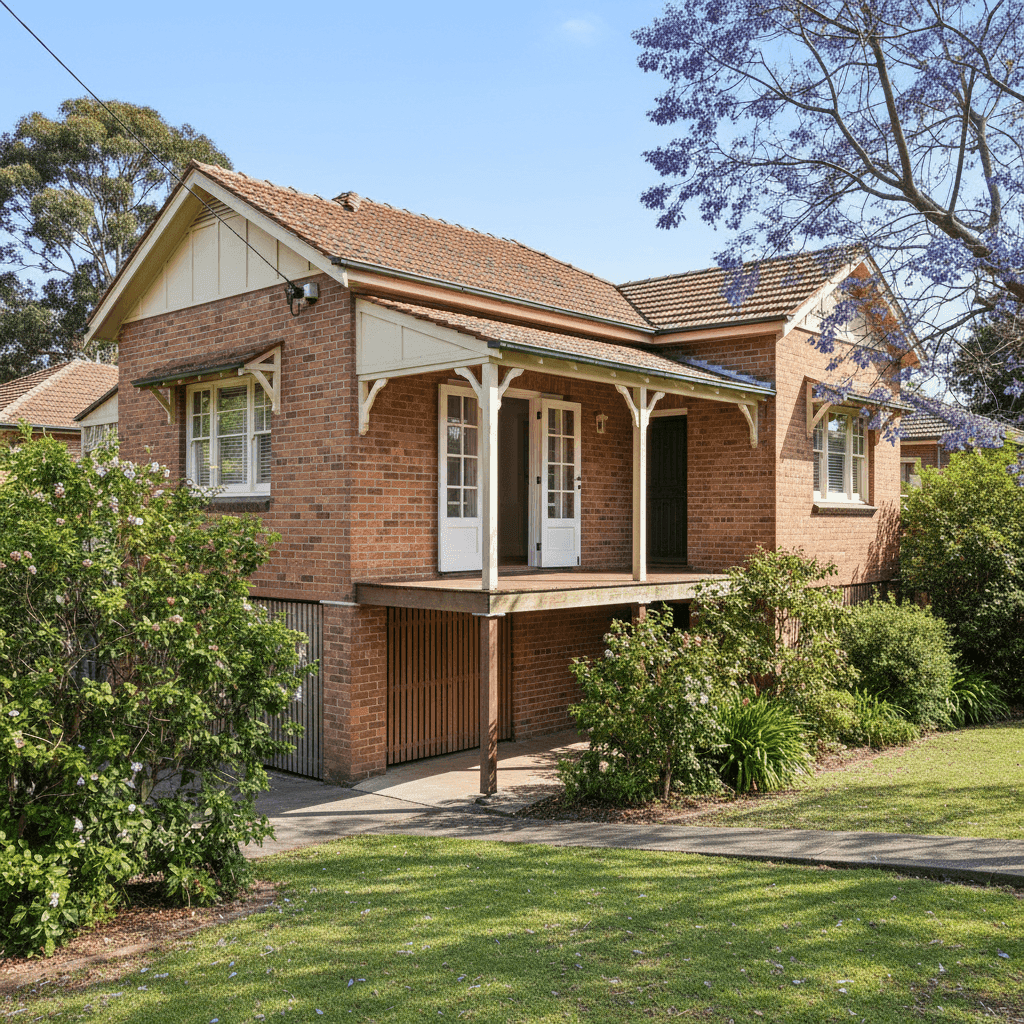
New Lambton is a well-established suburb sitting just west of Newcastle's CBD, known for its leafy streets, Federation-era character homes, and a strong sense of community. It's exactly the kind of suburb where a solid double brick home from the 1950s fits right in — and where understanding the true cost of home insurance can save you thousands. This article breaks down a real building insurance quote for a 3-bedroom, 2-bathroom free standing home in New Lambton (NSW 2305), and puts it into context against local, state, and national benchmarks.
---
Is This Quote Fair?
The short answer: yes — this is a genuinely competitive quote.
At $3,073 per year (or $301/month) for building-only cover on a $550,000 sum insured, this premium has been rated CHEAP — meaning it sits below the suburb average. That's a meaningful distinction in a market where premiums can vary dramatically depending on the insurer, the property's risk profile, and how the quote is structured.
The building excess of $2,000 is on the higher side, which is one of the ways insurers can offer lower headline premiums — essentially, you're agreeing to carry more of the initial risk yourself in exchange for reduced ongoing costs. Whether that trade-off suits you depends on your financial buffer and risk appetite. If you'd prefer a lower excess, it's worth requesting alternative excess options when comparing quotes.
Overall, for a property of this age, construction type, and location, landing below the suburb average is a solid result.
---
How New Lambton Compares
To understand just how competitive this quote is, it helps to look at the broader picture. Here's how the $3,073 annual premium stacks up:
| Benchmark | Premium |
|---|---|
| This quote | $3,073/yr |
| Suburb 25th percentile | $3,113/yr |
| Suburb median | $3,764/yr |
| Suburb average | $4,639/yr |
| Suburb 75th percentile | $5,583/yr |
| NSW state median | $3,770/yr |
| NSW state average | $9,528/yr |
| National median | $2,764/yr |
| National average | $5,347/yr |
| LGA (Lake Macquarie) average | $11,064/yr |
A few things stand out here. First, this quote comes in below the suburb's 25th percentile — meaning it's cheaper than at least 75% of the quotes collected for New Lambton. That's a strong result by any measure.
Second, the NSW state average of $9,528 looks alarming at first glance, but it's heavily skewed by high-risk postcodes — coastal areas, flood zones, and bushfire-prone regions can push averages up significantly. The state median of $3,770 is a far more representative figure for typical NSW homeowners, and this quote still comes in below that.
Third, the Lake Macquarie LGA average of $11,064 is notably high, again likely driven by outlier properties in higher-risk pockets of the region. New Lambton itself appears to be a more insurer-friendly suburb within that LGA.
You can explore more local data on the New Lambton suburb insurance stats page, or broaden your view with NSW state insurance statistics and national home insurance benchmarks.
---
Property Features That Affect Your Premium
Several characteristics of this particular property are worth examining — some work in the homeowner's favour, others introduce complexity.
Double Brick Construction
Double brick is widely regarded as one of the most resilient wall types for Australian homes. It offers excellent structural integrity, strong fire resistance, and good thermal performance. Insurers generally view double brick favourably, as it tends to reduce the likelihood and severity of damage from storms, fire, and everyday wear. For a home built in 1953, double brick construction is also a sign of quality craftsmanship that has stood the test of time.
Tiled Roof
Terracotta or concrete tile roofs are a common feature on mid-century Australian homes and are generally considered a lower-risk roofing material compared to older iron or fibrous cement alternatives. Tiles are durable, fire-resistant, and widely understood by insurers — all of which contribute to more predictable premium pricing.
Elevated on Stumps
The property sits elevated by at least one metre on a stump foundation — a classic feature of older Australian homes, particularly in areas like the Hunter Region. Elevation can be a double-edged sword: it helps with underfloor ventilation and can reduce flood risk in some scenarios, but it also means the subfloor structure (stumps, bearers, joists) needs to be maintained. Insurers will factor in the age of the stumps and the condition of the subfloor when assessing risk. Timber flooring over a stump foundation is particularly vulnerable to moisture and pest damage, so regular inspections are worthwhile.
Above Average Fittings
With above-average fittings quality, the $550,000 sum insured reflects a home that would cost more than average to rebuild to the same standard. Kitchens, bathrooms, and fixtures of a higher specification cost more to replace, which is appropriately captured in the building sum insured.
Ducted Climate Control
The presence of a ducted climate control system adds to the rebuild cost and is correctly factored into the sum insured. These systems can be expensive to replace and are a common source of underinsurance if homeowners overlook them when calculating their building value.
No Pool, No Solar
The absence of a pool and solar panels simplifies the risk profile. Both features can add complexity — and cost — to a home insurance policy, so their absence here contributes to a cleaner, more straightforward premium calculation.
---
Tips for Homeowners in New Lambton
1. Review your sum insured regularly Building costs in the Hunter Region have risen significantly in recent years. A sum insured set even two or three years ago may no longer reflect the true cost of rebuilding your home. Use a building cost estimator annually, and factor in above-average fittings, ducted systems, and the elevated stump foundation when calculating your figure.
2. Get your stumps inspected Homes on stump foundations — especially those built in the 1950s — can be vulnerable to timber decay, termite activity, and movement over time. An inspection by a licensed builder or pest inspector every few years is a smart investment. Some insurers may also ask about subfloor condition, so having documentation of recent inspections can be useful.
3. Compare quotes before your renewal date Even if you're happy with your current insurer, the home insurance market in NSW is competitive. Premiums can shift significantly from year to year, and loyalty doesn't always pay. Set a reminder to compare quotes at least 30 days before your renewal so you have time to switch if a better option emerges.
4. Consider your excess carefully The $2,000 building excess on this policy is relatively high. If you have a healthy emergency fund, this trade-off (lower premium, higher excess) makes sense. But if you'd struggle to cover a $2,000 outlay after a weather event or accidental damage, it's worth requesting quotes with a lower excess to compare the overall value.
---
Find a Better Deal with CoverClub
Whether you're renewing your policy or insuring a new property, comparing quotes is the single most effective way to avoid overpaying. CoverClub makes it easy to see how your premium stacks up against real data from your suburb, your state, and across Australia. Get a home insurance quote today and find out if you're getting the deal you deserve.