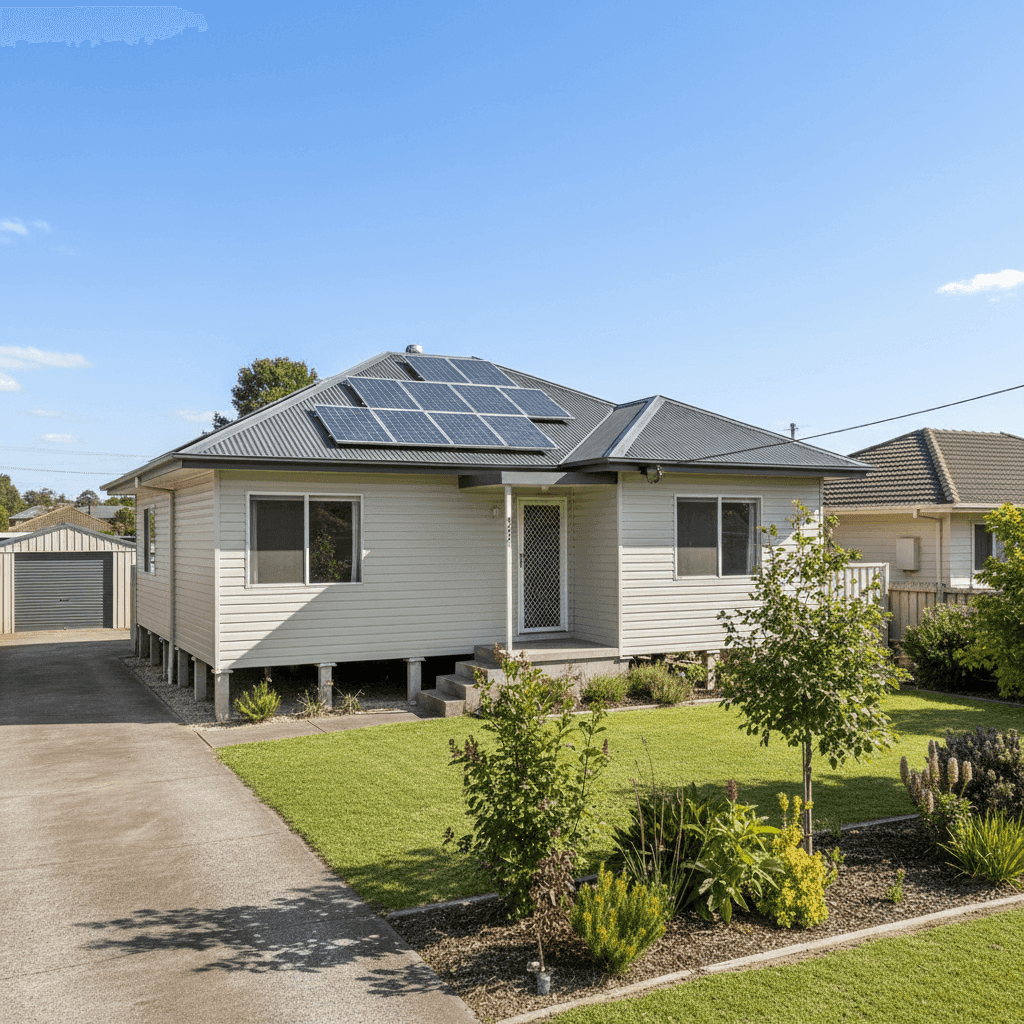
Home insurance costs can vary dramatically depending on where you live, what your home is made of, and how much cover you need. To help Australians make sense of their premiums, we regularly analyse real quotes from across the country. In this article, we take a close look at a home and contents insurance quote for a three-bedroom free standing home in Newborough, VIC 3825 — a quiet residential town in the Latrobe Valley region of Gippsland — and break down whether it represents good value.
---
Is This Quote Fair?
The quote in question comes in at $1,742 per year (or $177 per month) for combined home and contents cover, with a building sum insured of $612,000 and contents valued at $150,000. The building excess is $3,000 and the contents excess is $1,000.
Our price rating for this quote is FAIR — Around Average, which is a reasonable outcome for a property of this age and construction type. It sits comfortably within the interquartile range for Newborough, meaning it's neither suspiciously cheap nor unusually expensive. That said, "fair" doesn't necessarily mean you can't do better — it simply means this quote is in the ballpark of what most homeowners in the area are paying.
Given the property's characteristics — including its 1953 construction date, vinyl cladding walls, stump foundation, and timber/laminate flooring — the premium reflects a measured level of risk that insurers associate with older, elevated homes in regional Victoria.
---
How Newborough Compares
Context is everything when evaluating an insurance premium. Here's how this quote stacks up against local, state, and national benchmarks:
| Benchmark | Average | Median |
|---|---|---|
| Newborough (3825) | $2,211/yr | $1,832/yr |
| Victoria (VIC) | $3,000/yr | $2,718/yr |
| National | $5,347/yr | $2,764/yr |
| Wellington LGA | $4,409/yr | — |
At $1,742 per year, this quote sits below the Newborough suburb median of $1,832 and well below the suburb average of $2,211 — a positive sign. It also falls meaningfully beneath the Victorian state average of $3,000/yr and is a fraction of the national average of $5,347/yr, which is heavily influenced by high-risk coastal and cyclone-prone areas in Queensland and Western Australia.
Compared to the broader Wellington LGA average of $4,409/yr, this quote looks particularly competitive. The LGA figure is likely elevated by properties in higher-risk rural and bushfire-exposed areas within the Wellington Shire, which stretches from the Gippsland coast to the alpine foothills.
The suburb's 25th percentile sits at $1,359/yr, meaning roughly a quarter of Newborough homeowners are paying less — so there is room to shop around. But based on the property's profile, this quote appears to reflect fair and considered pricing. Our sample for Newborough draws from 46 quotes, giving us a solid basis for comparison.
---
Property Features That Affect Your Premium
Several characteristics of this property directly influence the premium calculation. Understanding these factors can help you anticipate how insurers view your home.
Age of Construction (1953)
Homes built in the early 1950s are well outside the modern building code era. Insurers factor in the higher likelihood of ageing infrastructure — including plumbing, wiring, and structural components — when pricing older homes. Rebuilding or repairing a period home can also be more costly due to non-standard materials and labour requirements, which helps explain the $612,000 building sum insured for a 130 sqm home.
Vinyl Cladding Exterior
Vinyl cladding is a common external wall material in regional Victoria, particularly on homes that have been updated or renovated over the decades. While it's generally considered a moderate-risk material (more fire-resistant than weatherboard, but less robust than brick), it can be a factor in how insurers assess weather-related damage claims.
Stump Foundation
Homes on stumps — also known as raised or pier foundations — are particularly common in older regional Victorian properties. While they offer practical benefits like underfloor ventilation, they can be more vulnerable to movement, subsidence, and pest damage. Insurers may price this in as a slightly elevated structural risk compared to concrete slab homes.
Timber and Laminate Flooring
Timber floors are susceptible to water damage, swelling, and warping, which can make water-related claims more expensive to settle. This is a factor insurers consider, particularly in areas with seasonal rainfall variability like Gippsland.
Solar Panels
The presence of solar panels adds replacement value to the property and can slightly increase the premium, as they represent an additional insurable asset on the roof. Ensure your policy explicitly covers solar panels — not all standard home insurance policies include them automatically.
Ducted Climate Control
Ducted heating and cooling systems are a meaningful addition to the home's contents and fixed fittings value. These systems can be costly to repair or replace, and their inclusion reinforces the need for adequate sum insured levels.
No Pool, No Cyclone Risk
The absence of a pool removes a common liability risk factor, and Newborough's location in inland Gippsland means it falls outside designated cyclone risk zones — both of which work in the homeowner's favour from a pricing perspective.
---
Tips for Homeowners in Newborough
Whether you're reviewing an existing policy or shopping for new cover, here are four practical tips tailored to homeowners in this part of Victoria.
1. Review your building sum insured regularly Construction costs have risen sharply in regional Victoria over recent years. A sum insured of $612,000 for a 130 sqm home may be appropriate today, but it's worth reassessing annually. Underinsurance is one of the most common — and costly — mistakes homeowners make. Use a building cost calculator or speak with a local builder to get a realistic rebuild estimate.
2. Check your solar panel coverage Many standard policies don't automatically cover rooftop solar systems, or they may cover them only under certain conditions. Contact your insurer to confirm whether your solar panels are included in your building sum insured and what events are covered (e.g., storm damage, fire, electrical fault).
3. Consider your excess settings strategically This policy carries a $3,000 building excess and $1,000 contents excess. A higher excess typically lowers your premium, but make sure you could comfortably cover that amount out of pocket in the event of a claim. If cash flow is a concern, a lower excess with a slightly higher premium may be the more prudent choice.
4. Shop around at renewal time Even if your current quote is rated "fair," the insurance market is competitive and premiums can shift significantly between providers. Use a comparison platform like CoverClub to benchmark your renewal quote against the broader market before committing for another year.
---
Compare Your Home Insurance Quote Today
Whether you're a long-term Newborough resident or new to the area, it pays to know what others are paying for similar cover. CoverClub aggregates real quote data from across Australia, giving you transparent, suburb-level insights to help you make an informed decision. Check the latest stats for Newborough or get a quote today to see how your premium stacks up.