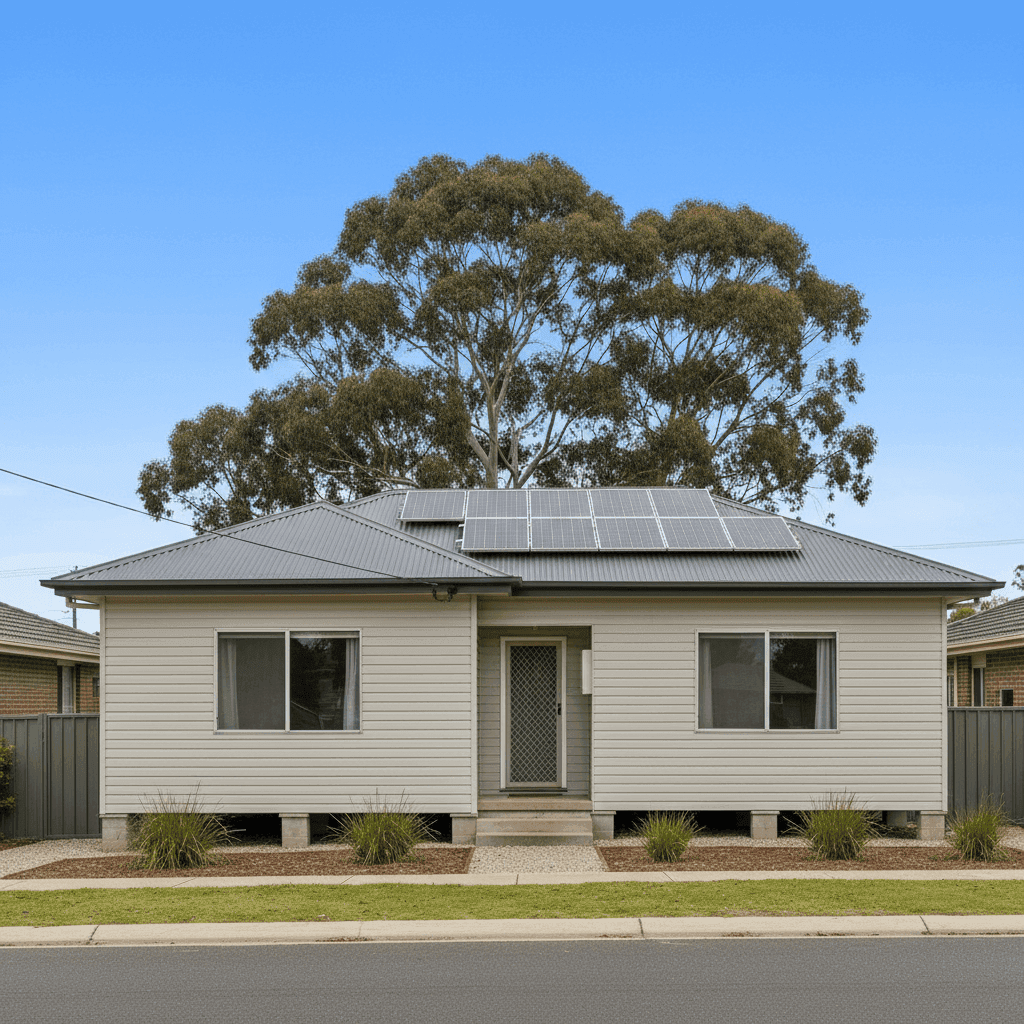
Newborough is a quiet residential town in Victoria's Latrobe Valley, and like many regional communities, homeowners here are increasingly focused on getting the best value from their insurance. This article breaks down a real home and contents insurance quote for a three-bedroom free standing home in Newborough (VIC 3825), comparing it against local, state, and national benchmarks — so you can make a more informed decision about your own cover.
---
Is This Quote Fair?
The quote in question comes in at $1,605 per year (or approximately $163/month) for combined home and contents cover, with a building sum insured of $502,000 and contents valued at $99,000. The building excess is $3,000 and the contents excess is $1,000.
Our price rating for this quote is FAIR — Around Average, and the data backs that up. Based on 46 quotes collected for Newborough (3825), the suburb's average annual premium sits at $2,211, with a median of $1,832. At $1,605, this quote lands just below the suburb median — meaning it's slightly better than what most Newborough homeowners are paying, though it's not quite in the most competitive tier (the 25th percentile sits at $1,359/yr).
In plain terms: this isn't a bargain, but it's not overpriced either. For a 1953-built home with some features that insurers scrutinise closely (more on that below), landing below the local median is a reasonable outcome.
---
How Newborough Compares
Context matters enormously when evaluating an insurance quote. Here's how Newborough stacks up against broader benchmarks:
| Benchmark | Average Premium | Median Premium |
|---|---|---|
| Newborough (3825) | $2,211/yr | $1,832/yr |
| Victoria (VIC) | $3,000/yr | $2,718/yr |
| National | $5,347/yr | $2,764/yr |
| Wellington LGA | $4,409/yr | — |
A few things stand out here. First, Newborough homeowners generally pay significantly less than the Victorian state average — roughly $789/yr less at the median level. That's a meaningful difference, and it reflects the relatively lower risk profile of the area compared to coastal, flood-prone, or bushfire-exposed parts of the state.
Second, the Wellington LGA average of $4,409/yr is notably higher than the Newborough suburb average. This suggests that while Newborough itself is reasonably affordable to insure, other parts of the Wellington local government area carry higher risk — potentially due to flood exposure along the Latrobe River system or other geographic factors. If you're curious about how the broader region shapes up, the Victoria insurance stats page has a detailed breakdown.
Nationally, the picture is stark: the national average of $5,347/yr is more than three times this quote. Much of that is driven by high-risk postcodes in Queensland and Northern Australia, but it's a useful reminder of just how variable home insurance can be across the country.
---
Property Features That Affect Your Premium
Every property has a unique risk profile, and insurers price accordingly. Here are the key features of this Newborough home and how they likely influence the premium:
Construction Era (1953)
Homes built in the early 1950s present a mixed picture for insurers. On one hand, they've proven their structural durability. On the other, older homes can have ageing plumbing, wiring, and foundations that increase the likelihood of claims. Insurers often apply a loading to pre-1960s homes, so it's worth checking whether your policy covers gradual deterioration or only sudden damage events.
Vinyl Cladding Exterior
Vinyl cladding is a cost-effective and low-maintenance wall material, but it can be a concern for insurers due to its flammability compared to brick or fibre cement. Some insurers may rate this material slightly higher for fire risk, particularly in areas with any bushfire exposure.
Steel/Colorbond Roof
This is a positive for insurability. Colorbond roofing is durable, fire-resistant, and widely regarded as one of the better roofing materials for Australian conditions. It's unlikely to attract any premium loading and may even be viewed favourably compared to older tile or asbestos-based roofing common in homes of this era.
Stump Foundation
Homes on stumps (also known as pier-and-beam foundations) are common in regional Victoria, especially in older builds. While they allow for good ventilation and can be easier to repair than slab foundations, they can be more vulnerable to movement, moisture, and pest damage. Insurers may factor this in when assessing structural risk.
Solar Panels
The property includes solar panels, which are a growing consideration for home insurers. Most standard home insurance policies cover solar panels as a fixture, but it's worth confirming this with your insurer — particularly whether the panels are covered for accidental damage, storm damage, and power surge events.
Ducted Climate Control
Ducted heating and cooling systems add value to a home and are generally covered under building insurance as a fixed fixture. Their presence contributes to the overall building sum insured, so ensuring your $502,000 building cover accurately reflects the cost to rebuild — including these systems — is important.
---
Tips for Homeowners in Newborough
1. Review Your Building Sum Insured Regularly
Construction costs have risen sharply in recent years. A sum insured of $502,000 for a 130 sqm home equates to roughly $3,862/sqm — which is within a reasonable range for regional Victoria, but worth verifying against current rebuild cost estimates. Underinsurance is one of the most common and costly mistakes homeowners make.
2. Ask About Your Excess Options
This quote carries a $3,000 building excess, which is on the higher side. A higher excess typically lowers your premium, but it also means more out-of-pocket costs if you need to claim. Consider whether you'd comfortably cover that amount in an emergency, and compare quotes with different excess levels to find your sweet spot.
3. Confirm Solar Panel Coverage
With solar panels on the roof, double-check that your policy explicitly covers them — both as a structural fixture and for electrical faults or storm damage. Not all policies treat solar panels the same way, and some require a separate endorsement.
4. Shop Around at Renewal Time
Even a "fair" quote can be beaten. Insurance premiums can shift significantly between providers, and loyalty doesn't always pay. The 25th percentile for Newborough sits at $1,359/yr — meaning roughly one in four quotes is noticeably cheaper than this one. It costs nothing to compare.
---
Compare Your Home Insurance at CoverClub
Whether you're a long-time Newborough resident or new to the area, getting the right cover at the right price starts with comparing your options. At CoverClub, we make it easy to see real quotes side by side, with transparent pricing data drawn from thousands of properties across Australia. Get a home insurance quote today and find out where your premium really sits.