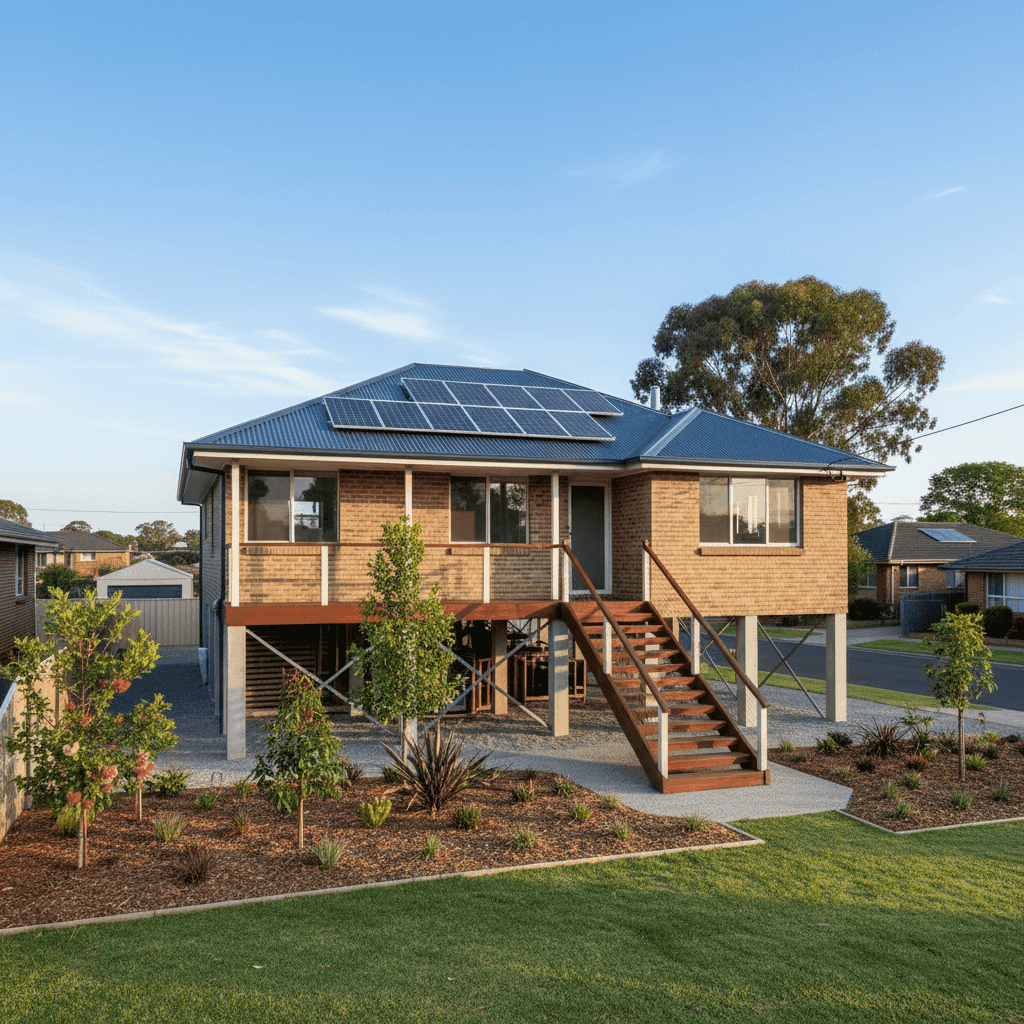
If you own a free standing home in Newborough, VIC 3825, you're probably curious whether the premium you're paying is competitive — or whether you're leaving money on the table. This article breaks down a real home and contents insurance quote for a three-bedroom, two-bathroom brick veneer property in Newborough, comparing it against local, state, and national benchmarks to help you make a more informed decision.
---
Is This Quote Fair?
The quote in question comes in at $2,808 per year (or $269/month) for combined home and contents cover, with a building sum insured of $858,000 and contents valued at $110,000. The building excess is $2,000 and the contents excess is $1,000.
Our pricing analysis rates this quote as Expensive — above average for the Newborough area.
To put that in context: the suburb average premium for Newborough sits at $2,211 per year, with a median of $1,832. That means this quote is roughly $597 above the suburb average and nearly $1,000 above the suburb median — a meaningful gap worth investigating.
That said, "expensive" doesn't automatically mean "wrong." A higher sum insured, above-average fittings, and certain property characteristics (more on those below) can all legitimately push a premium upward. The key is understanding why you're paying more, and whether the cover justifies the cost.
---
How Newborough Compares
Understanding where Newborough sits in the broader insurance landscape is essential context for any homeowner.
| Benchmark | Average Premium | Median Premium |
|---|---|---|
| Newborough (3825) | $2,211/yr | $1,832/yr |
| Victoria (VIC) | $3,000/yr | $2,718/yr |
| National | $5,347/yr | $2,764/yr |
| LGA (Wellington) | $4,409/yr | — |
A few things stand out here. First, Newborough premiums are noticeably lower than the Victorian state average — good news for locals. The VIC state average of $3,000/yr reflects the diversity of risk across the state, including bushfire-prone regions and flood-affected areas that can significantly inflate premiums elsewhere.
Second, while the national average of $5,347/yr looks eye-watering, it's heavily skewed by high-risk coastal and cyclone-prone regions in Queensland and Western Australia. The national median of $2,764 is a more realistic comparison point — and this quote sits just above that figure.
Perhaps the most telling comparison is against the Wellington LGA average of $4,409/yr. The fact that this quote of $2,808 sits well below the LGA average suggests that, while it's above the Newborough suburb average, it's not out of step with the broader regional picture. Wellington Shire encompasses a wide range of properties, including many in higher-risk bushfire zones, which drags the LGA average upward.
You can explore live suburb-level data at the Newborough insurance stats page.
---
Property Features That Affect Your Premium
Several characteristics of this particular property have a direct bearing on what insurers charge. Here's how each one plays out:
Brick Veneer Walls & Colorbond Roof Brick veneer is generally viewed favourably by insurers — it's durable, fire-resistant, and relatively low-maintenance. A steel Colorbond roof is similarly well-regarded for its longevity and resistance to the elements. Together, these construction materials typically attract more competitive premiums than timber or fibrous cement alternatives.
Stump Foundation & Elevated Position This property sits on stumps and is elevated by at least one metre — a classic profile for older Victorian homes, particularly those built in the 1960s. The elevated position can actually be a positive from a flood-risk perspective, as water is less likely to enter the living areas. However, stumped homes can be more expensive to repair after events like earthquakes or significant ground movement, which some insurers factor into their pricing.
Construction Year: 1965 Older homes often attract higher premiums due to the cost of restoring period features and the likelihood of outdated wiring, plumbing, or structural elements. A home built in 1965 may have original electrical systems or plumbing that increases the risk of fire or water damage — something insurers price accordingly.
Above-Average Fittings Above-average fittings — think stone benchtops, quality cabinetry, premium fixtures — increase the cost to rebuild or repair, which is reflected in a higher building sum insured of $858,000. This is a legitimate driver of premium costs and shouldn't be underestimated.
Solar Panels Solar panels are increasingly common on Australian rooftops, but they do add complexity to a claim. Panels can be damaged by hail, storms, or falling debris, and their replacement cost needs to be factored into your sum insured. Some insurers include them automatically; others require specific endorsement.
Ducted Climate Control Ducted systems are a significant fixed asset and can be costly to repair or replace. Their inclusion in the building sum insured is appropriate and adds to the overall replacement value of the property.
---
Tips for Homeowners in Newborough
1. Review your sum insured annually With $858,000 as the building sum insured, it's worth cross-checking this figure against a professional quantity surveyor's estimate or an online rebuild calculator. Over-insuring wastes money; under-insuring can leave you severely out of pocket after a major event.
2. Consider increasing your excess to reduce your premium The building excess on this policy is $2,000. If you have the financial buffer to absorb a higher out-of-pocket cost in the event of a claim, opting for a higher excess — say $2,500 or $3,000 — can meaningfully reduce your annual premium.
3. Ask about discounts for solar and security features Some insurers offer discounts for homes with solar panels, monitored alarm systems, or deadbolt locks. It's worth specifically asking any insurer whether your existing features qualify for a reduced rate.
4. Don't auto-renew without comparing Insurance loyalty rarely pays off. Insurers frequently offer better rates to new customers, and the market in Newborough has enough competition to make shopping around worthwhile. Even if you're happy with your current insurer, getting a comparison quote once a year takes minutes and could save you hundreds.
---
Compare Your Home Insurance Today
Whether this quote is the right fit depends on your individual circumstances, risk tolerance, and what's included in the policy fine print. The premium figures above give you a solid benchmark — but the only way to know if you're getting genuine value is to compare.
[Get a home insurance quote at CoverClub](https://coverclub.com.au/?focus=address) and see how your property stacks up against the market in minutes. No jargon, no pressure — just clear, comparable data to help you decide with confidence.