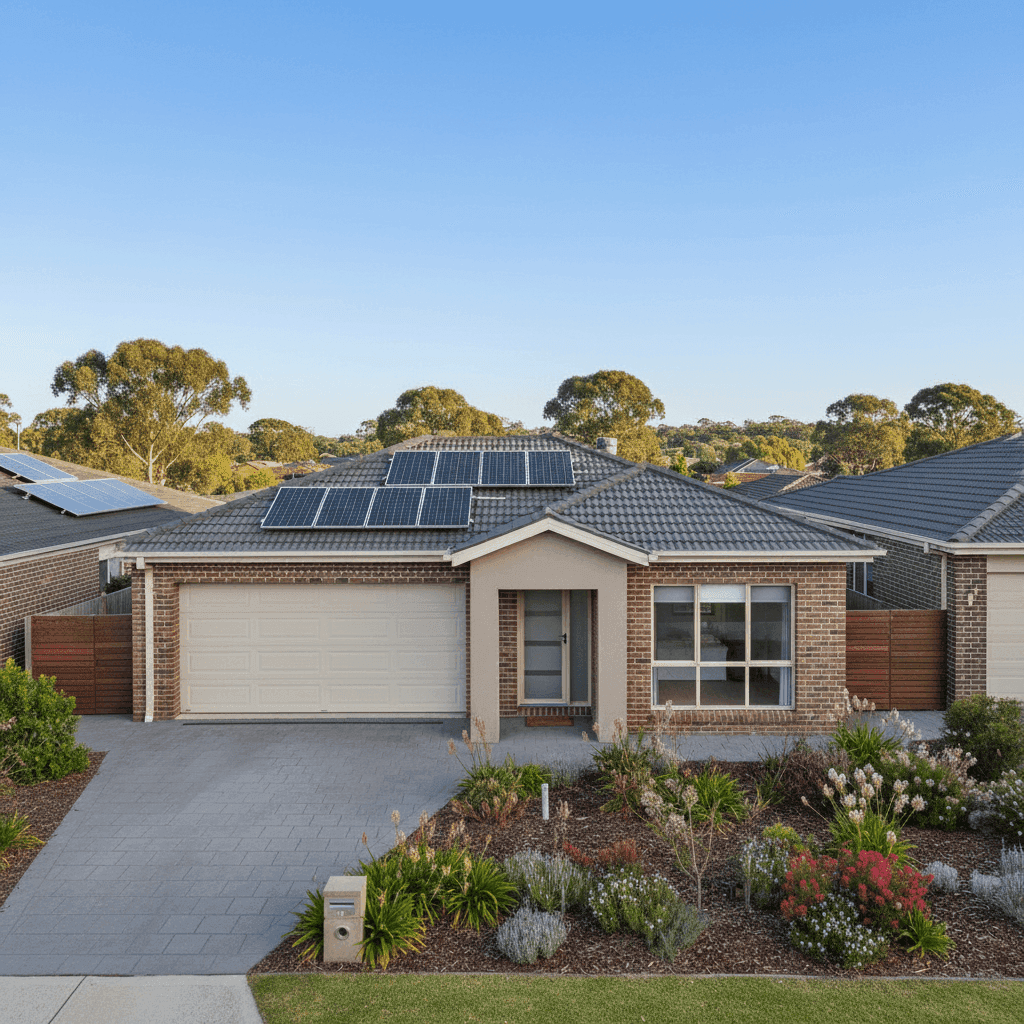
Newington is a well-planned suburb in Sydney's western corridor, sitting within the City of Canada Bay LGA and best known for its origins as the athletes' village for the 2000 Sydney Olympics. Today it's a sought-after residential area filled with quality homes — including plenty of brick veneer free-standing homes much like the one we're analysing today. If you own or are insuring a property in this postcode, understanding what a fair premium looks like can save you hundreds of dollars a year.
This article breaks down a real home and contents insurance quote for a 3-bedroom, 2-bathroom free-standing home in Newington (NSW 2127), compares it against local, state and national benchmarks, and offers practical tips for getting the best value on your cover.
---
Is This Quote Fair?
The quote in question comes in at $1,861 per year (or $178/month) for combined home and contents insurance, covering a building sum insured of $750,000 and contents valued at $70,000. Both the building and contents excess are set at $2,000.
Our pricing engine has rated this quote as FAIR — Around Average, which is an honest and useful result. It means you're not being overcharged significantly, but there's also room to shop around and potentially do better.
To put it in context:
- The suburb average for Newington is $1,941/yr, and the suburb median sits at $1,896/yr — meaning this quote comes in below both, which is a positive sign.
- The 25th percentile for the suburb is $1,108/yr, suggesting that roughly a quarter of comparable quotes in the area are notably cheaper — worth investigating if you haven't already compared multiple insurers.
- The 75th percentile is $2,431/yr, so this quote is comfortably below the more expensive end of the market.
In short: you're not overpaying dramatically, but the spread of prices in Newington is wide enough that shopping around could yield meaningful savings. Check out Newington suburb insurance stats for a fuller picture of how premiums are distributed in your postcode.
---
How Newington Compares
One of the most striking things about this quote is how favourably Newington compares to the broader NSW and national picture.
| Benchmark | Average Premium | Median Premium |
|---|---|---|
| Newington (2127) | $1,941/yr | $1,896/yr |
| LGA (Canada Bay) | $2,042/yr | — |
| NSW State | $9,528/yr | $3,770/yr |
| National | $5,347/yr | $2,764/yr |
The NSW state average of $9,528/yr is heavily skewed by high-risk regions — think flood-prone inland areas, bushfire zones and cyclone-exposed coastal communities in northern NSW. The median of $3,770/yr is a more representative figure, and Newington still comes in well below it.
Compared to the national median of $2,764/yr, a quote of $1,861/yr for a well-built Sydney suburban home is genuinely competitive. Newington benefits from its relatively low natural hazard exposure — it's not in a cyclone risk area, and while parts of greater Sydney face bushfire or flood risk, Newington's urban setting and modern infrastructure keep risk ratings manageable.
The Canada Bay LGA average of $2,042/yr also sits above this quote, reinforcing the "fair to good" assessment.
---
Property Features That Affect Your Premium
Insurers assess dozens of property characteristics when calculating a premium. Here's how the key features of this home likely influence the price:
Brick Veneer Walls Brick veneer is one of the most common external wall materials in Australian suburban homes built from the 1980s onwards. It's generally viewed favourably by insurers — it's durable, fire-resistant and relatively straightforward to repair or rebuild. This likely contributes to a more competitive premium compared to properties with timber or lightweight cladding.
Concrete Roof Concrete tile roofing is robust and long-lasting, with strong resistance to fire and moderate wind events. Insurers tend to rate concrete roofs positively, as they're less susceptible to storm damage than corrugated iron or older terracotta tiles that may be brittle.
Slab Foundation A concrete slab foundation is standard for homes of this era and construction type. It's structurally sound and presents minimal additional risk to insurers compared to older pier-and-beam or suspended timber floor systems.
Construction Year: 2005 A home built in 2005 is relatively modern and would have been constructed to the building codes of that period, which include improved standards for structural integrity, fire safety and energy efficiency. This generally translates to lower rebuild risk and more predictable repair costs.
Solar Panels This property includes rooftop solar panels, which can be a double-edged sword from an insurance perspective. Solar panels add value to the property and may increase the building sum insured needed for an accurate replacement cost. Some insurers cover solar panels automatically under building cover; others treat them as an optional extra. It's worth confirming your policy wording explicitly covers the panels, including damage from storms or electrical faults.
Ducted Climate Control Ducted air conditioning systems are a significant fixed asset and are typically covered under building insurance. However, they can also be a source of claims — particularly from electrical or mechanical breakdown. Ensuring your sum insured reflects the replacement cost of the ducted system is important.
Timber/Laminate Flooring Timber and laminate flooring can be costly to replace, particularly in a 153 sqm home. This is a contents or fixtures consideration depending on your policy, so it's worth checking whether your flooring is covered under building or contents — and at what value.
No Pool The absence of a swimming pool removes one potential liability and maintenance risk factor, which can contribute to a slightly lower premium.
---
Tips for Homeowners in Newington
1. Review your building sum insured annually With construction costs rising across Australia, the cost to rebuild your home may have increased significantly since you last set your sum insured. A 153 sqm brick veneer home in Sydney could cost well over $750,000 to rebuild from scratch when you factor in demolition, professional fees and current labour and materials costs. Use a building cost calculator or speak with a quantity surveyor to make sure you're not underinsured.
2. Confirm solar panel coverage in your policy Don't assume your solar panels are automatically covered. Read your Product Disclosure Statement (PDS) carefully to understand whether panels are included under building cover, what events are covered (storm, fire, accidental damage), and whether there's a separate sub-limit. Some insurers offer specific solar panel endorsements.
3. Compare at least three quotes before renewing The 25th to 75th percentile spread in Newington runs from $1,108/yr to $2,431/yr — a gap of over $1,300. That's a significant range for what may be very similar cover. Loyalty doesn't always pay in insurance; comparing quotes at renewal time is one of the simplest ways to reduce your premium. Get a quote at CoverClub to see what's available for your property.
4. Consider your excess level carefully Both the building and contents excess on this policy are set at $2,000. Choosing a higher excess generally reduces your premium, but you need to be comfortable covering that amount out of pocket if you need to make a claim. Conversely, if cash flow is a concern, a lower excess with a slightly higher premium may be worth it. Run the numbers both ways before deciding.
---
Ready to Compare?
Whether you're renewing your existing policy or shopping for cover for the first time, comparing quotes is the single most effective way to ensure you're getting fair value. CoverClub makes it easy to see multiple quotes side by side, tailored to your specific property in Newington.
Start comparing home insurance quotes now — it takes just a few minutes and could save you hundreds.