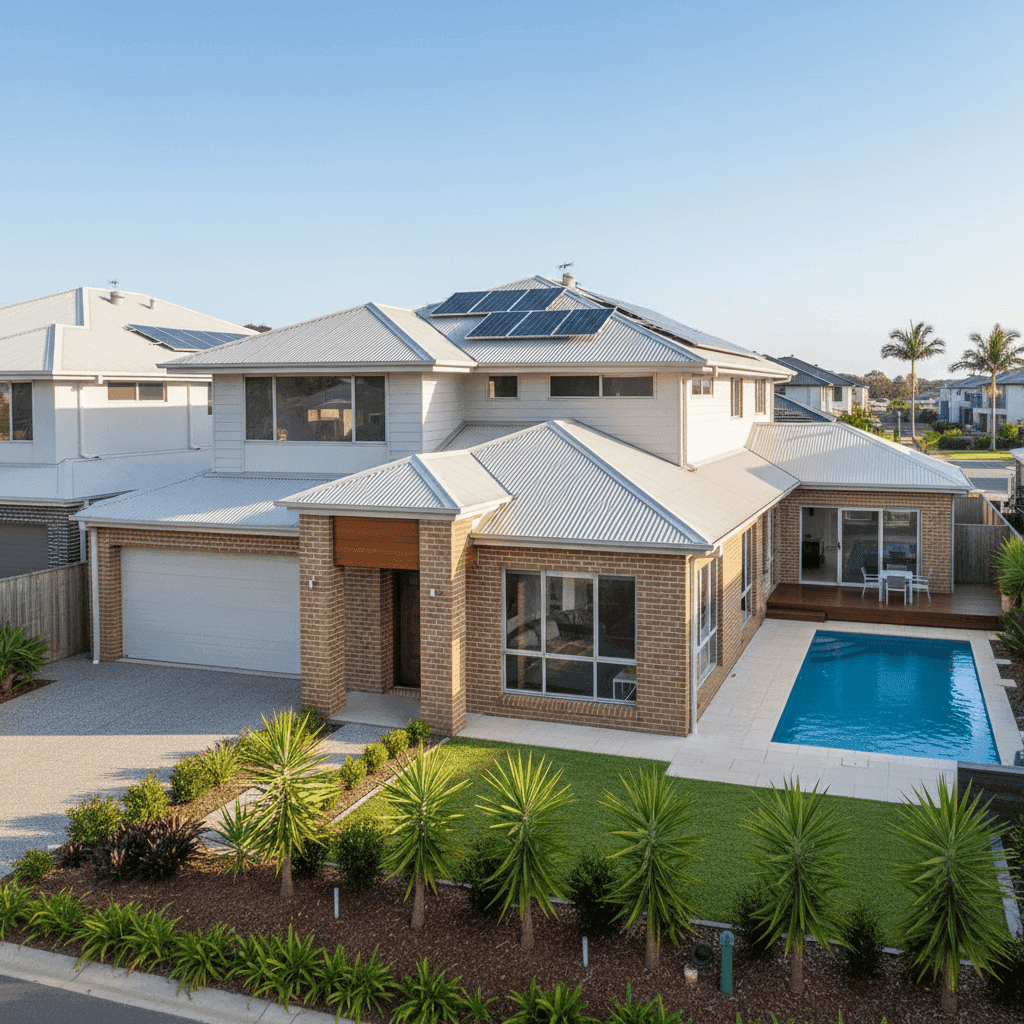
Newport, QLD 4020 is a sought-after coastal suburb on the Redcliffe Peninsula, known for its marina lifestyle, modern residential estates, and proximity to Moreton Bay. If you own a free standing home here — particularly a newer brick veneer build — understanding what you should expect to pay for home and contents insurance is an important part of protecting one of your biggest assets. This article breaks down a real insurance quote for a four-bedroom, two-bathroom home in Newport and puts the numbers into context using suburb, state, and national benchmarks.
---
Is This Quote Fair?
The quote in question comes in at $2,520 per year (or $246/month) for combined home and contents cover, with a building sum insured of $662,000 and contents valued at $50,000. Both the building and contents excess are set at $1,000.
Our price rating for this quote is FAIR — Around Average, and the data backs that up. At $2,520 annually, this premium sits comfortably between the suburb's 25th percentile ($1,873/yr) and median ($2,979/yr). In other words, roughly half of Newport homeowners in our dataset are paying more than this, and about a quarter are paying less. That's a reasonable position to be in — not the cheapest on the market, but certainly not overpriced.
It's also worth noting that Newport's insurance market has a wide spread. The suburb average premium is a striking $7,918/yr, heavily skewed by high-end policies and larger sums insured. The 75th percentile sits at $7,211/yr, which tells you that a significant portion of homeowners in this postcode are paying quite a lot more. Against that backdrop, $2,520/yr looks quite competitive.
---
How Newport Compares
To get a clearer picture, it helps to zoom out and look at the broader market. Here's how this quote stacks up across different comparison points:
| Benchmark | Annual Premium |
|---|---|
| This Quote | $2,520 |
| Newport Suburb Median | $2,979 |
| Newport Suburb Average | $7,918 |
| Moreton Bay LGA Average | $3,145 |
| QLD State Median | $3,931 |
| QLD State Average | $4,547 |
| National Median | $2,716 |
| National Average | $2,965 |
A few things stand out here. First, Queensland homeowners pay significantly more for home insurance than the national average — a reflection of the state's elevated exposure to severe weather events including storms, flooding, and hail. The QLD state average of $4,547/yr is more than 50% higher than the national average of $2,965/yr.
Second, this particular quote actually tracks below the national median of $2,716/yr when you consider it's for a four-bedroom home with a pool, solar panels, and ducted climate control — features that can push premiums higher. Landing at $2,520/yr for a property of this size and specification is a solid outcome.
You can explore more suburb-level data on the Newport QLD 4020 insurance stats page, dig into Queensland-wide insurance trends, or compare against national home insurance benchmarks.
---
Property Features That Affect Your Premium
Every property is different, and insurers price risk based on a combination of factors. Here's how the specific characteristics of this Newport home are likely influencing the premium:
Brick Veneer Walls & Colorbond Roof Brick veneer is generally regarded favourably by insurers — it's durable, fire-resistant, and relatively low-maintenance. Combined with a steel Colorbond roof, this construction type is considered robust and well-suited to the Queensland climate. Colorbond roofing in particular performs well in high-wind events and resists corrosion, which can work in your favour at premium time.
Concrete Slab Foundation A slab foundation is a strong, stable base that reduces the risk of subsidence and pest-related structural damage compared to older stumped or timber-framed homes. Insurers tend to view slab construction positively, especially in coastal areas where soil movement can be a concern.
Built in 2006 At roughly 20 years old, this home is young enough to benefit from modern building standards — including improved cyclone and storm-resistant construction codes introduced in Queensland following the 1990s — while being old enough that any early construction defects would likely have already surfaced. This is generally a sweet spot for insurers.
Swimming Pool Pools add value to a property but also introduce liability considerations. Most home insurance policies include public liability cover, which becomes relevant if a guest is injured around the pool. It's worth confirming your policy's liability limits and any specific conditions around pool fencing compliance.
Solar Panels Solar panels are increasingly common on Australian rooftops, but they do add complexity to a home insurance policy. Panels can be damaged by hail, storm debris, or fire, and their replacement cost can be significant. Check whether your policy covers solar panels as part of the building sum insured or whether they require a separate schedule.
Ducted Climate Control Ducted air conditioning systems are a meaningful asset — and a costly one to repair or replace. Ensuring your building sum insured adequately accounts for the replacement cost of built-in systems like ducted climate control is important to avoid being underinsured.
No Cyclone Risk Newport falls outside Queensland's designated cyclone risk zones, which is a meaningful premium advantage. Properties in cyclone-prone regions of North Queensland often attract significant loading on their premiums. The absence of this risk factor likely contributes to the relatively competitive quote seen here.
---
Tips for Homeowners in Newport
1. Review your building sum insured regularly Construction costs have risen sharply in recent years across Australia. A sum insured of $662,000 for a 214 sqm brick veneer home in Newport may be appropriate today, but it's worth reassessing annually — or after any renovations — to ensure you're not underinsured. Use a building cost calculator or ask your insurer to review the replacement cost estimate.
2. Confirm solar panel and pool coverage Don't assume these features are automatically covered. Ask your insurer specifically how solar panels are treated (are they part of the building sum insured or excluded?) and what liability conditions apply to your pool. Gaps in coverage here can be expensive to discover after a claim.
3. Consider your excess strategically Both the building and contents excess on this policy are set at $1,000. Opting for a higher voluntary excess — say, $2,000 — can reduce your annual premium, sometimes meaningfully. If you have a solid emergency fund and are unlikely to make small claims, this trade-off can make financial sense.
4. Shop the market at renewal Even a "fair" premium can often be improved with a bit of comparison shopping. Insurers price risk differently, and loyalty doesn't always pay — in fact, many providers offer better rates to new customers. Set a reminder to compare quotes a few weeks before your renewal date each year.
---
Compare Your Home Insurance Quote Today
Whether you're a Newport local or looking at properties across the Redcliffe Peninsula, it pays to know what the market looks like before you commit to a policy. CoverClub makes it easy to benchmark your quote against real data from your suburb, your state, and across Australia.
Get a home insurance quote and compare your options at CoverClub →