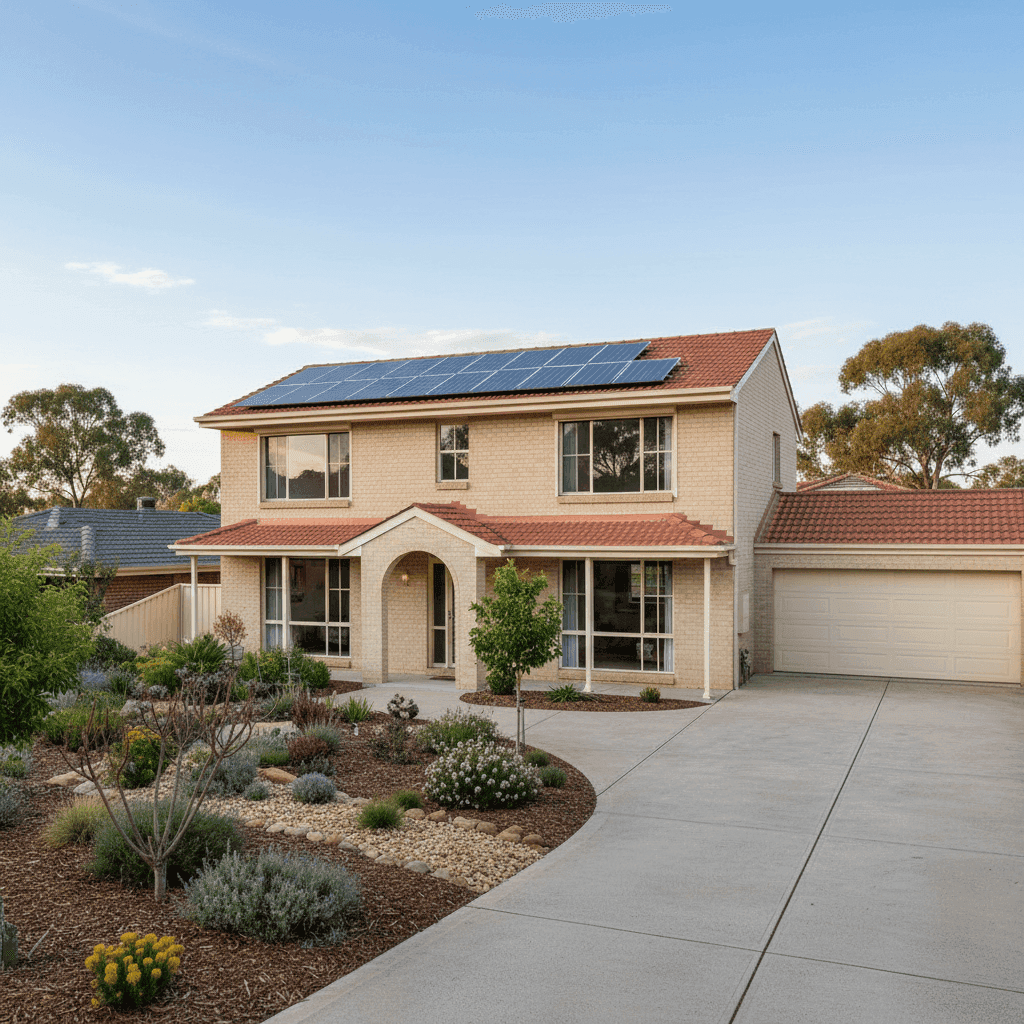
Newton is a well-established suburb in Adelaide's eastern foothills, sitting within the City of Campbelltown. It's a popular choice for families thanks to its leafy streets, proximity to the Torrens Linear Park, and solid housing stock — much of it built from the 1970s through to the 1990s. If you own a free standing home here, understanding what you should be paying for home and contents insurance is a smart financial move. This article breaks down a real quote for a 4-bedroom, 2-bathroom double brick home in Newton SA 5074 and puts it in context against local, state, and national benchmarks.
---
Is This Quote Fair?
The quote in question comes in at $2,033 per year (or $195/month) for combined home and contents cover, with a building sum insured of $751,000 and contents valued at $85,000. Both the building and contents excess are set at $500.
Our price rating for this quote is Expensive — above average for the Newton area.
To understand why, consider the local context. The suburb average premium in Newton sits at just $1,188 per year, with a median of $1,231. This quote lands $845 above the suburb average — that's roughly 71% more than what comparable Newton homeowners are typically paying. Even at the 75th percentile (meaning only 25% of quotes are higher), the figure is $1,383 — still well below this quote's $2,033 price tag.
That said, it's worth noting this quote covers a relatively high building sum insured of $751,000, which is likely a key driver of the elevated premium. Larger insured values naturally attract higher premiums, and if the rebuild cost for this property genuinely warrants that figure, the price may be more justifiable than it first appears.
---
How Newton Compares
Putting this quote into a broader geographic context reveals some interesting contrasts.
| Benchmark | Premium |
|---|---|
| This Quote | $2,033/yr |
| Newton Suburb Average | $1,188/yr |
| Newton Suburb Median | $1,231/yr |
| Campbelltown LGA Average | $1,375/yr |
| SA State Average | $2,433/yr |
| SA State Median | $1,679/yr |
| National Average | $5,347/yr |
| National Median | $2,764/yr |
When viewed against South Australian state averages, this quote is actually below the SA average of $2,433 — which reflects how significantly premium costs can vary across the state, particularly in higher-risk regions like coastal or bushfire-prone areas. And compared to the national average of $5,347, Newton homeowners are paying considerably less, which speaks to the relatively benign risk profile of Adelaide's eastern suburbs.
The suburb sample for Newton is based on 25 quotes, which is a reasonable dataset for a suburb of its size. The tight interquartile range ($991 to $1,383) suggests most Newton properties attract fairly consistent premiums — making this quote's position above that band more notable.
---
Property Features That Affect Your Premium
Several characteristics of this property will directly influence how insurers assess and price the risk.
Double Brick Construction Double brick is widely regarded as one of the most resilient building materials available in Australia. It offers excellent structural integrity, strong fire resistance, and good thermal performance. Insurers generally view double brick favourably, which can help moderate premiums compared to timber-framed or clad homes.
Tiled Roof Concrete or terracotta tile roofs are considered a lower-risk roofing material compared to metal or older fibrous cement options. They're durable, fire-resistant, and widely used across Adelaide's suburban housing stock. This is a neutral-to-positive factor for premium pricing.
Slab Foundation A concrete slab foundation is standard for homes of this era in South Australia and presents no particular risk concerns for insurers. It provides a stable base and is less susceptible to subsidence than some other foundation types.
Solar Panels This property has solar panels installed, which can add a modest amount to the insured value of the building. Some insurers include solar panels under the building sum insured automatically, while others may require you to specify them. It's worth confirming with your insurer that your panels are adequately covered — both for replacement and for any liability associated with them.
Ducted Climate Control Ducted air conditioning systems are a meaningful addition to a home's value and complexity. These systems can be costly to repair or replace, and their presence contributes to a higher building sum insured — which in turn pushes the premium upward. Ensuring your sum insured accurately reflects the replacement cost of all fixed systems, including ducted climate control, is essential.
Year Built: 1991 Homes built in the early 1990s are at an interesting inflection point for insurers. They're old enough that some components (plumbing, electrical, roofing) may be approaching end-of-life, but typically not so old as to carry the heritage or structural concerns of pre-1970s homes. Maintenance history becomes particularly relevant for properties of this age.
No Pool The absence of a swimming pool removes one potential liability and maintenance risk factor from the equation — a minor but positive influence on premium pricing.
---
Tips for Homeowners in Newton
1. Review Your Building Sum Insured Carefully At $751,000, the building sum insured on this quote is on the higher end for Newton. While it's critical not to underinsure — which could leave you severely out of pocket after a major claim — it's equally important not to over-insure. Use a reputable building cost calculator or engage a quantity surveyor to confirm your rebuild estimate is accurate. Even a modest reduction in sum insured, if justified, could bring your premium down noticeably.
2. Compare Multiple Quotes Before Renewing The Newton suburb average sits at $1,188/yr, which tells us there are meaningfully cheaper options available in this postcode. Don't let your policy auto-renew without shopping around. Get a fresh quote at CoverClub to see what competing insurers are offering for your specific property.
3. Check Your Solar Panel Coverage With solar panels on the roof, confirm explicitly with your insurer how they're covered. Are they included in the building sum insured? Is there a separate sub-limit? Are they covered for accidental damage, storm damage, and electrical failure? Gaps in solar coverage are a common oversight that can be costly to discover at claim time.
4. Consider Your Excess Settings Both the building and contents excess on this policy are set at $500. Opting for a higher voluntary excess — say $1,000 or $2,500 — can reduce your annual premium, sometimes significantly. If you're a low-claim household with solid savings to cover a higher out-of-pocket cost in an emergency, this trade-off may be worth exploring.
---
Compare Your Home Insurance Today
Whether this quote reflects fair value for your specific property or there's room to save, the best way to know is to compare. CoverClub makes it easy to see what multiple Australian insurers would charge for your home — in minutes, without the hassle. Start your comparison at CoverClub and make sure you're not paying more than you need to for quality cover.