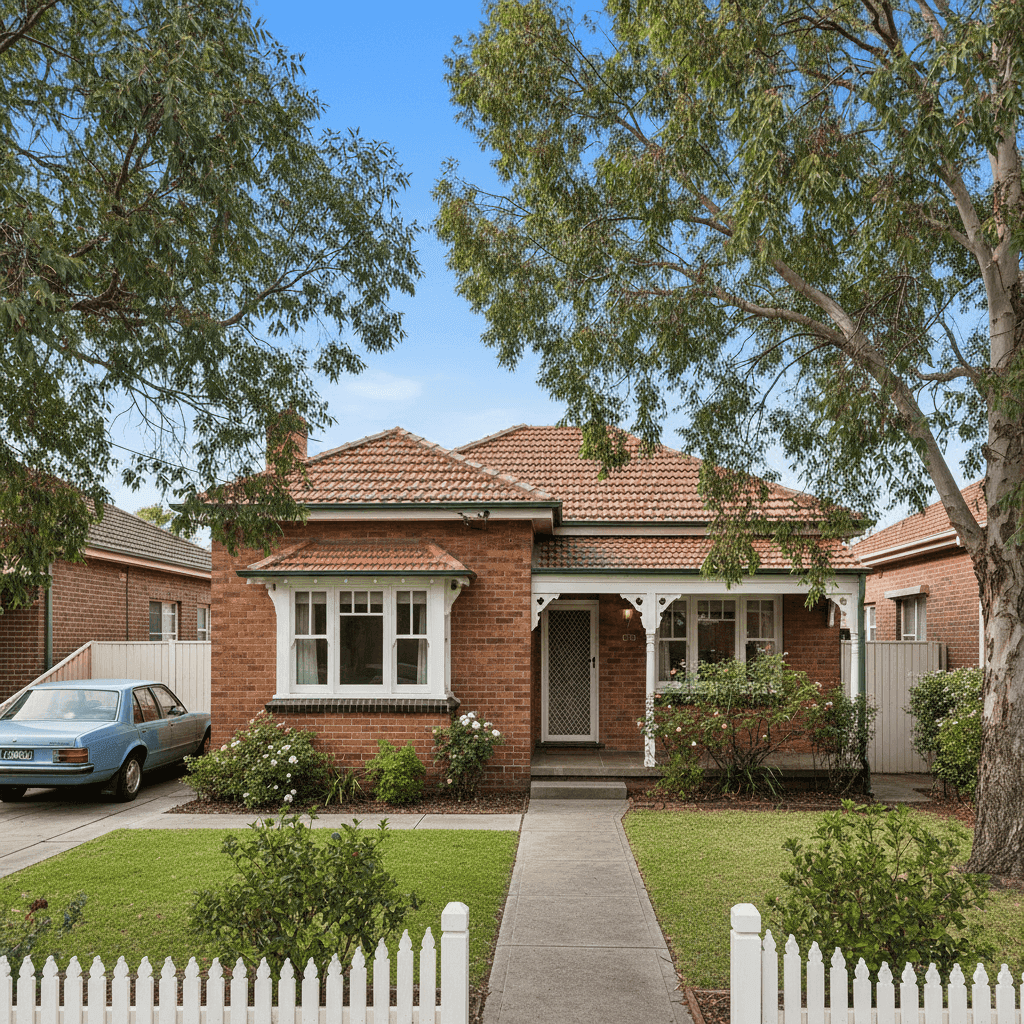
If you own a free standing home in Newtown, VIC 3220, you're likely no stranger to the question: am I paying too much for home insurance? Newtown is a well-established suburb on the western fringe of Geelong, characterised by a mix of post-war and mid-century homes — exactly the kind of property this quote covers. In this article, we break down a real home and contents insurance quote for a 2-bedroom, 1-bathroom brick veneer home built in 1953, and put the $2,016 annual premium under the microscope.
---
Is This Quote Fair?
The short answer: yes, broadly speaking — but there's room to do better.
This quote has been rated Fair (Around Average), which means it sits in a reasonable range but isn't the sharpest price on the market. At $2,016 per year (or $193/month), the premium lands above both the suburb average ($1,693/yr) and the suburb median ($1,457/yr) for Newtown. However, it falls comfortably below the 75th percentile of $2,159/yr — meaning roughly three-quarters of comparable quotes in this area come in cheaper.
That said, context matters. The building sum insured here is $880,000 with $103,000 in contents cover — a reasonably substantial level of protection. Higher sum insured values naturally push premiums upward, so some of the above-average cost can be attributed to the coverage level rather than the insurer simply charging more. The $1,000 excess on both building and contents is standard and won't be raising any red flags.
The bottom line: this quote isn't a bad deal, but homeowners in Newtown with similar properties may be able to find more competitive pricing — particularly if their sum insured is calibrated carefully.
---
How Newtown Compares
To understand whether this premium is genuinely reasonable, it helps to zoom out and look at the broader picture. Here's how Newtown's insurance costs stack up against the rest of the country:
| Benchmark | Annual Premium |
|---|---|
| Newtown (3220) Average | $1,693 |
| Newtown (3220) Median | $1,457 |
| Greater Geelong LGA Average | $1,754 |
| VIC State Average | $3,000 |
| VIC State Median | $2,718 |
| National Average | $5,347 |
| National Median | $2,764 |
The numbers tell an encouraging story for Newtown homeowners. Premiums in this suburb sit well below both [Victorian state averages](https://coverclub.com.au/stats/VIC) and [national benchmarks](https://coverclub.com.au/stats/national). The VIC state average of $3,000/yr is nearly double the Newtown suburb average, and the national average of $5,347/yr — heavily influenced by high-risk coastal and cyclone-prone regions — is more than three times higher.
This reflects Newtown's relatively benign risk profile. The suburb isn't in a cyclone risk zone, and Geelong's inland position shields it from some of the extreme weather events that drive premiums sky-high in other parts of Australia. For homeowners here, the insurance market is comparatively affordable — which makes it all the more worthwhile to shop around and ensure you're not overpaying within that already-favourable range.
(Based on a sample of 28 quotes for properties in the Newtown 3220 postcode.)
---
Property Features That Affect Your Premium
Every property is different, and insurers price risk based on a range of physical characteristics. Here's how the features of this particular home are likely influencing the premium:
Brick Veneer Walls Brick veneer is one of the most common wall types in Victoria and is generally viewed favourably by insurers. It offers solid fire resistance and structural durability, which can help keep premiums in check compared to weatherboard or lightweight cladding.
Tiled Roof A tiled roof is considered a lower-risk roofing material than, say, corrugated iron or older asbestos-based materials. Tiles are durable and widely used across Victorian homes, so this shouldn't be adding any loading to the premium.
Stump Foundation Homes built on stumps — common in Victoria's older housing stock — can attract some additional scrutiny from insurers, particularly around subsidence and structural movement risk. This is worth keeping in mind if the stumps are original timber (as is common in 1953-era homes) rather than concrete or steel replacements.
Timber/Laminate Flooring Timber and laminate flooring can be more costly to replace than concrete or vinyl alternatives, which may contribute modestly to the contents or building replacement value. It's worth ensuring your sum insured accounts for this accurately.
Age of Construction (1953) At over 70 years old, this home predates many modern building standards. Older properties can carry higher risk of plumbing, electrical, or structural issues — factors that insurers typically weigh when pricing cover. Keeping the home well-maintained and updated where possible can help manage this risk.
Ducted Climate Control The presence of ducted heating and cooling adds to the replacement value of the home, and is a smart inclusion in the building sum insured. Make sure your insurer is aware of this system so it's properly covered.
No Pool, No Solar Panels The absence of a pool and solar panels simplifies the risk profile and removes two common sources of additional premium loading. This works in the homeowner's favour.
---
Tips for Homeowners in Newtown
1. Review your sum insured carefully At $880,000, the building sum insured is significant. Make sure this figure reflects the actual cost to rebuild the property from scratch — not its market value. Over-insuring can mean unnecessarily high premiums, while under-insuring leaves you exposed. Use a building cost calculator or consult a quantity surveyor if you're unsure.
2. Consider your excess level The $1,000 excess on both building and contents is a standard choice, but opting for a higher voluntary excess can meaningfully reduce your annual premium. If you have a solid emergency fund and are unlikely to make small claims, this trade-off can be worthwhile.
3. Get your stumps inspected If the stumps haven't been inspected recently, it's worth organising a professional assessment. Replacing deteriorating timber stumps with concrete or adjustable steel stumps not only protects the structural integrity of your home but may also be viewed more favourably by insurers.
4. Compare quotes annually The insurance market shifts constantly, and loyalty doesn't always pay. Given that this quote sits above the suburb median, there's a reasonable chance that shopping around at renewal time could surface a more competitive offer — especially for a property in a relatively low-risk area like Newtown.
---
Ready to Compare Home Insurance in Newtown?
Whether you're reviewing an existing policy or shopping for cover on a new purchase, CoverClub makes it easy to see how your quote stacks up. Get a home insurance quote today and compare real prices for properties in Newtown and across Victoria. With transparent data and no pressure, it's the smarter way to protect your home.