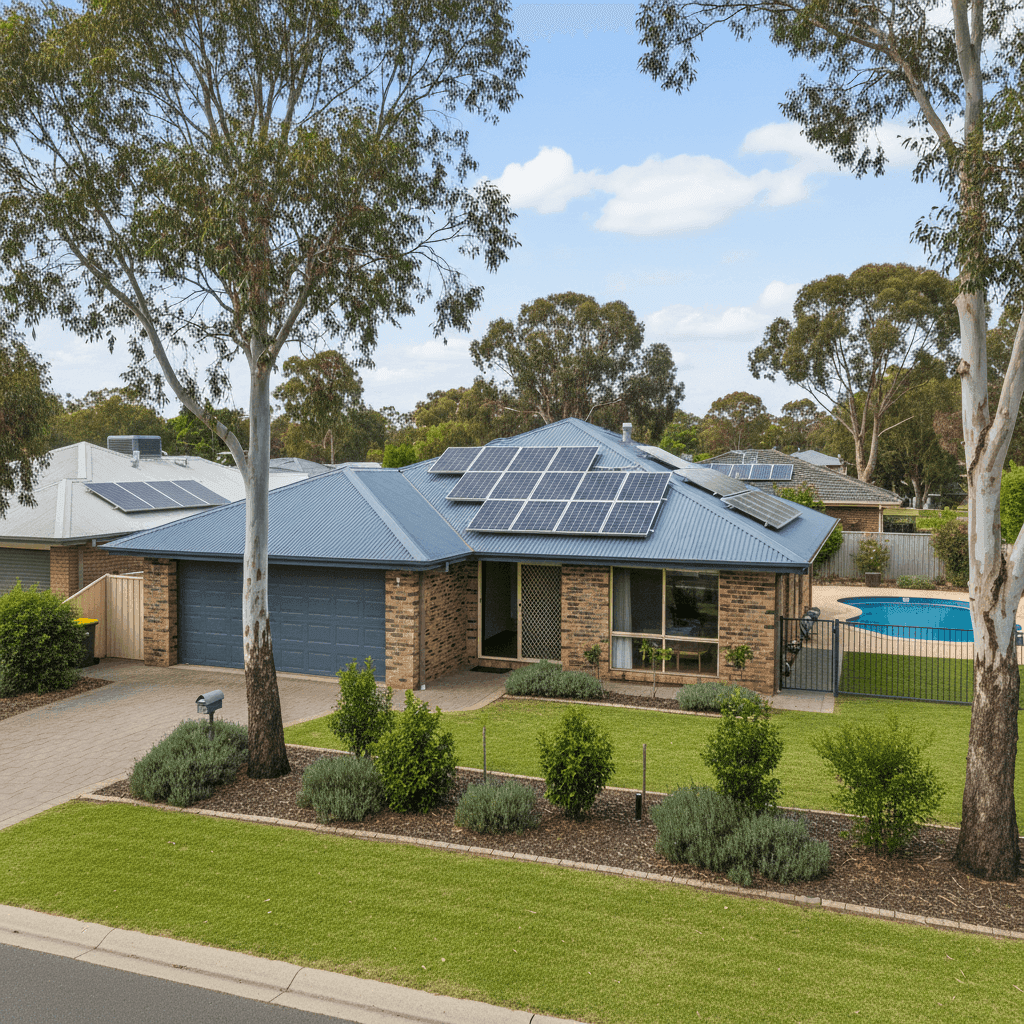
If you own a free standing home in Nichols Point, VIC 3501, you're likely no stranger to the challenge of finding competitive home insurance. Situated near Mildura in regional Victoria, Nichols Point is a quiet, established suburb where older brick homes are common — and where insurance premiums can vary more than many homeowners expect. This article takes a close look at a real home and contents insurance quote for a 4-bedroom property in the area, breaks down how it stacks up against local and national benchmarks, and offers practical advice on what you can do to manage your costs.
---
Is This Quote Fair?
The quote in question comes in at $12,523 per year (or approximately $1,200 per month) for combined home and contents cover, with a building sum insured of $612,000 and contents valued at $152,000. Both the building and contents excess are set at $2,000.
Our price rating for this quote is EXPENSIVE — above average.
To put that in perspective: the average home and contents premium in Nichols Point sits at around $3,288 per year, with a median of $3,201. This quote is nearly four times the suburb average — a significant gap that warrants a closer look. Even accounting for the higher-than-typical sum insured and the range of property features involved, a premium at this level is well outside what most comparable properties in the area attract.
That said, it's important to understand why a quote might land at this level before assuming it's simply an overcharge. Several property-specific factors can push premiums well above the suburb norm, and in this case, a number of those factors are clearly at play.
---
How Nichols Point Compares
Understanding where your premium sits relative to broader benchmarks is one of the most useful tools a homeowner has. Here's how the numbers line up:
| Benchmark | Premium |
|---|---|
| This Quote | $12,523/yr |
| Nichols Point Average | $3,288/yr |
| Nichols Point Median | $3,201/yr |
| Nichols Point 25th Percentile | $2,531/yr |
| Nichols Point 75th Percentile | $4,076/yr |
| VIC State Average | $3,000/yr |
| VIC State Median | $2,718/yr |
| National Average | $5,347/yr |
| National Median | $2,764/yr |
| Swan Hill LGA Average | $2,484/yr |
Even measured against the national average of $5,347, this quote is still more than double. Interestingly, the Swan Hill LGA average is just $2,484 — among the lowest in the country — which reflects the relatively low natural hazard risk in this inland region. Nichols Point is not in a cyclone risk zone, and the area doesn't face the bushfire or flood exposure that drives premiums sky-high in other parts of Victoria.
You can explore full suburb-level data on our Nichols Point insurance stats page, compare it against Victoria-wide figures, or see how it measures up on our national insurance statistics page.
---
Property Features That Affect Your Premium
While the suburb's risk profile is relatively benign, the property itself has several characteristics that insurers factor heavily into their pricing.
Age of Construction
Built in 1965, this home is now over 60 years old. Older homes present a higher risk of hidden structural issues, outdated wiring, and plumbing that may not meet modern standards. Insurers typically apply age-loading to properties built before the 1980s, and a 1960s build on stumps is a classic example.
Stump Foundation
The stump (or pier) foundation is common in older Victorian homes, but it introduces specific risks — including subsidence, termite ingress, and structural movement over time. This is one of the more significant premium drivers for this property type.
Brick Veneer Walls & Colorbond Roof
Brick veneer is generally well-regarded by insurers for fire resistance, though it can be costlier to repair or rebuild than full brick. The steel/Colorbond roof is a positive — it's durable, low-maintenance, and performs well in most weather conditions.
Swimming Pool
A pool adds both value and liability to a property. Insurers factor in the cost of pool reinstatement as part of the building sum insured, and public liability considerations around pool safety can also influence pricing.
Solar Panels
Solar panels are increasingly common but add to the rebuild cost of a home. Panels, inverters, and associated electrical infrastructure need to be covered under the building policy, which contributes to a higher sum insured.
Ducted Climate Control
Ducted heating and cooling systems are expensive to replace and are typically included in the building sum insured. A full ducted system in a 139 sqm home can represent a meaningful portion of the rebuild cost.
Sum Insured
The $612,000 building sum insured is notably high for a 139 sqm home in this region. While it's critical to insure for full replacement cost (not market value), it's worth reviewing whether this figure accurately reflects current rebuild costs — including demolition, professional fees, and compliance with modern building codes. An inflated sum insured will directly inflate your premium.
---
Tips for Homeowners in Nichols Point
1. Review Your Sum Insured
Given the gap between this quote and the suburb average, the first thing worth examining is whether the $612,000 building sum insured is accurate. Use a reputable building cost calculator (many insurers provide one) or consult a quantity surveyor to confirm your rebuild estimate. Overinsuring is a common and costly mistake.
2. Compare Multiple Insurers
No two insurers price risk the same way, and the spread of premiums for equivalent cover can be substantial. Using a comparison platform like CoverClub lets you see multiple quotes side by side without having to ring around individually.
3. Consider Your Excess Level
Raising your excess from $2,000 to $3,000 or higher can reduce your annual premium meaningfully. If you have savings to cover a higher out-of-pocket cost in the event of a claim, a higher excess is often a smart trade-off.
4. Bundle and Ask for Discounts
Many insurers offer discounts for bundling home and contents cover (which this policy already does), as well as loyalty discounts, security system discounts, and claim-free history bonuses. It's always worth asking what discounts are available — they're not always applied automatically.
---
Ready to Find a Better Deal?
If your current home insurance premium feels out of step with what others in Nichols Point are paying, the best move is to compare. At CoverClub, we make it easy to benchmark your quote against real data from your suburb and get competitive quotes from leading Australian insurers. Start your comparison today — it takes just a few minutes and could save you thousands.