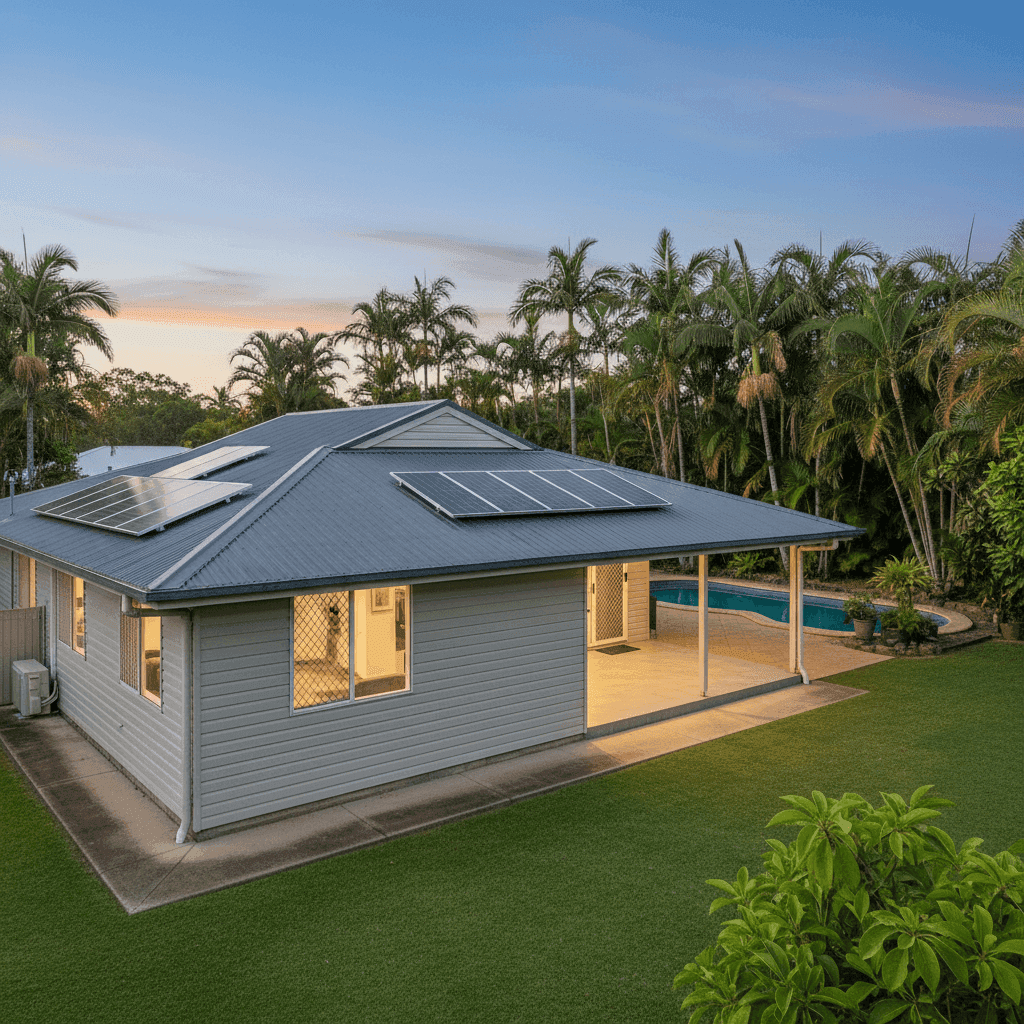
Nightcliff is one of Darwin's most sought-after coastal suburbs — a relaxed, leafy neighbourhood that sits right on the edge of the Timor Sea. But living in paradise comes with its own set of insurance considerations, particularly for homeowners in the Northern Territory. This analysis looks at a building insurance quote for a 3-bedroom, 2-bathroom semi detached home in Nightcliff (NT 0810), built in 1981 and sitting on a slab foundation with vinyl cladding walls and a steel Colorbond roof. With a sum insured of $713,000, the quoted annual premium of $4,771 (or $457/month) has been rated Fair — around average for the area. Let's unpack what that actually means.
---
Is This Quote Fair?
Short answer: yes, and arguably quite competitive given the location and property profile.
A "Fair" rating means this premium sits broadly in line with what other homeowners in Nightcliff are paying — but context matters enormously here. The suburb average premium in Nightcliff sits at $6,409 per year, with a median of $6,831. This quote at $4,771 comes in well below both figures, landing closer to the 25th percentile of $4,185 — meaning it's cheaper than roughly 75% of comparable quotes in the suburb.
The interquartile range for Nightcliff is quite wide, spanning from $4,185 at the lower end to $8,004 at the 75th percentile. That spread of nearly $3,820 reflects just how much individual property factors — construction type, age, features, and insurer appetite — can influence pricing in a cyclone-prone coastal area.
So while "Fair" might sound middling, in the context of Nightcliff's premium landscape, this quote is actually sitting in a relatively favourable position.
---
How Nightcliff Compares
Understanding where this quote sits requires zooming out to the broader market. Here's a snapshot:
| Benchmark | Average | Median |
|---|---|---|
| Nightcliff (NT 0810) | $6,409/yr | $6,831/yr |
| Northern Territory | $10,773/yr | $3,402/yr |
| National | $5,347/yr | $2,764/yr |
| LGA (Darwin) | $15,687/yr | — |
A few things stand out immediately. The Northern Territory average of $10,773 is extraordinarily high — more than double the national average of $5,347 — but the NT median of just $3,402 tells a more nuanced story. This wide gap between average and median in the NT suggests a relatively small number of very high-risk or high-value properties are pulling the average upward significantly.
The Darwin LGA average of $15,687 is particularly striking, and likely reflects the concentration of premium properties, elevated rebuild costs, and the heightened cyclone exposure across the greater Darwin region.
Against the national median of $2,764, this quote does appear elevated — but that comparison needs to be taken with a grain of salt. Homes in cyclone-prone coastal areas of the NT carry materially higher risk profiles than, say, a brick veneer home in suburban Melbourne or Adelaide. The national average of $5,347 is a more useful yardstick, and this quote sits just below it.
Note: the Nightcliff suburb sample size is 14 quotes, so these figures should be treated as indicative rather than definitive. A larger dataset would provide greater statistical confidence.
---
Property Features That Affect Your Premium
Several characteristics of this property have a meaningful influence on what insurers are willing to charge — and some cut both ways.
Cyclone risk area — This is the single biggest premium driver for any property in the Darwin region. Nightcliff's coastal position and Top End location place it squarely in a high cyclone risk zone. Insurers price this risk heavily, and it's reflected across the suburb's premium distribution.
Vinyl cladding external walls — Vinyl cladding is generally considered a lower-risk cladding material compared to combustible alternatives, but it doesn't offer the same structural resilience as brick or masonry in high-wind events. Some insurers may apply loadings for cladded homes in cyclone zones.
Steel/Colorbond roof — This is a positive from an insurer's perspective. Colorbond roofing is durable, resistant to corrosion, and performs well under cyclonic conditions when properly installed and secured. It's widely used across the NT for exactly this reason.
Construction year: 1981 — Homes built in the early 1980s in Darwin were constructed after Cyclone Tracy (1974), meaning they were likely built to improved cyclone-resistant standards. However, a 43-year-old home may still attract some age-related loadings, particularly around plumbing, electrical, and roofing integrity.
Swimming pool — Pools add liability exposure and can increase the cost of a claim (e.g., damage to pool structure, fencing, or equipment). They're a standard premium factor for insurers.
Solar panels — Solar systems add to the sum insured and can be damaged in severe weather events. Insurers will factor in the replacement cost of panels and inverters, which can be substantial.
Ducted climate control — Ducted air conditioning systems are expensive to repair or replace and are a common source of claims. Their presence typically adds a modest loading to the premium.
Slab foundation and tile flooring — Both are considered low-risk by most insurers. Slab-on-ground construction is robust, and tiles are durable and easy to remediate after water damage compared to timber or carpet.
---
Tips for Homeowners in Nightcliff
1. Review your sum insured annually At $713,000, the building sum insured needs to reflect current rebuild costs — not market value. Construction costs in Darwin are elevated due to remoteness, labour costs, and cyclone-rated building requirements. Use a building cost calculator or speak to a quantity surveyor to ensure you're not underinsured, particularly as material costs have risen sharply in recent years.
2. Check your cyclone-specific policy conditions Not all home insurance policies treat cyclone damage the same way. Some policies apply a separate cyclone excess, impose waiting periods at the start of cyclone season, or exclude certain types of storm surge damage. Read the Product Disclosure Statement (PDS) carefully and ask your insurer directly about cyclone-related exclusions.
3. Maintain your property's cyclone resilience Insurers increasingly reward — or require — properties to meet certain cyclone-resistant standards. Ensure your roof fixings, cladding, and any outbuildings (including pool fencing and solar panel mounts) are regularly inspected and maintained. Proactive maintenance can also support a claim if damage does occur.
4. Compare quotes before renewal The Nightcliff premium range spans from $4,185 to over $8,000 per year, which is a significant gap. Loyalty doesn't always pay in insurance — shopping around at renewal time using a comparison platform can surface meaningfully better deals without compromising on cover quality.
---
Compare Home Insurance Quotes in Nightcliff
Whether you're reviewing your current policy or shopping for the first time, comparing quotes is the smartest way to make sure you're getting fair value. CoverClub makes it easy to see real quotes side by side, tailored to your property's specific features and location. Get a home insurance quote today and see how your premium stacks up against the Nightcliff market — you might be surprised by what's available.