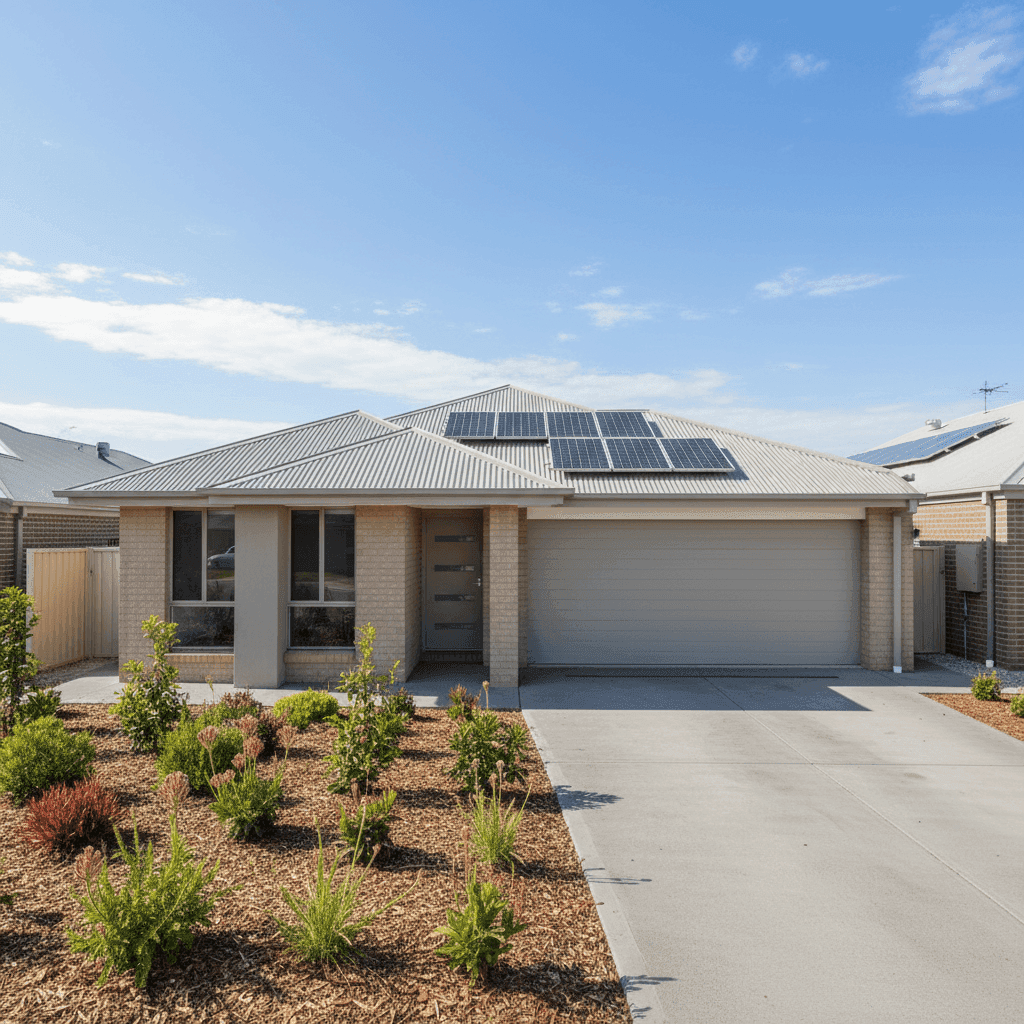
If you own a four-bedroom free standing home in Ningi, QLD 4511, you've probably wondered whether you're paying a fair price for home insurance — or leaving money on the table. Ningi is a quiet residential suburb in the Moreton Bay region, north of Brisbane, and like much of South-East Queensland, it sits in a market where premiums can vary significantly depending on your property's characteristics and the insurer you choose. This article breaks down a real home and contents insurance quote for a property in this suburb, benchmarks it against local, state and national data, and offers practical tips to help you get the best value.
---
Is This Quote Fair?
The quote in question comes to $2,660 per year (or $255/month) for combined home and contents cover, with a building sum insured of $700,000 and contents valued at $70,000. Both the building and contents excess are set at $2,000.
Our price rating for this quote is FAIR — Around Average, and the data backs that up. Based on 48 quotes collected for Ningi (postcode 4511), the suburb average sits at $2,770/year and the median at $2,826/year. At $2,660, this quote comes in below both the suburb average and median, which is a solid result.
To put it in percentile terms: the 25th percentile for Ningi is $2,084/year, and the 75th percentile is $3,410/year. This quote falls comfortably in the middle of the pack — not the cheapest available, but well clear of the more expensive end of the market. For a well-built, modern brick veneer home with a Colorbond roof, that's a reasonable outcome.
---
How Ningi Compares
One of the most striking aspects of home insurance pricing in Queensland is just how wide the gap is between different parts of the state. When you look at Queensland-wide insurance data, the state average premium is a hefty $9,129/year — though this figure is heavily skewed by high-risk areas in Far North Queensland, where cyclone exposure drives premiums into the tens of thousands. The state median is a more representative $3,903/year, and even that is notably higher than what most Ningi homeowners are paying.
At the Moreton Bay LGA level, the average premium is $3,435/year — again, higher than this quote. Ningi benefits from its relatively benign risk profile: it's not classified as a cyclone risk area, it's not in a known flood corridor, and its modern housing stock tends to attract more competitive pricing.
Zooming out to the national picture, the Australian average premium is $5,347/year and the national median is $2,764/year. This quote of $2,660 sits just below the national median, which reinforces the "fair" rating — it's genuinely competitive in a broader context, even if there may still be room to shop around.
| Benchmark | Premium |
|---|---|
| This Quote | $2,660/yr |
| Ningi Suburb Average | $2,770/yr |
| Ningi Suburb Median | $2,826/yr |
| Moreton Bay LGA Average | $3,435/yr |
| QLD State Median | $3,903/yr |
| National Median | $2,764/yr |
| National Average | $5,347/yr |
---
Property Features That Affect Your Premium
Several characteristics of this property work in its favour from an insurance pricing perspective.
Construction year (2013): A home built in 2013 was constructed under modern Australian Building Codes, which include improved standards for structural integrity, fire resistance and weatherproofing. Insurers generally view newer builds more favourably than older homes that may have outdated wiring, plumbing or materials.
Brick veneer walls and Colorbond roof: Brick veneer is one of the most common and well-regarded external wall materials in Australia. It offers solid fire resistance and durability. Paired with a steel Colorbond roof — which is lightweight, corrosion-resistant and performs well in the Queensland climate — this combination typically attracts competitive premiums compared to, say, weatherboard cladding or terracotta tiles.
Concrete slab foundation and tile flooring: A slab foundation is generally considered lower risk than a raised timber subfloor, as it reduces moisture ingress and pest vulnerability. Tile flooring is similarly durable and resistant to water damage, which can be a factor in claims assessments.
Solar panels: This property has solar panels installed, which does add a small layer of complexity to a home insurance policy. Panels are typically covered under the building policy, but it's worth confirming with your insurer whether they're included in the building sum insured or listed as a separate item.
Ducted climate control: Ducted air conditioning is a significant fixture that should be reflected in your building sum insured. At 244 sqm with standard fittings quality, the $700,000 sum insured appears reasonable, but it's always worth reviewing your rebuild cost estimate periodically — especially as construction costs continue to rise.
No pool, no cyclone risk: The absence of a pool removes a liability risk that can nudge premiums upward. And being outside a designated cyclone risk zone is a meaningful advantage for Queensland homeowners — it's one of the primary reasons premiums in South-East Queensland are substantially lower than those in North Queensland.
---
Tips for Homeowners in Ningi
1. Review your sum insured regularly Construction costs in South-East Queensland have risen considerably over the past few years. A sum insured of $700,000 may have been accurate at policy inception, but it's worth using an independent building cost calculator annually to ensure you're not underinsured. Being caught short at claim time can be a costly mistake.
2. Consider your excess carefully Both the building and contents excess on this policy are set at $2,000. A higher excess generally reduces your annual premium, but make sure it's an amount you could genuinely afford to pay out of pocket in the event of a claim. If $2,000 feels like a stretch, it may be worth adjusting — even if it costs a little more per year.
3. Confirm solar panel coverage With solar panels on the roof, check your policy documents to confirm exactly how they're covered. Some insurers include them automatically under building cover; others require them to be listed separately or may apply specific sub-limits. Given the replacement cost of a quality solar system, this is worth a quick call to your insurer.
4. Compare quotes at renewal time Even a "fair" quote can often be improved upon. The insurance market in Queensland is competitive, and premiums can shift meaningfully from year to year. Rather than simply accepting your renewal notice, take 10 minutes to compare alternatives — you may find equivalent cover for less.
---
Ready to Compare?
Whether you're happy with your current premium or suspect you could do better, it pays to see what's available. Get a home insurance quote at CoverClub and compare options tailored to your property in Ningi. You can also explore the full Ningi suburb insurance stats to see how your premium stacks up against your neighbours.