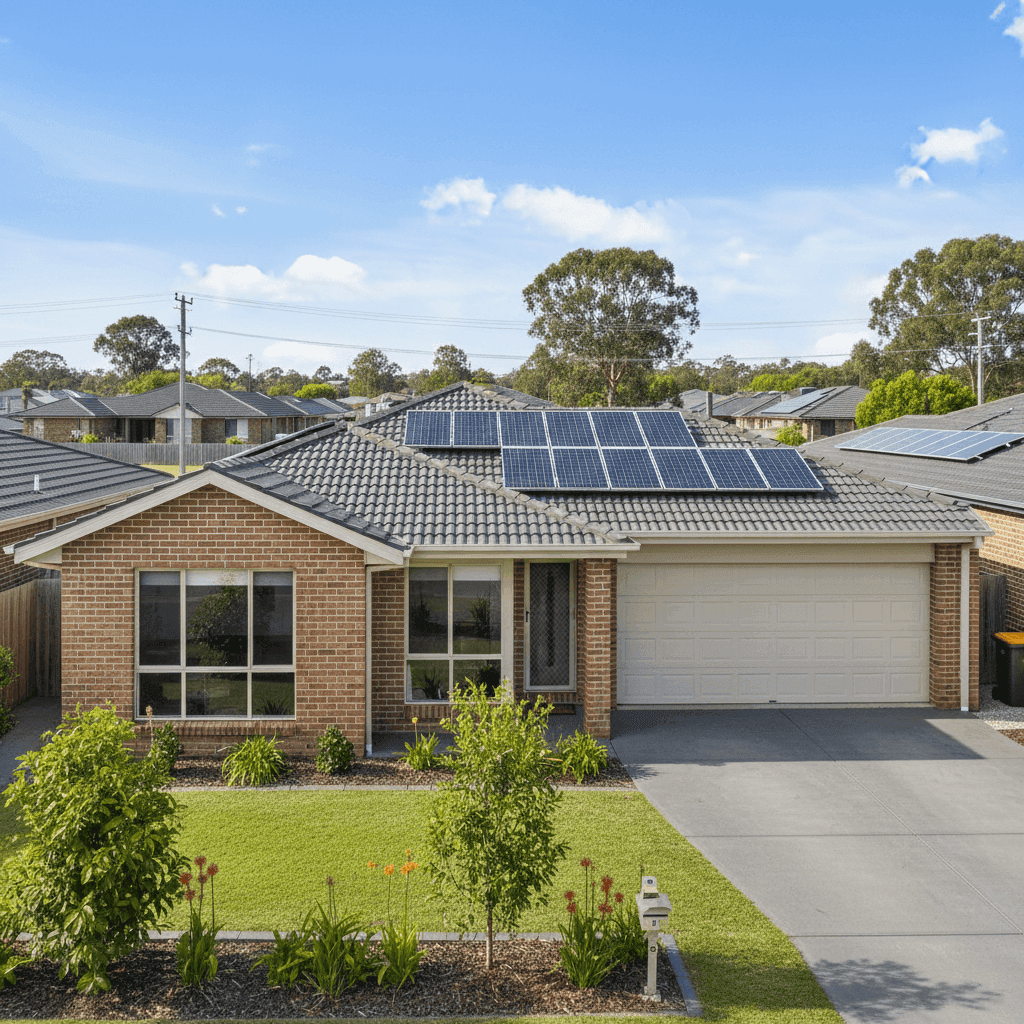
If you own a free standing home in Ningi, QLD 4511, you've probably noticed that home insurance premiums in South-East Queensland can vary wildly depending on your suburb, property features, and the insurer you choose. This article breaks down a real home and contents insurance quote for a four-bedroom, two-bathroom brick veneer home in Ningi — and puts that number into context using suburb, state, and national benchmarks.
---
Is This Quote Fair?
The quote in question comes in at $2,481 per year (or $238 per month) for combined home and contents cover, with a building sum insured of $606,000 and contents valued at $64,000. Both the building and contents excess are set at $2,000.
Our price rating for this quote is FAIR — Around Average, and the data backs that up. Based on 48 quotes collected for Ningi (postcode 4511), the suburb average sits at $2,770 per year and the median at $2,826 per year. That means this quote is tracking roughly $289–$345 below the suburb average and median respectively — a meaningful saving without being an outlier.
To put it in percentile terms: the 25th percentile for Ningi is $2,084/yr and the 75th percentile is $3,410/yr. At $2,481, this quote sits comfortably in the lower half of the range — better than average, but not suspiciously cheap. For homeowners, that's actually a reassuring position to be in. Quotes that look too good to be true sometimes come with narrower cover, higher sub-limits, or exclusions buried in the fine print.
---
How Ningi Compares to the Rest of Queensland and Australia
Context is everything when it comes to insurance pricing, and the numbers here tell an interesting story.
| Benchmark | Premium |
|---|---|
| This Quote | $2,481/yr |
| Ningi Suburb Average | $2,770/yr |
| Ningi Suburb Median | $2,826/yr |
| Moreton Bay LGA Average | $3,435/yr |
| QLD State Average | $9,129/yr |
| QLD State Median | $3,903/yr |
| National Average | $5,347/yr |
| National Median | $2,764/yr |
The Queensland state average of $9,129/yr looks alarming at first glance, but it's heavily skewed by high-risk coastal and cyclone-prone postcodes in Far North Queensland — places like Cairns, Townsville, and the Whitsundays, where premiums can run into the tens of thousands. The median of $3,903/yr is a more realistic representation of what most Queenslanders pay, and even then, Ningi sits well below it.
Compared to the Moreton Bay LGA average of $3,435/yr, this quote is also tracking favourably — roughly $954 cheaper per year than the broader local government area average.
On a national level, the median premium of $2,764/yr is very close to what Ningi homeowners are typically paying, suggesting the suburb is broadly in line with typical Australian home insurance costs. That's a positive sign — it means Ningi isn't carrying a significant risk premium relative to the rest of the country.
You can explore more suburb-level data on the Ningi insurance stats page.
---
Property Features That Affect Your Premium
Every home is priced individually, and the specific characteristics of this property play a direct role in where the premium lands.
Brick veneer construction with a tiled roof is generally viewed favourably by insurers. Brick veneer offers solid fire resistance and structural durability, while tiled roofs are considered more resilient than Colorbond or corrugated iron in many risk models — though they do carry some hail vulnerability. Together, these materials typically attract lower premiums than lightweight or timber-framed alternatives.
Slab foundation is the norm for homes built in South-East Queensland and doesn't carry any particular risk loading. Similarly, tiled flooring is a practical and durable choice that holds up well in Queensland's humid climate and is straightforward to replace if damaged.
The home was built in 2009, which puts it in a sweet spot for insurers — modern enough to meet post-2000 building codes (which improved significantly after cyclone and flood events), but established enough that there's no new-build uncertainty. Homes constructed after major code revisions tend to be better engineered for local weather conditions.
Solar panels are worth noting. While they add value to the property and are typically covered under the building sum insured, some insurers treat them as a separate item or apply sub-limits. It's worth confirming your policy explicitly covers solar panels for damage from storms, hail, or fire — and that the $606,000 building sum insured accounts for their replacement cost.
The absence of a pool and ducted climate control removes two common sources of claims and complexity. Pools carry liability and maintenance risks, while ducted systems can be expensive to repair or replace. Not having either keeps the risk profile clean.
Ningi is also not classified as a cyclone risk area, which is a significant factor in Queensland. Cyclone-rated premiums can be multiples of standard premiums, so being outside that zone is a genuine financial advantage for homeowners in this part of the Moreton Bay region.
---
Tips for Homeowners in Ningi
1. Review your building sum insured regularly At $606,000, the building sum insured needs to reflect the actual cost to rebuild — not the market value of the property. Construction costs in South-East Queensland have risen sharply in recent years. Use a building cost calculator annually to make sure you're not underinsured, especially with a 214 sqm home.
2. Confirm solar panel coverage in your policy Solar panels are a significant asset and a common source of confusion in home insurance policies. Check whether your insurer covers them under the building section, whether there are any sub-limits, and whether accidental damage is included — not just storm or fire.
3. Shop around at renewal time This quote is priced fairly relative to the Ningi market, but that doesn't mean it's the best available. Insurers regularly reprice at renewal, and loyalty doesn't always pay. Comparing quotes annually takes only a few minutes and can save hundreds of dollars.
4. Consider your excess strategically Both the building and contents excess on this policy are set at $2,000. A higher excess typically reduces your premium, but it also means more out-of-pocket costs when you do make a claim. Think about what you could comfortably cover in an emergency and set your excess accordingly — especially for contents, where smaller claims are more common.
---
Compare Your Home Insurance Options
Whether you're buying, renewing, or just curious about whether you're getting a fair deal, CoverClub makes it easy to compare home insurance quotes for properties across Queensland and beyond. Get a quote now and see how your premium stacks up against your neighbours — it only takes a couple of minutes.