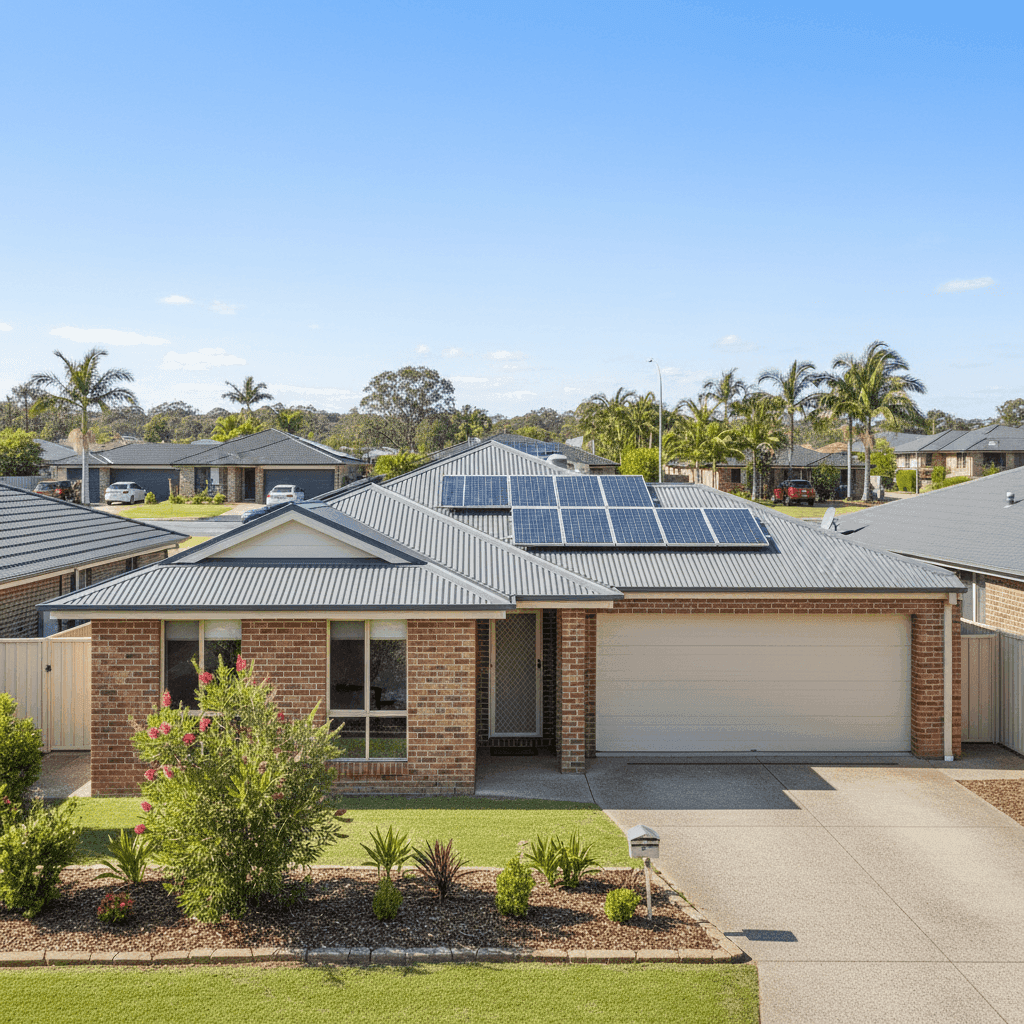
If you own a free standing home in Ningi, QLD 4511, you've probably noticed that home insurance costs in South East Queensland can vary quite a bit depending on who you ask. This article breaks down a real home and contents insurance quote for a three-bedroom brick veneer home in Ningi — and puts it into context against local, state, and national benchmarks — so you can judge whether you're getting a fair deal.
---
Is This Quote Fair?
The quote in question comes to $3,672 per year (or $352 per month) for combined home and contents cover, with a building sum insured of $668,000 and contents valued at $248,000. Both the building and contents excesses are set at $1,000.
Our price rating for this quote is Expensive (Above Average).
To understand why, it helps to look at what other homeowners in the same postcode are paying. Based on a sample of 48 quotes from Ningi and the surrounding 4511 area, the suburb average sits at $2,770 per year, with a median of $2,826. This quote lands well above both figures — and even sits above the 75th percentile of $3,410, meaning it's higher than roughly three-quarters of comparable quotes in the area.
That said, "expensive" doesn't automatically mean "wrong." The sum insured here is on the higher end, and the contents value of $248,000 is substantial. A higher level of cover will always push premiums upward. The key question is whether the pricing is proportionate — and whether shopping around might uncover a more competitive rate for the same level of protection.
---
How Ningi Compares
Understanding where Ningi sits in the broader insurance landscape is useful context for any homeowner reassessing their policy.
| Benchmark | Average Premium | Median Premium |
|---|---|---|
| Ningi (4511) | $2,770/yr | $2,826/yr |
| Moreton Bay LGA | $3,435/yr | — |
| Queensland | $9,129/yr | $3,903/yr |
| National | $5,347/yr | $2,764/yr |
A few things stand out here. Queensland's average premium of $9,129 is dramatically higher than the national average of $5,347 — a reflection of the state's exposure to extreme weather events including cyclones, flooding, and severe storms. However, the median figures tell a more nuanced story: Queensland's median of $3,903 and the national median of $2,764 are much closer together, suggesting that a small number of very high-risk properties (particularly in Far North Queensland) are pulling the state average upward significantly.
Ningi, situated on the Sunshine Coast hinterland fringe near Bribie Island, benefits from a relatively moderate risk profile compared to more northern parts of the state. It's not classified as a cyclone risk area, which is a meaningful factor in keeping premiums more manageable. The suburb's average of $2,770 sits comfortably below both the Queensland and national averages, which is reassuring for local homeowners.
You can explore the full data for your area on the Ningi suburb stats page, or compare it against all of Queensland and national benchmarks.
---
Property Features That Affect Your Premium
Every home is different, and insurers price policies based on a range of property-specific factors. Here's how the key features of this particular home are likely influencing the quote:
Brick Veneer Walls Brick veneer is generally viewed favourably by insurers. It offers solid fire resistance and durability, which can help moderate building premiums compared to timber-framed or weatherboard construction.
Steel / Colorbond Roof A Colorbond roof is one of the better roofing choices from an insurance perspective. It's lightweight, highly resistant to fire, and holds up well in storms — all of which reduce the likelihood of a claim and can positively influence pricing.
Concrete Slab Foundation Slab foundations are standard across much of Queensland and are generally considered low-risk from a structural standpoint, provided the site has adequate drainage. They're less susceptible to subsidence issues than some other foundation types.
Solar Panels The property has solar panels installed, which adds some replacement value to the building sum insured. Solar systems can be damaged in hailstorms or severe weather events, and their inclusion in the insured value is worth confirming explicitly with your insurer to ensure they're adequately covered.
Built in 1995 At around 30 years old, this home is mature but not old enough to carry significant concerns around ageing infrastructure. However, it's worth ensuring that your building sum insured reflects current replacement costs — not market value — particularly given how much construction costs have risen in recent years.
214 sqm Building Size At 214 square metres, this is a mid-to-large sized home for a three-bedroom property. Larger floor areas generally mean higher rebuild costs, which is reflected in the $668,000 building sum insured.
Tiles & Standard Fittings Tiled flooring is durable and relatively inexpensive to replace compared to hardwood or engineered timber. Standard-quality fittings across the home keep the replacement cost estimate grounded, without the premium uplift you'd see with high-end or custom finishes.
---
Tips for Homeowners in Ningi
Whether you're reviewing your existing policy or shopping for a new one, here are four practical steps worth taking:
1. Verify your building sum insured reflects true rebuild costs With construction costs having risen sharply since COVID, many homeowners find their building sum insured is now out of date. Use an independent building cost calculator or speak to a quantity surveyor to confirm your coverage is adequate — underinsurance is one of the most common and costly mistakes at claim time.
2. Check that your solar panels are explicitly covered Not all policies automatically include solar panel systems under the building definition. Review your Product Disclosure Statement (PDS) carefully, and if needed, ask your insurer to confirm solar panels are included in your building cover.
3. Shop around — especially if you're above the 75th percentile This quote sits above the 75th percentile for the Ningi area, which is a strong signal to compare alternatives. Premiums for the same property can vary by hundreds of dollars between insurers. Using a comparison platform takes the legwork out of this process.
4. Consider your excess level strategically Both excesses here are set at $1,000. Opting for a higher excess (say, $2,000) can reduce your annual premium meaningfully — but only makes sense if you're confident you could comfortably cover that amount out of pocket in the event of a claim.
---
Ready to Compare?
If this quote has you wondering whether you could be paying less for the same level of cover, the best next step is to run a fresh comparison. At CoverClub, we make it easy to see how multiple insurers price your specific property — so you can make an informed decision rather than just renewing on autopilot.