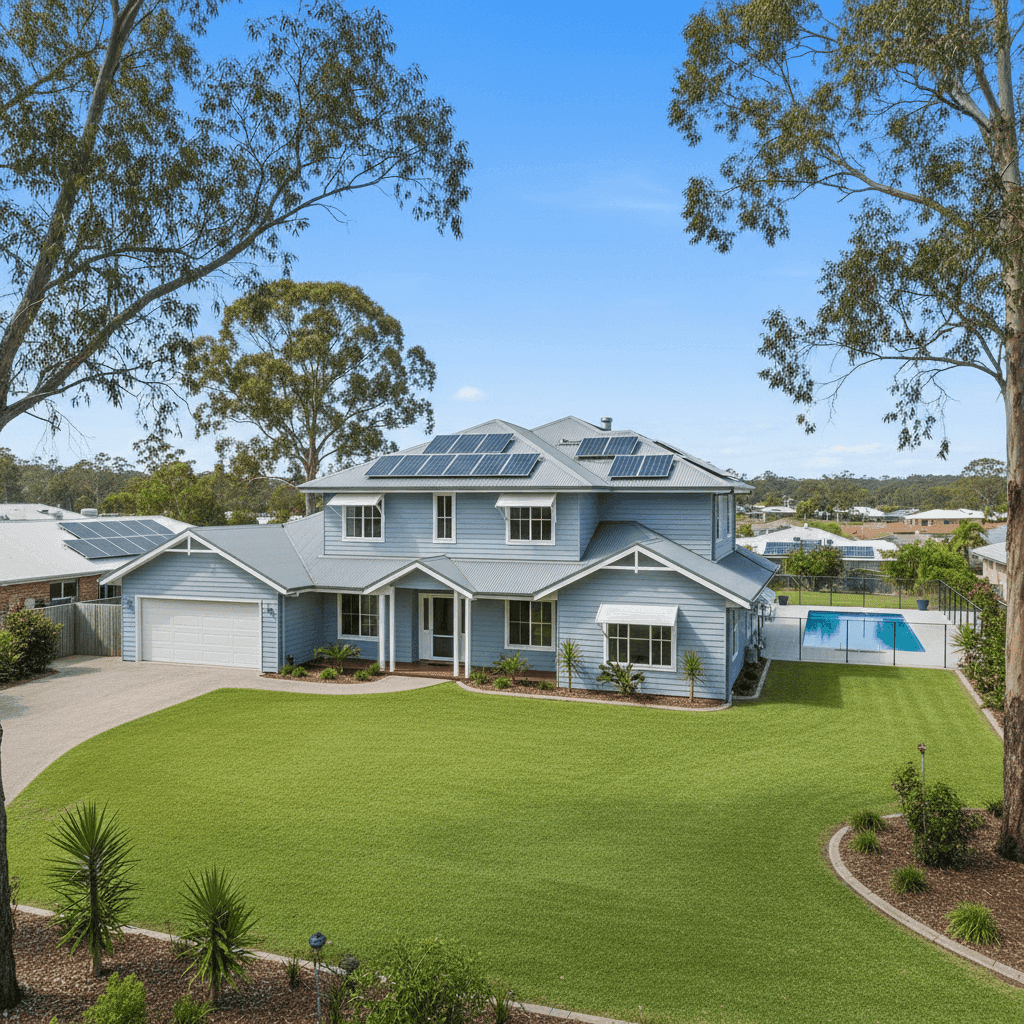
Ningi is a quiet residential suburb on Queensland's Sunshine Coast hinterland fringe, sitting within the Moreton Bay local government area. Known for its leafy streets and relaxed lifestyle, it attracts families looking for space — and a six-bedroom, four-bathroom free-standing home is exactly the kind of substantial property you'll find here. But when it comes to insuring a home like this, the numbers can raise an eyebrow or two. Let's unpack what's driving this quote and whether it stacks up against the broader market.
---
Is This Quote Fair?
The annual premium on this quote comes in at $4,842 per year (or $472/month), covering the building only with a sum insured of $1,033,000 and a building excess of $2,000.
Our price rating for this quote is Expensive — above average for the Ningi area.
To put that in context: the suburb average premium sits at just $2,770/year, and the median is $2,826/year. That means this quote is running at roughly 75% above the suburb average — a significant gap that warrants a closer look.
That said, "expensive" doesn't automatically mean "wrong." A number of property-specific factors (which we'll cover below) can legitimately push a premium higher than the suburb norm. The key question is whether those factors fully justify the gap — or whether there's room to shop around for a more competitive rate.
---
How Ningi Compares
Here's how this quote sits relative to broader benchmarks, based on data from Ningi suburb insurance stats, Queensland state averages, and national figures:
| Benchmark | Average Premium | Median Premium |
|---|---|---|
| Ningi (QLD 4511) | $2,770/yr | $2,826/yr |
| Moreton Bay LGA | $3,435/yr | — |
| Queensland | $9,129/yr (avg) | $3,903/yr |
| National | $5,347/yr (avg) | $2,764/yr |
A few things stand out here. Queensland's average premium of $9,129/year is dramatically higher than its median of $3,903/year — a clear sign that the state average is being pulled upward by high-risk properties in cyclone-prone areas like Far North Queensland. Since Ningi is not in a designated cyclone risk zone, those extreme premiums don't apply here.
Compared to the national median of $2,764/year, this quote at $4,842 is still well above the midpoint. However, it falls below the national average of $5,347/year — which offers some perspective. For a large, older home with a pool, solar panels, and a high sum insured, a premium above the suburb median is not unexpected. The question is how much above is reasonable.
The suburb sample of 48 quotes shows the 25th percentile at $2,084/year and the 75th percentile at $3,410/year. This quote sits well outside the 75th percentile, placing it in the top tier of premiums recorded for the area.
---
Property Features That Affect Your Premium
Several characteristics of this property are likely contributing to the elevated premium. Understanding them helps you have a more informed conversation with insurers.
Older Construction (Built 1970)
A home built in 1970 is now over 50 years old. Older properties can carry higher risk in the eyes of insurers due to ageing plumbing, electrical systems, and structural wear — even if the home has been well maintained. Weatherboard timber construction, while charming, is also considered higher risk than brick veneer or double brick, particularly when it comes to fire and moisture damage.
High Sum Insured ($1,033,000)
This is a large home at 214 sqm with six bedrooms and four bathrooms. The sum insured of over $1 million reflects the cost to fully rebuild — and a higher rebuild cost directly translates to a higher premium. For a home of this size with quality fittings, that figure may be entirely appropriate, but it's worth getting a professional building valuation to ensure it's accurate (over-insuring is just as costly as under-insuring).
Swimming Pool
Pools add liability exposure and increase the overall replacement value of the property, which can nudge premiums upward.
Solar Panels
Solar panel systems represent a meaningful asset that needs to be covered under the building policy. Panels can be damaged by hail, storms, or fire, and their inclusion in the sum insured is a legitimate cost driver.
Ducted Climate Control
A ducted air conditioning system is a significant fixed installation. Like solar panels, it adds to the rebuild value and is factored into the building sum insured.
Timber and Laminate Flooring
Timber flooring, while beautiful, can be more susceptible to water damage than tiles, which may influence risk assessments depending on the insurer's methodology.
---
Tips for Homeowners in Ningi
1. Compare Multiple Quotes Before Renewing
With a premium this far above the suburb median, it's well worth shopping around. Insurers price risk differently, and the gap between the cheapest and most expensive quote for the same property can be substantial. Use CoverClub's free comparison tool to see what other insurers would charge for your home.
2. Review Your Sum Insured Carefully
A sum insured of $1,033,000 for a 214 sqm home works out to roughly $4,827 per square metre — which is on the higher end. Consider getting a professional quantity surveyor's report or using an online building cost calculator to verify this figure. Reducing an inflated sum insured (without under-insuring) can meaningfully reduce your annual premium.
3. Ask About Discounts for Safety Features
Solar panels and modern security systems can sometimes attract discounts with certain insurers. It's always worth asking your insurer directly whether your existing features qualify for any premium reductions — they won't always volunteer the information.
4. Consider Increasing Your Excess
The current building excess is $2,000. If you have the financial capacity to absorb a larger out-of-pocket cost in the event of a claim, opting for a higher excess (say, $2,500–$5,000) can reduce your annual premium. Just make sure the saving justifies the increased risk you're taking on.
---
Ready to Find a Better Rate?
Whether you're looking to benchmark your current policy or find a more competitive premium, CoverClub makes it easy. We aggregate real quote data from across Australia so you can see exactly how your home insurance stacks up — and find a deal that actually reflects your property. Get a quote today and see what Ningi homeowners are actually paying.