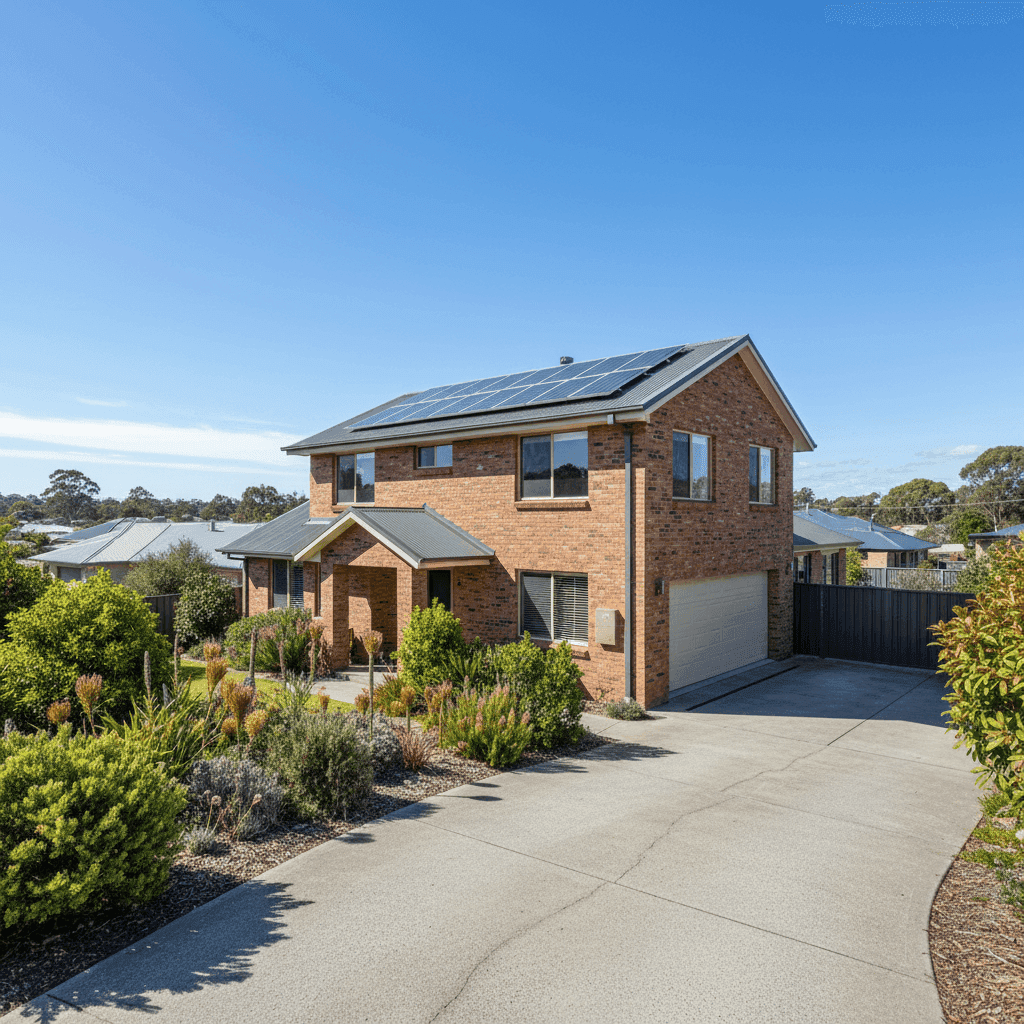
If you own a free standing home in Nook, TAS 7306, you're probably curious about whether what you're paying for home and contents insurance is fair — or whether there's room to save. This article breaks down a real insurance quote for a three-bedroom, three-bathroom home in Nook, compares it against local and national benchmarks, and offers practical tips to help you get better value on your cover.
---
Is This Quote Fair?
The quote in question comes in at $2,646 per year (or $254 per month) for combined home and contents cover, with a building sum insured of $649,000 and contents valued at $106,000. Both the building and contents excess are set at $500.
Based on our pricing data, this quote is rated Expensive — above average for the Nook area. The suburb average premium for Nook sits at $1,972 per year, meaning this quote is roughly 34% above what most comparable properties in the postcode are paying. Even against the suburb's 75th percentile of $2,235 per year, this quote exceeds the upper band by over $400.
That said, context matters. The higher sum insured ($649,000 for the building alone) and the inclusion of solar panels and ducted climate control can push premiums upward compared to simpler properties in the same street. Insurers price risk at the individual property level, so a direct apples-to-apples comparison with neighbours isn't always straightforward.
---
How Nook Compares
Understanding where Nook sits relative to broader markets helps put this quote in perspective.
| Benchmark | Annual Premium |
|---|---|
| Nook suburb average | $1,972 |
| Nook suburb median | $1,964 |
| Nook 25th percentile | $1,845 |
| Nook 75th percentile | $2,235 |
| Waratah-Wynyard LGA average | $2,461 |
| Tasmania state average | $2,814 |
| Tasmania state median | $2,326 |
| National average | $5,347 |
| National median | $2,764 |
(Based on 11 quotes sampled in the Nook postcode)
A few things stand out here. First, Nook is actually a relatively affordable area to insure compared to both the Tasmanian state average and the national average. The state average for TAS is $2,814 per year — higher than the suburb median of $1,964 — suggesting that Nook homeowners generally benefit from lower-risk pricing. And when you look at the national picture, the average premium of $5,347 is more than double the Nook suburb average, largely driven by high-risk coastal and cyclone-prone regions in Queensland and Western Australia.
The Waratah-Wynyard LGA average of $2,461 sits between the suburb median and the state average, which is typical for a regional LGA that encompasses a mix of rural, coastal, and township properties.
So while this particular quote is above average for Nook, it remains well below both the Tasmanian and national averages — which is some comfort, though it doesn't mean you shouldn't shop around.
---
Property Features That Affect Your Premium
Several characteristics of this property will directly influence how insurers calculate the premium.
Double brick construction is generally viewed favourably by insurers. It offers strong resistance to fire, wind, and structural damage, which can lower the risk profile compared to timber-framed homes. In Tasmania's cooler, wetter climate, double brick also performs well against moisture-related issues.
Steel/Colorbond roofing is another positive signal for insurers. It's durable, low-maintenance, and performs well in high-wind conditions — a relevant consideration even in non-cyclone areas like Nook, where winter storms can be significant.
Solar panels add value to the property but also introduce a modest premium uplift. Panels represent an additional asset to insure, and some insurers factor in the cost of replacement or damage (including from hail or storm events) when calculating your building sum insured. It's worth confirming with your insurer that solar panels are explicitly covered under your policy.
Ducted climate control similarly adds to the replacement cost of the home, which is likely one reason the building sum insured of $649,000 is on the higher side for a 139 sqm home. Systems like these are expensive to replace and should absolutely be included in your sum insured calculation.
Slab foundation and carpet flooring are standard features that don't significantly elevate risk, though carpet can be a factor in contents claims if water damage occurs.
The absence of a pool and the property's location outside a cyclone risk zone are both premium-reducing factors — so the overall risk profile of this home is reasonably balanced.
---
Tips for Homeowners in Nook
1. Review your sum insured carefully At $649,000, the building sum insured is substantial for a 139 sqm home — even accounting for ducted climate control and solar panels. It's worth getting an independent building replacement cost estimate to make sure you're not over-insured, which could be inflating your premium unnecessarily. Equally, being under-insured carries serious financial risk, so accuracy is key.
2. Shop around — seriously With only 11 quotes in our Nook sample, the market here is relatively thin, but the spread between the 25th percentile ($1,845) and this quote ($2,646) is significant. Using a comparison platform like CoverClub to run multiple quotes side by side is one of the most effective ways to identify whether you're overpaying.
3. Ask about bundling discounts and loyalty offers Some insurers offer discounts for holding multiple policies (e.g., home, contents, and car) with the same provider. Others reward long-term customers. It's always worth calling your insurer directly to ask what discounts might be available — these aren't always advertised prominently.
4. Consider a higher excess to reduce your premium Both the building and contents excess on this quote are set at $500, which is relatively standard. Increasing your excess — say, to $1,000 or $2,000 — can meaningfully reduce your annual premium. This strategy works best if you have the financial buffer to cover a larger out-of-pocket cost in the event of a claim.
---
Compare Your Options at CoverClub
Whether you're renewing your current policy or shopping for the first time, it pays to compare. CoverClub makes it easy to see how your premium stacks up against real quotes from across your suburb, LGA, and state. Get a quote today and find out if you could be paying less for the same level of cover — or getting more cover for what you're already paying.