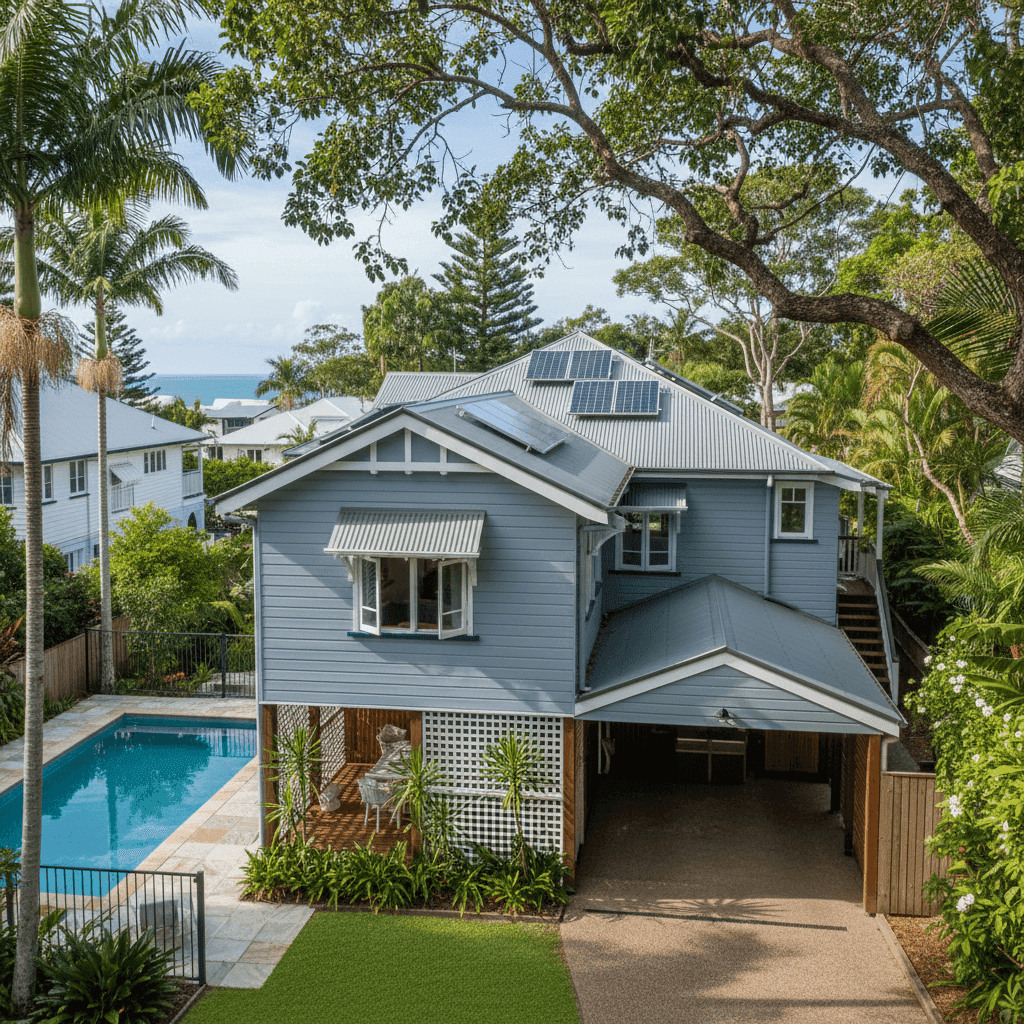
If you own a free standing home in Noosa Heads, QLD 4567, you already know this stretch of the Sunshine Coast is one of Australia's most sought-after addresses. But premium real estate comes with premium insurance considerations — and understanding whether you're getting a fair deal on your home and contents cover is just as important as the view from the deck.
This article breaks down a recent home and contents insurance quote for a four-bedroom, two-bathroom weatherboard home in Noosa Heads, examining how the annual premium stacks up against suburb, state, and national benchmarks.
---
Is This Quote Fair?
The quote in question comes in at $2,538 per year (or $253/month) for combined home and contents cover, with a $500,000 building sum insured and $50,000 contents value. Both the building and contents excess are set at $2,000.
Our price rating for this quote is FAIR — Around Average.
At first glance, $2,538 sits comfortably below the suburb average of $3,680/yr and just above the suburb's 25th percentile of $2,080/yr. In practical terms, this means the quote is better than roughly half of what Noosa Heads homeowners are paying, but there's still room to potentially find a more competitive price if you shop around. It's not a standout bargain, but it's certainly not an overpriced policy either — particularly given the number of risk factors this property carries (more on those below).
For a property of this size and complexity, landing in the "fair" zone is a reasonable outcome, though savvy homeowners should always explore whether they can nudge that figure closer to the 25th percentile.
---
How Noosa Heads Compares
Understanding where your premium sits relative to broader benchmarks gives you real negotiating power. Here's how the numbers look across different comparison points:
| Benchmark | Average Premium | Median Premium |
|---|---|---|
| Noosa Heads (suburb) | $3,680/yr | $3,624/yr |
| Queensland (state) | $9,129/yr | $3,903/yr |
| National | $5,347/yr | $2,764/yr |
| Noosa LGA | $18,770/yr | — |
A few things stand out here. The Queensland state average of $9,129/yr is dramatically higher than the median of $3,903/yr — a clear sign that a small number of very high-risk properties (think cyclone-prone far north Queensland) are pulling the average upward significantly. This is why the median is often a more useful comparison point.
Relative to the Queensland median of $3,903/yr, this quote at $2,538 looks quite competitive. Against the national median of $2,764/yr, it's only marginally below, which makes sense — Noosa Heads is a coastal, elevated suburb with its own set of risk characteristics.
The Noosa LGA average of $18,770/yr is extraordinarily high and likely reflects the inclusion of beachfront and flood-prone properties that dramatically skew the figure. This is a good reminder that LGA-level data can be misleading, and suburb-level comparisons (based on 91 quotes from Noosa Heads) tend to be far more meaningful.
For a broader picture of insurance pricing across Queensland, visit the QLD state insurance stats page, or explore national home insurance benchmarks to see how your suburb fits into the wider Australian landscape.
---
Property Features That Affect Your Premium
This particular property has a number of characteristics that insurers weigh carefully when calculating risk. Here's what's likely influencing the premium:
Weatherboard Timber Construction
Weatherboard wood external walls are one of the most significant premium drivers for this property. Timber is more susceptible to fire, rot, and termite damage than brick or rendered masonry, and it tends to cost more to repair or replace. Insurers typically price timber-clad homes higher than their brick equivalents.
Steel/Colorbond Roof
On the positive side, a Colorbond steel roof is generally viewed favourably by insurers. It's durable, low-maintenance, and performs well in high-wind conditions — a relevant consideration for a coastal Queensland property.
Elevated on Stumps
The home being elevated by at least one metre on stumps is a classic Queensland design feature. On the upside, elevation can reduce flood risk, which may help keep premiums lower. However, stumped homes can be more expensive to repair structurally, and the underfloor space introduces additional exposure considerations.
Timber/Laminate Flooring
Timber flooring adds to the overall rebuild cost and can be particularly vulnerable to water damage. Combined with a stumped foundation, water ingress from below is a risk insurers will factor in.
Swimming Pool
A pool on the property adds to the replacement cost calculation and introduces liability considerations, both of which can nudge premiums upward.
Solar Panels
Solar panels are an increasingly common feature on Australian homes, but they add to the insured value of the building and can complicate roof repairs. Most policies cover them, but they do contribute to the overall sum insured.
Granny Flat
The presence of a granny flat on the property adds additional floor area and structures to insure, which is reflected in the building sum insured and the overall premium calculation.
1985 Build Year
A home built in 1985 is now approaching 40 years old. Older homes can have higher rebuild costs due to non-standard materials, and ageing electrical or plumbing systems may be viewed as higher risk by some insurers.
---
Tips for Homeowners in Noosa Heads
1. Review Your Sum Insured Regularly
With building costs rising across Queensland, your $500,000 building sum insured should be reviewed annually. Underinsurance is a significant risk — if your home costs more to rebuild than your policy covers, you'll be out of pocket. Use a building cost calculator or speak to a quantity surveyor to validate your figure.
2. Consider Your Excess Strategically
Both the building and contents excess are set at $2,000 in this quote. Opting for a higher excess is one of the most straightforward ways to reduce your annual premium. If you have sufficient savings to cover a larger excess in an emergency, it's worth running the numbers.
3. Maintain Your Weatherboard Cladding
Timber weatherboard requires regular maintenance — painting, sealing, and checking for rot or termite activity. Keeping your home in good condition isn't just good practice; some insurers may reduce claims payouts or dispute coverage if damage is attributed to lack of maintenance.
4. Shop the Market at Renewal Time
Insurance loyalty rarely pays. With a suburb 25th percentile of $2,080/yr, there are clearly policies available at a lower price point for Noosa Heads homes. Use renewal time as a trigger to compare at least three to four quotes before auto-renewing.
---
Compare Your Home Insurance Quote Today
Whether you're reviewing an existing policy or insuring a Noosa Heads property for the first time, comparing quotes is the single most effective way to ensure you're not overpaying. CoverClub aggregates real premium data from across Australia so you can see exactly where your quote sits before you commit.