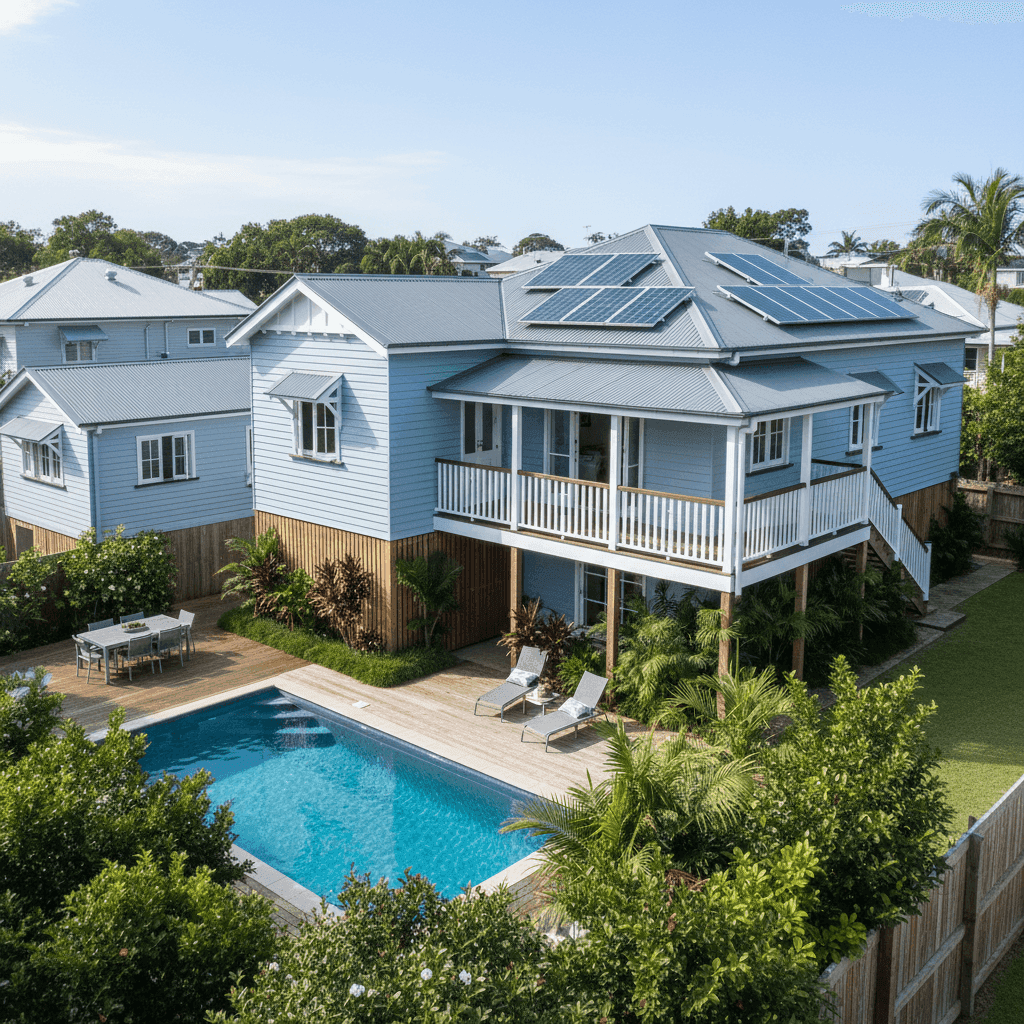
Noosa Heads is one of Queensland's most sought-after coastal addresses — and with that desirability comes some important considerations when it comes to protecting your home. This article breaks down a real building insurance quote for a three-bedroom, two-bathroom free-standing home in Noosa Heads (QLD 4567), helping you understand what's driving the premium and whether it stacks up against the broader market.
---
Is This Quote Fair?
The quote in question sits at $2,852 per year (or $285/month) for building-only cover, with a building excess of $2,000. Our price rating for this quote is FAIR — Around Average, which is a solid outcome for a property in this part of Queensland.
To put that in perspective, the suburb average premium across 91 quotes collected in Noosa Heads is $3,680/year, with a median of $3,624. That means this quote is sitting roughly $828 below the suburb average — a meaningful saving. It also falls between the 25th percentile ($2,080/yr) and the 75th percentile ($4,583/yr), confirming it's genuinely in the middle of the pack for the area rather than an outlier in either direction.
For a property with several features that can push premiums higher — including a pool, solar panels, a granny flat, and an older construction date — landing near the suburb average is a reasonable result. It's not the cheapest quote available in the suburb, but it's far from the most expensive either.
---
How Noosa Heads Compares
Understanding where Noosa Heads sits in the broader insurance landscape helps frame whether you're getting value for money.
| Benchmark | Premium |
|---|---|
| This Quote | $2,852/yr |
| Noosa Heads Suburb Average | $3,680/yr |
| Noosa Heads Suburb Median | $3,624/yr |
| LGA (Noosa) Average | $18,770/yr |
| QLD State Average | $9,129/yr |
| QLD State Median | $3,903/yr |
| National Average | $5,347/yr |
| National Median | $2,764/yr |
A few things stand out here. The LGA (Noosa) average of $18,770/year looks dramatically high compared to the suburb-level data — this is likely skewed by high-value prestige properties and waterfront homes within the broader Noosa local government area, which can carry extremely large sums insured. The suburb-level data is a more meaningful comparison for a standard residential property like this one.
The QLD state average of $9,129/year is notably elevated compared to the national figure, which reflects the significant insurance burden carried by Queensland homeowners due to flood, storm, and cyclone exposure across much of the state. Noosa Heads, while a coastal area, is not classified as a cyclone risk zone, which helps keep premiums more manageable than many other parts of Queensland.
Interestingly, this quote also sits above the national median of $2,764/year — a reminder that even a "fair" result in Noosa Heads reflects the premium coastal Queensland market.
---
Property Features That Affect Your Premium
Several characteristics of this property have a direct bearing on what insurers charge. Here's how they play out:
Weatherboard timber walls and timber/laminate flooring Timber-framed and clad homes built in the 1970s are generally considered higher risk by insurers than modern brick or rendered construction. Weatherboard is more susceptible to fire spread and can deteriorate over time, both of which influence pricing. The 1975 construction year means the home is over 50 years old — insurers factor in the age of electrical systems, plumbing, and roofing when assessing risk.
Steel/Colorbond roof On the positive side, a Colorbond steel roof is viewed favourably by insurers. It's durable, low-maintenance, and performs well in high-wind and storm events — all relevant for a coastal Queensland property.
Stump foundation and elevation The home sits on stumps and is elevated by less than one metre. Elevated homes on stumps can be more vulnerable to underfloor wind damage but may also offer some protection from minor surface flooding. The sub-1m elevation means it doesn't attract the full premium benefits of a higher-set Queenslander, but it's still a common and accepted construction type in the region.
Swimming pool A pool adds to the insured value of the property and introduces additional liability considerations, both of which contribute to a higher premium. Pools also require fencing compliance under Queensland law, which insurers will factor into their risk assessment.
Solar panels Solar panels are now a standard feature on many Australian homes, but they do add to the replacement cost of the building. Panels can be damaged by hail, storms, or falling debris, and their inclusion in the sum insured of $600,000 is appropriate.
Granny flat The presence of a granny flat increases the total insurable area and replacement cost of the property. Ensuring the sum insured adequately reflects both the main dwelling and the secondary structure is essential to avoid being underinsured.
Sum insured: $600,000 For a 139 sqm home with a pool, solar panels, and a granny flat in Noosa Heads, a $600,000 building sum insured is worth reviewing carefully. Construction costs in coastal Queensland have risen sharply in recent years — getting a professional rebuild cost estimate is worthwhile to ensure you're not left short at claim time.
---
Tips for Homeowners in Noosa Heads
1. Review your sum insured regularly With building costs continuing to rise across Australia, a sum insured set a few years ago may no longer be sufficient to fully rebuild your home. This is especially true for properties with additional structures like granny flats and pools. Consider using an independent quantity surveyor or an online building calculator to check your figure annually.
2. Compare quotes before renewal A "fair" rating means there's room to do better. The 25th percentile for Noosa Heads sits at $2,080/year — meaning roughly a quarter of comparable properties are insured for less. Running a fresh comparison at CoverClub before your renewal date takes minutes and could uncover a more competitive offer.
3. Check your policy covers your granny flat and pool Not all building policies automatically include secondary dwellings or pool structures in their standard cover. Read the Product Disclosure Statement carefully to confirm what's included, and ask your insurer directly if you're unsure. Gaps in cover can be costly at claim time.
4. Understand your excess The $2,000 building excess on this policy is on the higher end. While a higher excess typically reduces your premium, it also means you're carrying more of the financial risk yourself in the event of a claim. Consider whether that trade-off makes sense for your financial situation — particularly for a coastal property where storm damage claims are not uncommon.
---
Compare Your Home Insurance Today
Whether you're a long-time Noosa Heads resident or you've recently purchased in the area, it pays to know what the market looks like. CoverClub makes it easy to see how your current premium stacks up and explore alternatives — all in one place. Get a home insurance quote now and find out if you could be paying less for the same level of cover.
You can also explore detailed premium data for Noosa Heads, Queensland, and across Australia to see how your property compares.