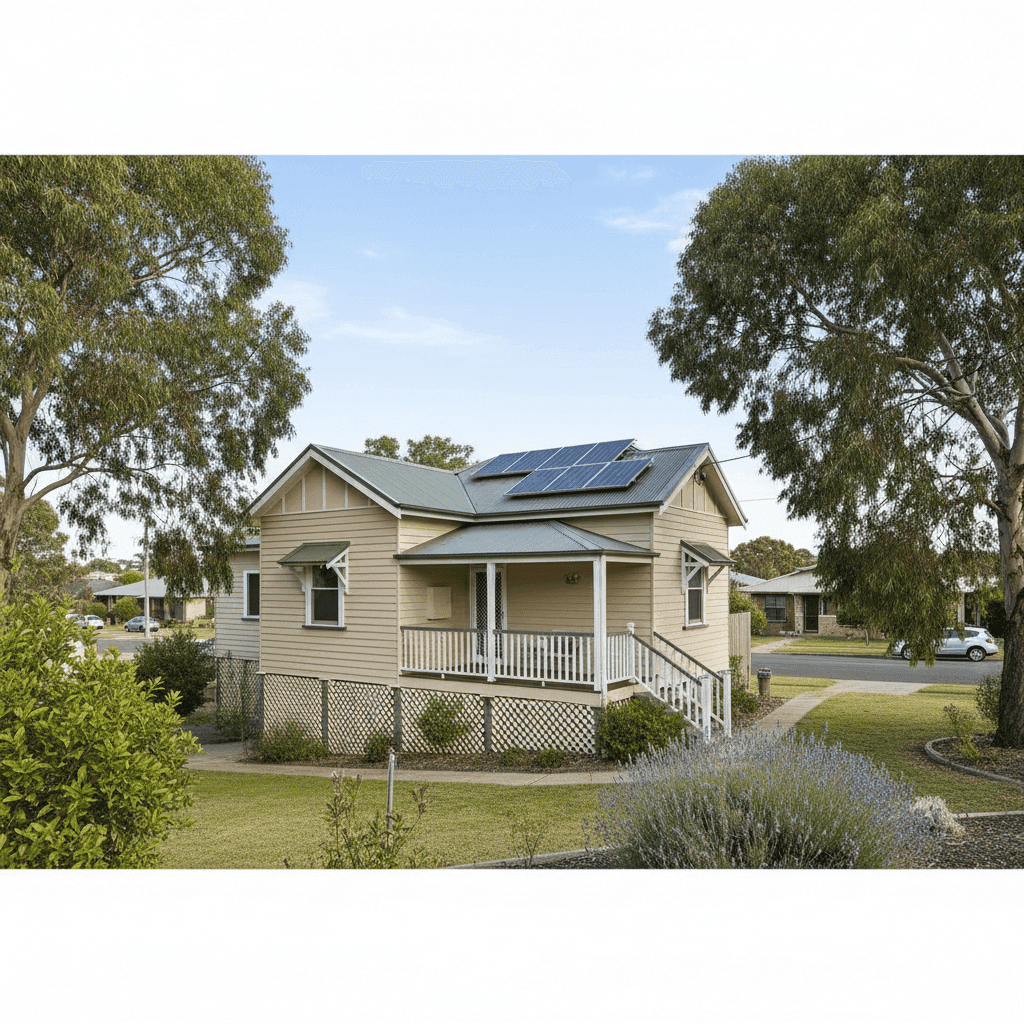
North Albury is a well-established residential suburb sitting just south of the Murray River in New South Wales, known for its mix of period homes and quiet tree-lined streets. If you own a free standing home in the area — particularly an older weatherboard property — understanding what you should be paying for home and contents insurance is an important part of protecting your investment. This article breaks down a real insurance quote for a 2-bedroom, 1-bathroom free standing home in North Albury (NSW 2640), and puts it in context against local, state, and national benchmarks.
---
Is This Quote Fair?
The quote in question comes in at $1,173 per year (or around $110 per month) for combined home and contents cover, with a building sum insured of $520,000 and contents covered to $100,000. The building excess is set at $2,000 and the contents excess at $1,000.
Our pricing analysis rates this quote as CHEAP — below average for the area. That's a meaningful finding. In a suburb where the average annual premium sits at $1,932 and the median at $1,927, this quote comes in roughly $759 below the suburb average — a saving of nearly 40%. Even against the cheapest quarter of quotes in the area (the 25th percentile at $1,306/yr), this premium still undercuts the market.
For homeowners comparing options, a below-average rating like this signals genuine value — though it's always worth confirming the policy's inclusions, exclusions, and claim conditions before committing. A lower premium can sometimes reflect narrower cover, higher excesses, or specific exclusions, so reading the Product Disclosure Statement (PDS) carefully remains essential.
---
How North Albury Compares
To properly appreciate this quote, it helps to zoom out and look at the broader pricing landscape. You can explore the full data on the North Albury suburb stats page.
| Benchmark | Annual Premium |
|---|---|
| This quote | $1,173 |
| Suburb average (North Albury) | $1,932 |
| Suburb median (North Albury) | $1,927 |
| Suburb 25th percentile | $1,306 |
| Suburb 75th percentile | $2,262 |
| NSW average | $3,801 |
| NSW median | $3,410 |
| National average | $2,965 |
| National median | $2,716 |
The gap between this quote and NSW-wide pricing is striking. The NSW state average of $3,801 per year is more than three times the cost of this particular quote — a reflection of just how varied home insurance can be across the state. Coastal and flood-prone areas, along with higher-density urban centres like Sydney, tend to push state averages upward significantly.
Compared to the national average of $2,965, this quote is still less than half the price. Even within the broader Snowy Valleys LGA, where the average premium is $2,748 per year, this quote represents exceptional value.
North Albury's own suburb averages are notably lower than both state and national figures, suggesting the area benefits from relatively favourable risk conditions — no cyclone exposure, lower catastrophe frequency, and a stable inland climate all contribute to more competitive premiums in this part of regional NSW.
---
Property Features That Affect Your Premium
Several characteristics of this particular property are worth discussing, as they directly influence how insurers assess risk and calculate premiums.
Weatherboard timber walls are one of the most significant rating factors for older homes. Timber construction is generally considered higher risk than brick veneer or double brick, as it is more susceptible to fire and can be more expensive to repair or replace. Insurers typically apply a loading for weatherboard homes, which makes the competitive pricing here even more noteworthy.
Steel/Colorbond roofing is viewed favourably by most insurers. It's durable, low-maintenance, and performs well in both extreme heat and heavy rainfall — all relevant considerations for a regional NSW property. Compared to older tile or fibrous cement roofing, Colorbond tends to attract more competitive premiums.
Stumps foundation is common in older homes across regional NSW and Victoria. While it's a well-understood construction type, it can raise questions around subfloor access, pest risk, and structural movement over time. Some insurers apply minor loadings for stump foundations, particularly in areas with reactive soils.
Timber and laminate flooring is generally straightforward from an insurance perspective, though water damage claims can be more costly to repair with timber floors compared to tiles.
Solar panels are an increasingly common feature and are typically covered as part of the building sum insured, provided they are permanently fixed to the roof. It's worth confirming with your insurer that the $520,000 building sum insured accounts for the replacement value of the panels.
Ducted climate control adds to the overall replacement value of the home and is a relevant consideration when setting your building sum insured. Underinsurance is a common issue in Australia — ensuring your sum insured reflects the true cost of rebuilding, including fixtures and fittings, is critical.
The property was built in 1969, making it over 55 years old. Older homes can carry higher risk profiles due to ageing electrical wiring, plumbing, and structural components. Regular maintenance and updates to key systems can help manage both risk and premium costs.
---
Tips for Homeowners in North Albury
1. Review your building sum insured regularly Construction costs have risen sharply in recent years. A sum insured of $520,000 for a 130 sqm home may be appropriate today, but it's worth recalculating your replacement cost annually — especially given the age and construction type of the property. Use a building cost calculator or speak with a local builder to get an up-to-date estimate.
2. Maintain your weatherboard exterior Timber weatherboard requires ongoing upkeep to remain in good condition. Regular painting, prompt repair of damaged boards, and treatment for termites not only protect the home but may also support your insurance claims if damage occurs. Some insurers may reduce payouts if damage is attributed to a lack of maintenance.
3. Confirm solar panel coverage With solar panels installed, check your policy's PDS to confirm they are explicitly covered under the building section. Ask your insurer whether accidental damage, storm damage, and power surge are all included — and whether any separate limits apply.
4. Compare quotes at renewal time Even if your current premium is already below average, the insurance market changes every year. New entrants, updated risk models, and changing reinsurance costs mean the best deal today may not be the best deal next year. Shopping around at renewal is one of the simplest ways to keep your costs in check.
---
Compare Home Insurance Quotes in North Albury
Whether you're renewing an existing policy or insuring a property for the first time, comparing multiple quotes is the smartest way to ensure you're getting fair value. CoverClub makes it easy to see how your premium stacks up against real data from your suburb and across Australia. Get a home insurance quote today and find out if you're paying too much.