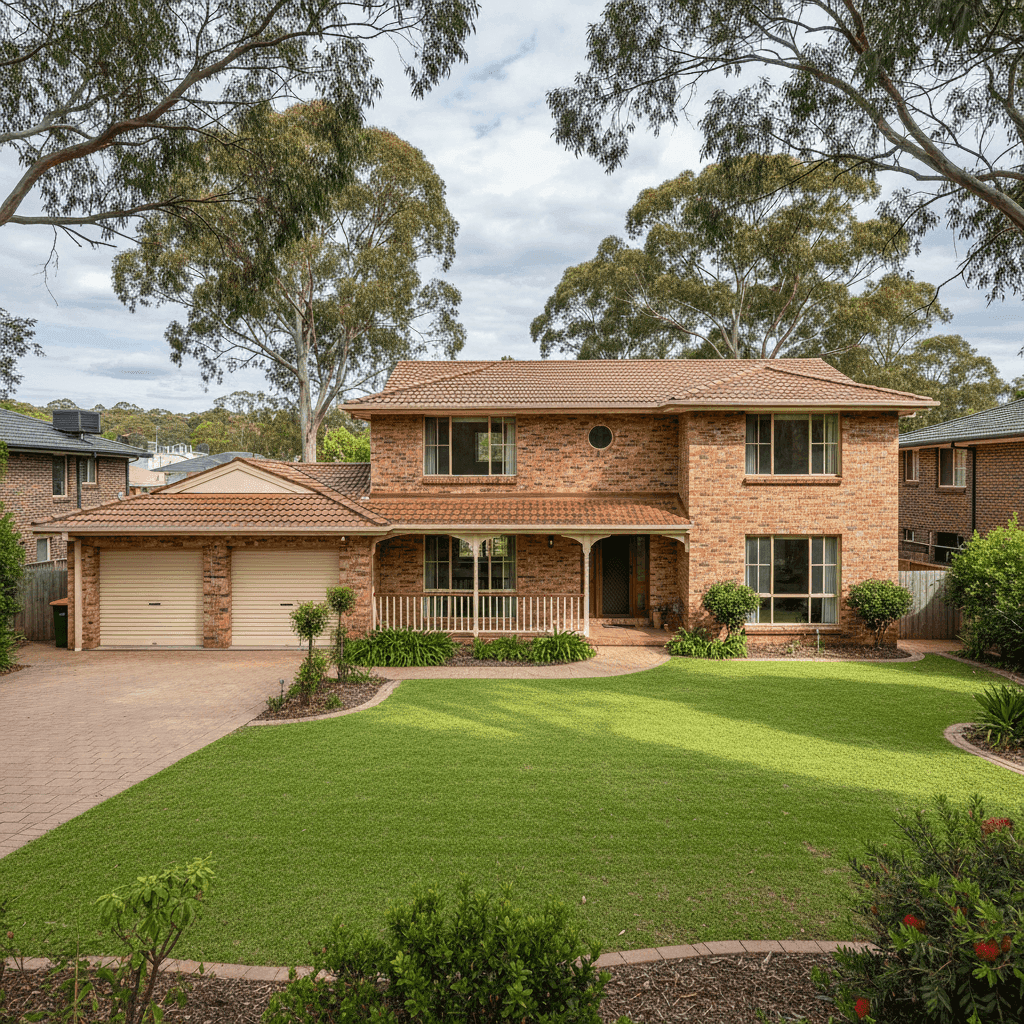
North Avoca is one of the Central Coast's most sought-after coastal suburbs — a leafy, relaxed community sitting between Terrigal and Avoca Beach. It's the kind of place where a well-built, four-bedroom family home on a generous block is the norm, and protecting that investment with the right home insurance is essential. In this article, we break down a real home and contents insurance quote for a free-standing brick veneer home in North Avoca (NSW 2260), and assess whether the premium stacks up against what other homeowners in the area — and across the country — are paying.
---
Is This Quote Fair?
The quote in question comes in at $5,392 per year (or $510/month) for combined home and contents cover, with a building sum insured of $909,000 and contents valued at $100,000. Both the building and contents excess are set at $1,000.
Our price rating for this quote is Expensive (Above Average).
To put that in context: the suburb average for North Avoca sits at $4,586/year, and the median is $4,547/year. This quote lands above the 75th percentile for the suburb (which is $5,374/year), meaning it's priced higher than roughly three-quarters of comparable quotes we've seen in the area. That's a meaningful gap — around $800 more per year than the local average.
That said, "expensive" doesn't necessarily mean wrong. The building sum insured of $909,000 is substantial, and the property's above-average fittings quality will push the replacement cost — and therefore the premium — higher than a more modestly appointed home. Still, it's worth shopping around to ensure you're not overpaying for the same level of cover.
---
How North Avoca Compares
Understanding where your suburb sits relative to broader benchmarks helps put any individual quote into perspective. Here's how North Avoca stacks up:
| Benchmark | Average Premium | Median Premium |
|---|---|---|
| North Avoca (NSW 2260) | $4,586/yr | $4,547/yr |
| NSW (State) | $9,528/yr | $3,770/yr |
| National | $5,347/yr | $2,764/yr |
| Central Coast LGA | $8,387/yr | — |
(Based on [North Avoca suburb data](https://coverclub.com.au/stats/NSW/2260/north-avoca), [NSW state data](https://coverclub.com.au/stats/NSW), and [national benchmarks](https://coverclub.com.au/stats/national).)
A few things stand out here. The NSW state average of $9,528/year is dramatically higher than the median of $3,770/year — a classic sign that a small number of very high-risk or high-value properties are pulling the average upward. The same dynamic plays out nationally, where the average ($5,347/year) is nearly double the median ($2,764/year).
For North Avoca specifically, the average and median are closely aligned, which suggests a relatively consistent risk profile across the suburb — no extreme outliers skewing the numbers. The quote we're analysing sits comfortably above the local average but is broadly in line with the national average, which is worth noting given the property's size and sum insured.
The Central Coast LGA average of $8,387/year is notably high, likely reflecting a mix of coastal, bushfire-adjacent, and flood-prone properties across the broader region. North Avoca's own figures are considerably more favourable than the LGA-wide average, which is a positive signal for homeowners in this specific suburb.
---
Property Features That Affect Your Premium
Every home is different, and insurers weigh up a range of property characteristics when calculating your premium. Here's how the features of this particular home are likely influencing the quote:
Brick Veneer Walls Brick veneer is generally viewed favourably by insurers. It offers solid fire resistance and durability compared to timber or clad construction, which can translate to more competitive premiums. However, it can be more expensive to repair or rebuild than some modern materials, which may partially offset that advantage.
Tiled Roof Terracotta or concrete tiles are a common and well-regarded roofing choice in NSW. They're durable, fire-resistant, and relatively low maintenance — all factors that tend to keep premiums in check compared to older or more vulnerable roofing materials.
Slab Foundation A concrete slab foundation is standard for many homes of this era and is generally considered low-risk from an insurer's perspective. It eliminates the underfloor space that can be vulnerable to moisture and pest damage in raised homes.
Timber/Laminate Flooring Flooring type can influence contents and building claims. Timber and laminate floors are susceptible to water damage, which is worth keeping in mind when reviewing your policy's water damage provisions.
Construction Year: 1981 At over 40 years old, this home predates some modern building codes. Older homes can attract slightly higher premiums due to the increased likelihood of ageing infrastructure (plumbing, wiring, roofing) requiring attention. Ensuring the building sum insured reflects current rebuild costs — not just market value — is particularly important for homes of this vintage.
Above-Average Fittings Quality This is one of the more significant premium drivers for this property. Above-average fittings — think stone benchtops, quality cabinetry, premium fixtures — increase the cost to rebuild or repair, and insurers price accordingly. It's one of the key reasons this quote sits above the suburb median.
Ducted Climate Control Ducted air conditioning systems are a fixed building feature and are typically included in the building sum insured. They add to the overall replacement cost and can be expensive to repair or replace following an insured event.
---
Tips for Homeowners in North Avoca
1. Review your building sum insured carefully With a sum insured of $909,000, it's important to ensure this figure genuinely reflects the cost to demolish and rebuild your home from scratch — not its market value. Underinsurance is a common and costly mistake. Use a quantity surveyor or your insurer's building cost calculator to validate the figure, especially given the above-average fittings in this home.
2. Compare quotes before renewing This quote is rated as expensive relative to the local market. With 18 quotes in our North Avoca dataset, there's clear evidence that more competitive pricing exists in this suburb. Before your policy renews, get a fresh quote at CoverClub to see what other insurers are offering for the same level of cover.
3. Consider your excess settings Both the building and contents excess are set at $1,000. Opting for a higher voluntary excess can meaningfully reduce your annual premium. If you're unlikely to make small claims, a higher excess may represent good value — just ensure you can comfortably cover it in the event of a claim.
4. Bundle strategically, but verify the savings Combined home and contents policies often attract a discount, and this quote already bundles both. However, it's still worth pricing them separately with different insurers to confirm the bundled deal is genuinely the most cost-effective option for your situation.
---
Ready to Find a Better Deal?
Whether you're buying, renewing, or simply curious about what you should be paying, comparing quotes is the single most effective way to ensure you're not overpaying. CoverClub makes it easy to see real quotes for homes like yours in North Avoca and across Australia. Start your free comparison today — it only takes a few minutes and could save you hundreds of dollars a year.
For more data on home insurance pricing in your area, explore the North Avoca suburb stats, NSW state benchmarks, or national averages.