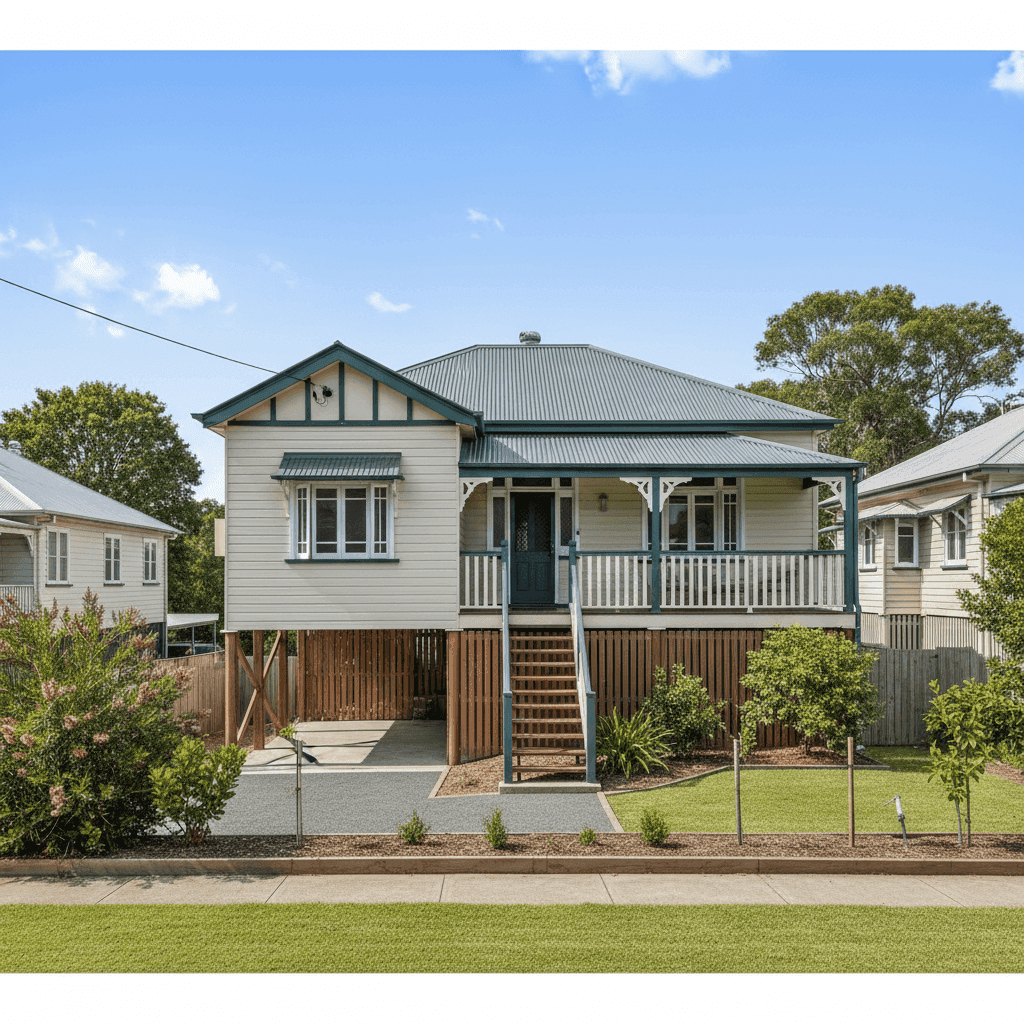
North Ipswich is one of those quietly characterful Queensland suburbs where post-war weatherboard homes still line the streets, many of them elevated on timber stumps and wearing their age with a certain dignity. If you own a free standing home here, understanding what you should be paying for building insurance — and why — can save you hundreds of dollars a year. This article breaks down a real building-only insurance quote for a 3-bedroom, 2-bathroom home in North Ipswich (QLD 4305), and puts the numbers into context using suburb, state, and national data.
---
Is This Quote Fair?
The quote in question comes in at $1,360 per year (or $138/month) for building-only cover on a home insured for $402,000, with a $3,000 building excess.
Our price rating for this quote is FAIR — Around Average, and the data backs that up. Based on 37 quotes collected for the North Ipswich area, the suburb average sits at $1,989/yr and the median at $1,984/yr. At $1,360, this quote lands below both of those benchmarks — closer to the 25th percentile of $1,235/yr than the 75th percentile of $2,768/yr.
In plain terms: this homeowner is paying less than most of their neighbours for comparable cover. That said, "fair" doesn't necessarily mean "the best available." There may still be room to shop around, particularly given the wide spread between the 25th and 75th percentile ($1,235 vs $2,768) — a gap of over $1,500 that reflects just how variable premiums can be in this postcode.
The $3,000 building excess is on the higher side and is worth factoring into the overall value assessment. A higher excess typically lowers your premium, so part of what makes this quote look competitive may be the trade-off of paying more out of pocket in the event of a claim.
---
How North Ipswich Compares
To appreciate how this quote sits in the broader landscape, it helps to zoom out.
| Benchmark | Premium |
|---|---|
| This quote | $1,360/yr |
| North Ipswich suburb average | $1,989/yr |
| North Ipswich suburb median | $1,984/yr |
| QLD state average | $9,129/yr |
| QLD state median | $3,903/yr |
| National average | $5,347/yr |
| National median | $2,764/yr |
The Queensland state average of $9,129/yr is dramatically higher than what North Ipswich homeowners typically pay — a reflection of the extreme premiums seen in cyclone-prone and flood-affected parts of the state, such as Far North Queensland and parts of the Darling Downs. North Ipswich, while not immune to flood risk given its proximity to the Bremer River, is not classified as a cyclone risk area, which keeps premiums more manageable.
Even against the national average of $5,347/yr and national median of $2,764/yr, North Ipswich looks relatively affordable. The suburb median of $1,984/yr sits comfortably below the national median, suggesting that — at least by Australian standards — this is not a high-cost insurance postcode.
It's also worth noting that the nearby LGA average (Scenic Rim) sits at $8,744/yr, which is substantially higher. This likely reflects the more rural and flood-exposed properties in that broader region, and serves as a reminder that postcode-level data tells a more accurate story than LGA-wide figures.
---
Property Features That Affect Your Premium
Several characteristics of this particular home have a meaningful influence on the premium quoted.
Weatherboard timber walls are one of the most significant factors. Timber-framed and clad homes are generally considered higher risk by insurers due to their susceptibility to fire, termite damage, and moisture-related deterioration. Compared to brick or rendered homes, weatherboard properties often attract higher premiums — though this varies by insurer.
Elevated on stumps is a double-edged sword in Queensland. On one hand, being elevated by at least one metre can reduce flood damage risk (water may pass under the home rather than through it), which some insurers reward with lower premiums. On the other hand, homes on stumps can be more vulnerable to storm and wind events, particularly if the stumps are ageing. The 1948 construction year means this home is over 75 years old, and insurers will factor in the age of the structure when assessing replacement cost and risk.
Steel/Colorbond roof is generally viewed favourably by insurers. Colorbond is durable, fire-resistant, and performs well in high-wind conditions — a meaningful advantage in South East Queensland where storm activity is common.
Timber and laminate flooring is relatively neutral from an insurance perspective, though it can be more susceptible to water damage than tiles. Given the elevated foundation, however, the risk of inundation reaching the floor level is somewhat mitigated.
No pool, no solar panels, and no ducted climate control all simplify the risk profile and help keep the premium down. Each of those features adds complexity and potential liability to a property.
The 130 sqm building size and standard fittings quality also contribute to a sum insured of $402,000 that appears proportionate — neither over- nor under-insured for a home of this age and specification.
---
Tips for Homeowners in North Ipswich
1. Review your sum insured annually. Construction costs in Queensland have risen significantly in recent years. A home insured for $402,000 today may cost considerably more to rebuild in two or three years' time. Underinsurance is one of the most common — and costly — mistakes homeowners make. Use a building cost calculator or speak with a quantity surveyor if you're unsure.
2. Ask your insurer about flood cover specifically. North Ipswich sits near the Bremer River, which has a documented history of flooding. Make sure your policy explicitly includes flood cover (not just storm or rainwater damage), and check whether your property falls within a designated flood zone. Some insurers exclude or heavily load premiums for flood in this area.
3. Maintain your stumps and subfloor. Older homes on timber stumps can develop structural issues that affect both safety and insurability. Regular inspections by a licensed builder or pest inspector can catch problems early — and demonstrate to insurers that the property is well-maintained, which may help at renewal time.
4. Compare quotes before you renew. The $1,500+ spread between the 25th and 75th percentile in North Ipswich shows just how much premiums vary between insurers for essentially the same property. Don't assume your renewal quote is the best available. Shopping around — even every two years — is one of the simplest ways to avoid paying more than you need to.
---
Compare Home Insurance Quotes in North Ipswich
Whether you're reviewing an existing policy or shopping for the first time, CoverClub makes it easy to see how your premium stacks up. Get a building insurance quote for your North Ipswich home and compare it against real data from your suburb. You can also explore the full North Ipswich insurance statistics to see how premiums in your postcode are trending.