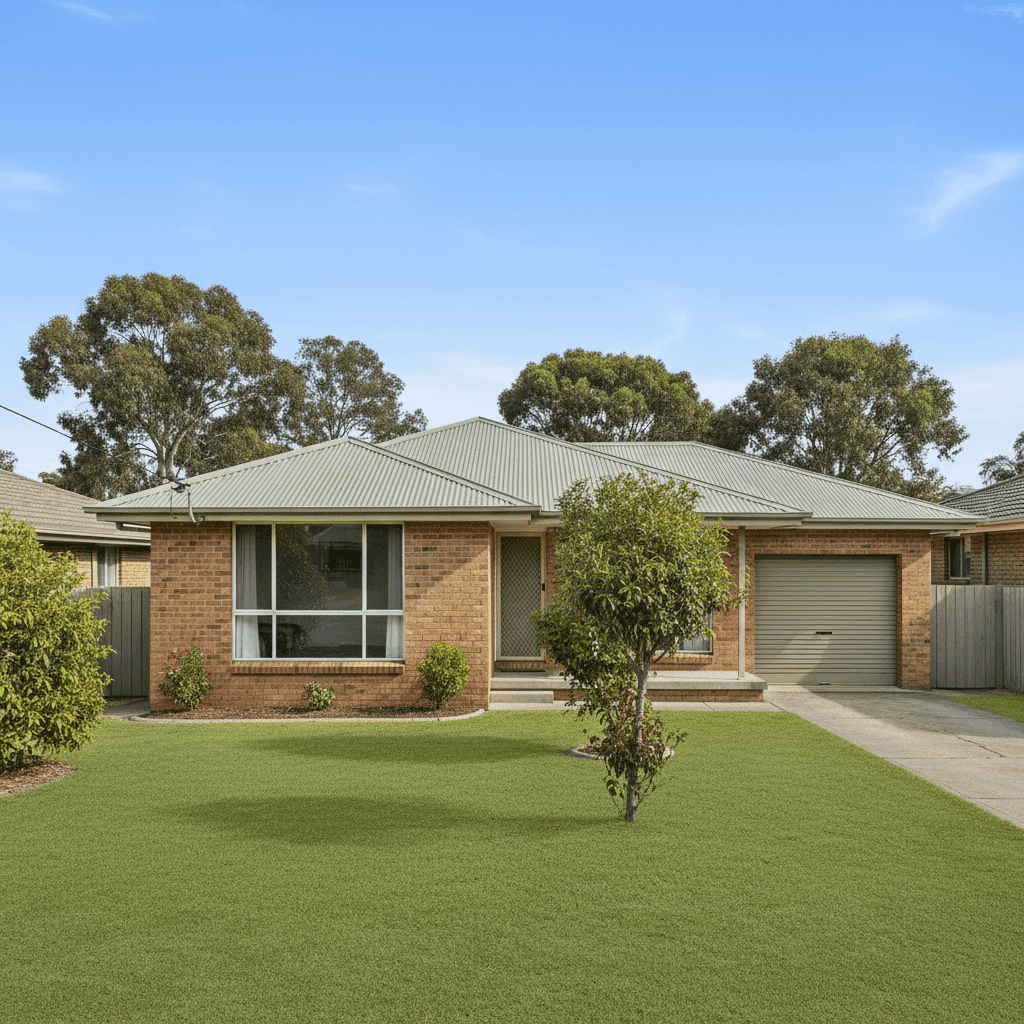
North Ipswich is one of those quietly characterful Queensland suburbs — established streets, solid older homes, and a community that's seen plenty of change over the decades. For owners of a free standing home in this pocket of postcode 4305, understanding what home insurance actually costs — and whether a given quote represents good value — is more important than ever. This article breaks down a real quote for a 3-bedroom, 1-bathroom brick veneer home in North Ipswich, and puts it in context against suburb, state, and national benchmarks.
---
Is This Quote Fair?
The short answer: yes — this is an exceptionally competitive quote.
At $768 per year (or just $72 per month) for combined Home and Contents cover, with a building sum insured of $444,000 and $50,000 in contents cover, this quote sits firmly in "Cheap" territory. That's not a casual label — it means the premium is meaningfully below the average for the same suburb.
To put it in perspective, the suburb average for North Ipswich sits at $2,417 per year, with a median of $2,574. This quote comes in at roughly 68% below the suburb average — a remarkable gap. Even at the 25th percentile (the cheapest quarter of quotes in the area), the going rate is $1,778 per year. This quote undercuts even that figure by more than half.
For homeowners used to seeing eye-watering renewal notices, a premium like this is worth paying close attention to — both to understand why it's so low, and to ensure the cover itself is adequate for the property's needs.
---
How North Ipswich Compares
North Ipswich sits within a broader Queensland insurance landscape that has become increasingly expensive in recent years. Flood events, severe storms, and the ongoing impacts of climate variability have pushed premiums across the state well above national norms.
Here's how the numbers stack up:
| Benchmark | Annual Premium |
|---|---|
| This Quote | $768 |
| North Ipswich Suburb Average | $2,417 |
| North Ipswich Suburb Median | $2,574 |
| North Ipswich 25th Percentile | $1,778 |
| North Ipswich 75th Percentile | $2,924 |
| QLD State Average | $4,547 |
| QLD State Median | $3,931 |
| National Average | $2,965 |
| National Median | $2,716 |
| Ipswich LGA Average | $4,020 |
The QLD state average of $4,547 per year is a stark figure — nearly six times what this particular quote came in at. Even the national average of $2,965 is almost four times higher. Queensland's elevated premiums reflect the state's exposure to extreme weather, particularly flooding and cyclones, which push up risk assessments across the board.
North Ipswich's own suburb averages are notably lower than the broader QLD and Ipswich LGA figures, suggesting that localised risk factors — including flood mapping and proximity to the Bremer River — vary considerably even within the postcode. That said, the suburb's averages are still well above this quote, underlining just how competitive this particular premium is.
---
Property Features That Affect Your Premium
Several characteristics of this property likely contribute to its favourable premium. Let's unpack them:
Brick Veneer Construction Brick veneer is generally viewed positively by insurers. It offers solid fire resistance and structural durability compared to weatherboard or lightweight cladding, which can translate to lower risk assessments and, in turn, lower premiums.
Steel / Colorbond Roof Colorbond roofing is a strong performer in the Australian climate. It's lightweight, resistant to corrosion, and holds up well in high-wind events. Insurers tend to view it more favourably than older tile roofs, which can crack or dislodge in storms.
Slab Foundation A concrete slab foundation provides stability and reduces the risk of subsidence or pest-related structural damage. It's a straightforward foundation type that doesn't carry the same inspection concerns as older stumped or pier-and-beam homes.
Slightly Elevated (Less Than 1m) The property is listed as elevated by less than 1 metre. While this modest elevation may offer minimal flood protection compared to a fully raised Queenslander, it can still make a marginal difference in flood risk assessments — particularly relevant in parts of Ipswich that have experienced inundation historically.
Construction Year: 1985 Homes built in the mid-1980s occupy an interesting middle ground. They're old enough to have some wear, but generally built to reasonable standards before more recent code improvements. Insurers will factor in the age of fixtures and fittings, particularly for a property with standard-quality fittings and timber/laminate flooring.
Ducted Climate Control The presence of ducted climate control adds some value to the contents and building assessment, but it's a relatively common feature that doesn't dramatically shift premiums in either direction.
No Pool, No Solar The absence of a pool removes one source of liability risk, and no solar panels means there's no additional equipment to insure or assess for storm/hail damage. Both simplify the risk profile.
---
Tips for Homeowners in North Ipswich
1. Review Your Sum Insured Regularly Building costs have risen sharply in recent years. A sum insured of $444,000 for a 130 sqm home in North Ipswich should be reviewed annually to ensure it reflects current rebuild costs — not just the original purchase price. Underinsurance is one of the most common and costly mistakes homeowners make.
2. Understand Your Flood Risk Parts of North Ipswich have been affected by flooding, particularly during major Bremer River events. Check whether your policy explicitly includes flood cover (as distinct from storm or rainwater damage), and verify your property's flood zone status with Ipswich City Council's mapping tools before assuming you're covered.
3. Don't Over-Insure Contents — But Don't Under-Insure Either A $50,000 contents sum for a 3-bedroom home is modest. Take the time to do a proper home contents inventory — furniture, appliances, clothing, electronics, and valuables — to make sure the figure is realistic. A claim shortfall can be just as damaging as paying too much upfront.
4. Compare at Renewal, Every Time This quote demonstrates that premiums can vary wildly for the same property type in the same suburb. Insurers use different risk models, and the gap between the cheapest and most expensive quotes can be thousands of dollars. Don't auto-renew without checking what else is available.
---
Ready to See What You Could Pay?
Whether you're a North Ipswich local or looking at property anywhere in Australia, comparing quotes is the single most effective way to avoid overpaying for home insurance. Get a quote through CoverClub and see how your premium stacks up against real suburb, state, and national data — in minutes.