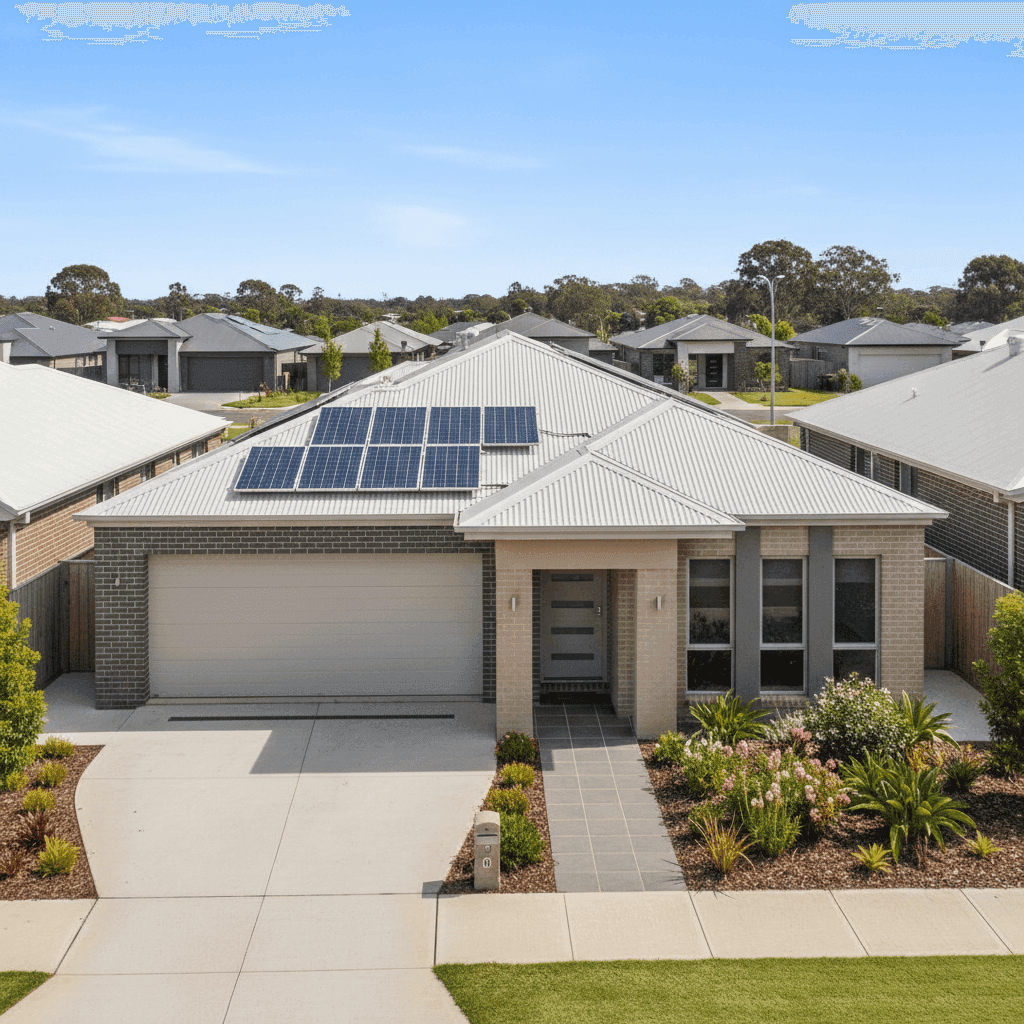
North Lakes is one of South East Queensland's most popular master-planned communities, sitting about 35 kilometres north of Brisbane's CBD in the Moreton Bay region. With its mix of modern estates, family-friendly streets, and easy access to Westfield North Lakes, it's no surprise the suburb has seen strong residential growth over the past two decades. For owners of a free standing home here, understanding what a fair home insurance premium looks like is an important part of protecting what is likely their most valuable asset.
This article breaks down a real home and contents insurance quote for a four-bedroom, three-bathroom free standing home in North Lakes (postcode 4509), benchmarks it against local, state, and national data, and offers practical tips to help you get the best value cover.
---
Is This Quote Fair?
The annual premium for this property came in at $1,500 per year (or $147 per month), covering both building (sum insured: $948,000) and contents ($100,000), with a building excess of $2,000 and a contents excess of $1,000.
Our pricing analysis rates this quote as CHEAP — below average for the area. Here's what that means in context:
Based on 58 quotes collected for North Lakes (4509), the suburb average premium sits at $2,408 per year, with a median of $2,591. The 25th percentile — meaning only one in four quotes in the suburb came in cheaper — is $1,954 per year. This quote, at $1,500, falls well below even the cheapest quarter of the market for this suburb.
Put simply: if you received this quote, you'd be paying significantly less than most comparable North Lakes homeowners. That's a strong result, and worth understanding in more detail.
---
How North Lakes Compares
To put this quote in broader perspective, here's how North Lakes stacks up against Queensland and national benchmarks:
| Benchmark | Average Premium | Median Premium |
|---|---|---|
| North Lakes (4509) | $2,408/yr | $2,591/yr |
| Moreton Bay LGA | $3,145/yr | — |
| Queensland | $4,547/yr | $3,931/yr |
| National | $2,965/yr | $2,716/yr |
A few things stand out here. First, North Lakes is actually cheaper than both the Queensland state average and the national average — a meaningful advantage for homeowners in this suburb. Queensland as a whole carries some of the highest home insurance premiums in the country, largely driven by the elevated risk of cyclones, flooding, and storm damage in many parts of the state. North Lakes, however, is not classified as a cyclone risk area, which helps keep premiums more competitive.
Second, the Moreton Bay LGA average of $3,145 per year is notably higher than the North Lakes suburb average of $2,408, suggesting that other parts of the Moreton Bay region carry greater risk profiles — likely including suburbs with higher flood exposure or proximity to waterways.
This quote, at $1,500, beats every single benchmark listed above by a wide margin.
---
Property Features That Affect Your Premium
Insurance underwriters assess a range of property characteristics when pricing a policy. For this home, several features work in the owner's favour:
Brick veneer construction is generally viewed favourably by insurers. While not as robust as full brick, brick veneer walls offer solid resistance to wind and impact damage, and are far more fire-resistant than timber-framed cladding alternatives. This can contribute to lower building premiums.
Steel (Colorbond) roofing is another positive factor. Colorbond is a durable, lightweight material that performs well in Australian conditions — resistant to corrosion, fire, and moderate wind events. It's a popular choice in Queensland and is typically associated with lower claim rates than older tile roofs, which can crack, leak, or lift in storms.
Slab foundation is the standard for homes of this era and construction type. It's structurally sound and doesn't carry the added risks of subfloor moisture or pest damage that older raised foundations might.
Solar panels are worth noting. While they add value to a property, they can also add modest complexity to a building insurance policy — some insurers include them in the building sum insured, while others treat them as a separate item. It's worth confirming with your insurer that your solar system is explicitly covered under your policy.
Built in 2005, this home sits in a sweet spot: modern enough to meet contemporary building codes (which have strengthened significantly since the 1990s), but established enough that construction costs are well understood. Homes built after 1990 generally attract more favourable premiums than older properties.
The 235 sqm floor area and standard fittings quality are consistent with the sum insured of $948,000, which reflects current rebuild costs in South East Queensland rather than market value.
---
Tips for Homeowners in North Lakes
1. Review your sum insured annually Building costs in Queensland have risen sharply in recent years. A sum insured that was accurate two years ago may no longer reflect what it would actually cost to rebuild your home today. Use a building cost calculator or speak to a quantity surveyor to make sure you're not underinsured.
2. Confirm your solar panels are covered With solar panels installed, check your policy documents carefully. Some policies cover panels as part of the building; others require a separate endorsement. Make sure the replacement value of your system is factored into your sum insured.
3. Consider your excess strategically This policy carries a $2,000 building excess and a $1,000 contents excess. Choosing a higher excess is one of the most effective ways to reduce your annual premium — but make sure the excess is an amount you could genuinely afford to pay at short notice if you needed to make a claim.
4. Shop around at renewal time Even with a competitive premium like this one, insurers frequently adjust their pricing year on year. Loyalty doesn't always pay in the insurance market — comparing quotes at renewal is one of the simplest ways to ensure you're still getting good value. Get a fresh quote at CoverClub to see how your current policy stacks up.
---
Compare Your Home Insurance Today
Whether you're a first-time buyer in North Lakes or a long-term homeowner reviewing your cover, CoverClub makes it easy to see what you should be paying. Our suburb-level data gives you real benchmarks — not industry averages — so you can walk into any insurance conversation with confidence. Start comparing home insurance quotes now and find out if your premium is as competitive as it could be.