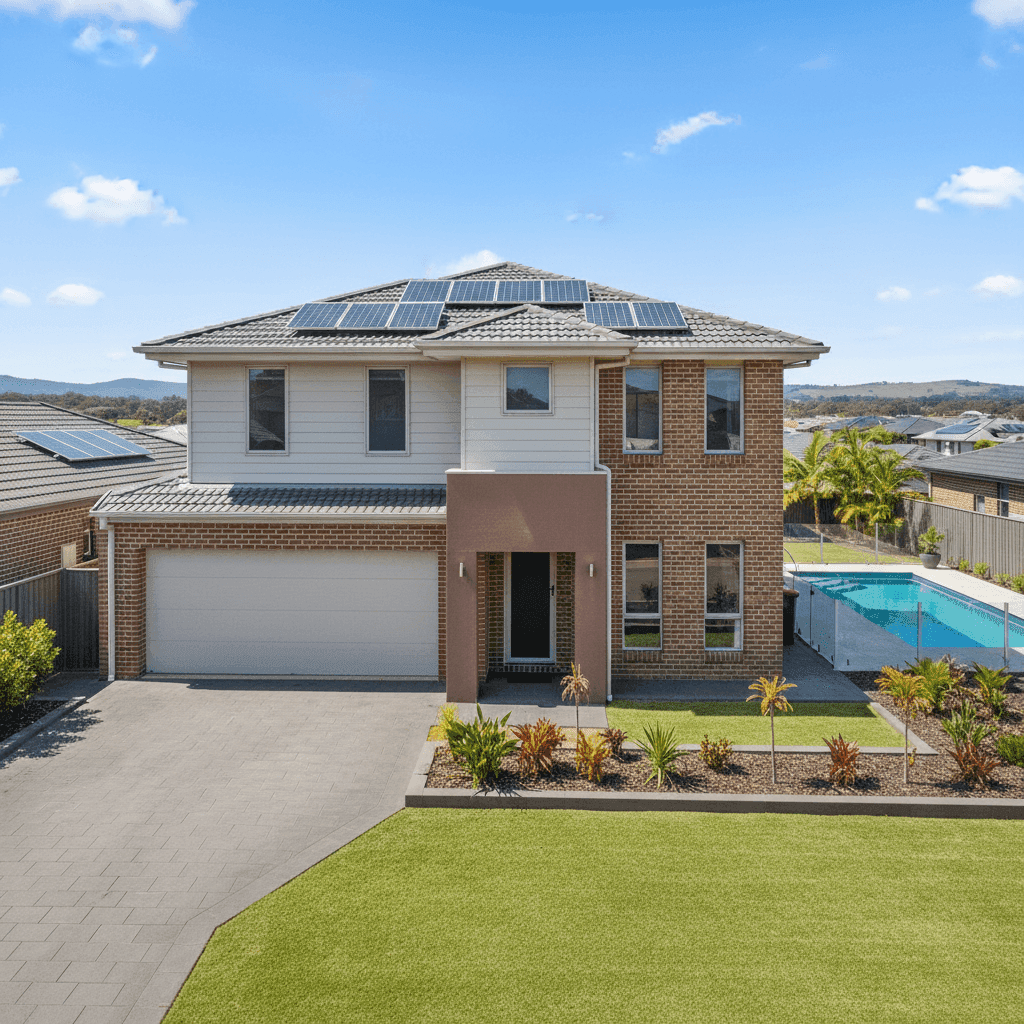
North Lakes is one of South East Queensland's most popular master-planned communities, sitting roughly 35 kilometres north of Brisbane's CBD in the Moreton Bay region. It's a suburb that attracts families drawn to its modern housing stock, retail amenities, and relative affordability compared to inner-city alternatives. If you own a free standing home here — or you're thinking about buying one — understanding what you should expect to pay for home and contents insurance is an important part of managing your household budget.
This article breaks down a real insurance quote for a five-bedroom, three-bathroom brick veneer home in North Lakes, compares it against local, state, and national benchmarks, and offers practical tips to help you get the best value on your cover.
---
Is This Quote Fair?
The quote in question comes in at $2,636 per year (or $258 per month) for combined home and contents insurance, covering a building sum insured of $1,102,000 and contents valued at $150,000. The building excess is $3,000 and the contents excess is $600.
Our price rating for this quote is FAIR — Around Average, and the data backs that up.
Looking at home insurance quotes across North Lakes (postcode 4509), the suburb average sits at $2,408 per year and the median at $2,591. This quote of $2,636 lands just above the median and comfortably within the interquartile range — the middle 50% of quotes in the suburb fall between $1,954 and $2,834 per year. In other words, this premium is neither a bargain nor a red flag; it's a reasonable market rate for the area.
That said, "fair" doesn't mean you can't do better. There's still a meaningful gap between the 25th percentile ($1,954/yr) and this quote, suggesting that competitive alternatives do exist in the market for a property of this type.
---
How North Lakes Compares
One of the most striking takeaways from the data is just how favourably North Lakes compares to the broader Queensland market.
Queensland home insurance premiums are significantly elevated compared to the rest of the country, driven largely by the state's exposure to cyclones, floods, and severe storms — particularly in northern and coastal regions. The QLD state average sits at a hefty $4,547 per year, with a median of $3,931. This quote at $2,636 is well below both figures, reflecting the fact that North Lakes, while still subject to South East Queensland's storm season, sits outside designated cyclone risk zones.
Zooming out to the national picture, the Australian average premium is $2,965 per year and the national median is $2,716. This quote again comes in below both benchmarks, which is a positive sign for North Lakes homeowners — you're paying less than the typical Australian homeowner despite being in a state known for above-average insurance costs.
Within the Moreton Bay LGA, the average premium is $3,145 per year, so this quote also undercuts the local government area average by a reasonable margin. North Lakes benefits from its relatively modern housing stock and lower flood exposure compared to some other Moreton Bay suburbs, which helps keep premiums more competitive.
| Benchmark | Annual Premium |
|---|---|
| This Quote | $2,636 |
| North Lakes Suburb Average | $2,408 |
| North Lakes Suburb Median | $2,591 |
| Moreton Bay LGA Average | $3,145 |
| QLD State Average | $4,547 |
| National Average | $2,965 |
---
Property Features That Affect Your Premium
Several characteristics of this particular property have a direct bearing on how insurers price the risk.
Brick veneer construction and tiled roof are generally viewed favourably by insurers. Brick veneer walls offer solid fire resistance and structural durability, while a tiled roof is considered more resilient than corrugated iron in many storm scenarios. Together, these materials typically attract more competitive premiums compared to lightweight or older construction types.
Slab foundation is standard for Queensland homes built in the 2000s and is generally neutral from an insurance perspective — there's no elevated subfloor to worry about, and the slab provides a stable base that reduces some structural risks.
Tile flooring throughout the home is another positive signal for insurers. Tiles are water-resistant and far less susceptible to damage from minor flooding or moisture ingress than carpet or timber flooring, which can reduce the likelihood and cost of contents and building claims.
Swimming pool adds both value and risk to the property. Pools increase the replacement cost of the building sum insured and can introduce liability considerations, both of which can nudge premiums upward. It's worth ensuring your pool and associated equipment (pumps, filters, fencing) are adequately covered under your policy.
Solar panels are an increasingly common feature on Queensland homes and are worth paying attention to at policy renewal. Many standard home insurance policies cover rooftop solar panels as part of the building, but coverage limits and conditions vary between insurers. Make sure your sum insured accounts for the replacement cost of your solar system.
Ducted climate control is another high-value fixture that should be reflected in your building sum insured. Ducted systems can cost tens of thousands of dollars to replace, and underinsurance is a common issue for homeowners who haven't updated their sum insured since installation.
At 315 sqm, this is a substantial home, and the building sum insured of $1,102,000 reflects that scale. Getting your sum insured right is critical — underinsurance can leave you significantly out of pocket in the event of a major claim.
---
Tips for Homeowners in North Lakes
1. Review your sum insured annually Construction costs have risen sharply in recent years, and a sum insured that was accurate two or three years ago may no longer be sufficient to fully rebuild your home. Use a building cost calculator and factor in your pool, solar system, and ducted air conditioning when assessing your coverage.
2. Compare quotes before renewing Insurance loyalty rarely pays off. With 58 quotes in our North Lakes dataset ranging from under $1,954 to over $2,834, there's clear variation in the market. Shopping around at renewal time — rather than simply accepting the automatic renewal price — can yield meaningful savings without sacrificing coverage quality.
3. Consider your excess settings carefully This quote carries a $3,000 building excess, which is on the higher side. While a higher excess generally reduces your premium, it also means a larger out-of-pocket cost if you need to make a claim. Make sure the excess level you choose aligns with what you could realistically afford to pay at short notice.
4. Check your policy covers storm and water damage South East Queensland experiences intense summer storms, and North Lakes is not immune. Review your policy's definitions for storm damage, storm surge, and water ingress to ensure you're covered for the scenarios most likely to affect your home. Some policies have specific exclusions or sub-limits that aren't immediately obvious.
---
Find a Better Deal with CoverClub
Whether you're reviewing an existing policy or shopping for cover on a new purchase, comparing quotes is the single most effective way to ensure you're getting fair value. CoverClub makes it easy to see how your premium stacks up against real quotes from homeowners in your suburb.
Get a home insurance quote for your North Lakes property and find out if you could be paying less — without compromising on the cover you need.