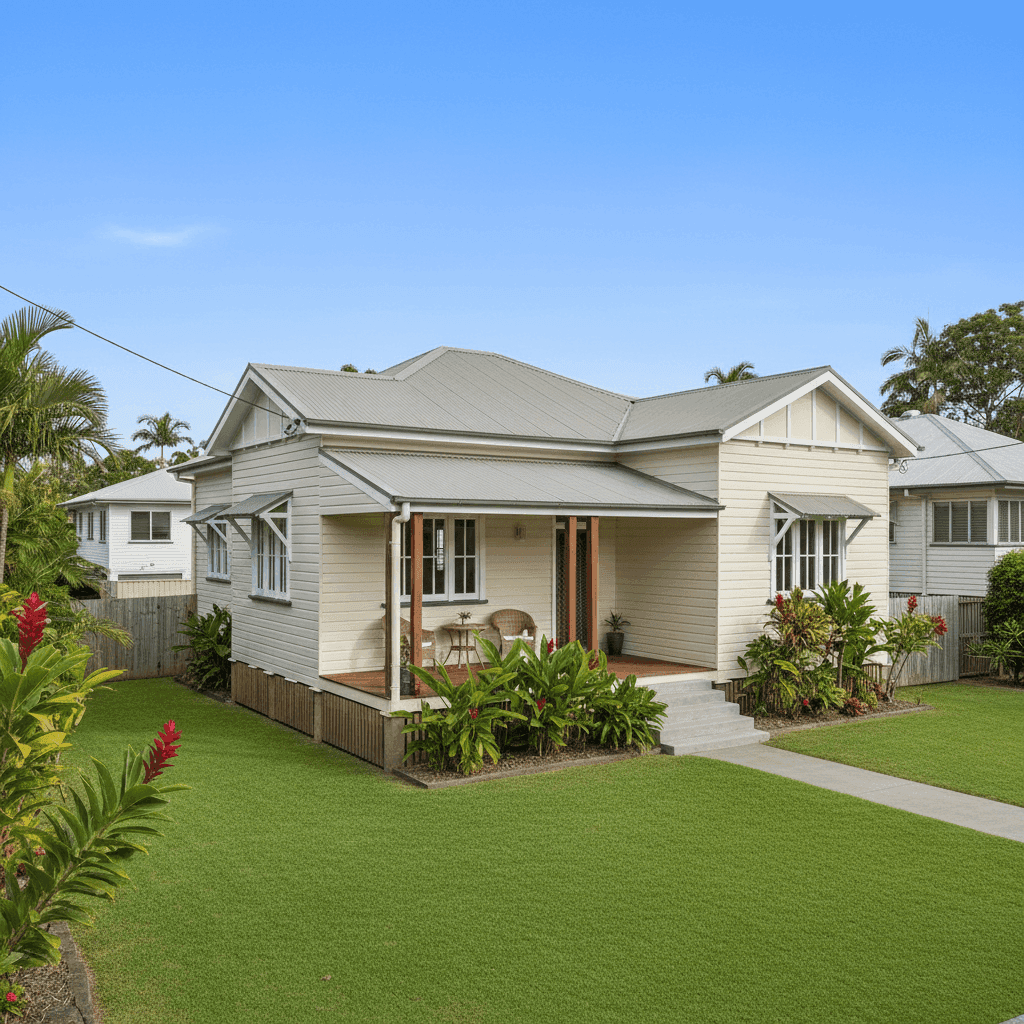
North Mackay is a well-established residential suburb sitting just north of the Mackay CBD in Queensland's tropical north. It's a popular choice for families drawn to its mix of older character homes, convenient amenities, and proximity to the coast. But for homeowners in this part of Queensland, insurance is rarely straightforward — and understanding what drives your premium is just as important as finding a competitive price.
This article breaks down a real home and contents insurance quote for a 3-bedroom, 1-bathroom free-standing home in North Mackay, comparing it against local, state, and national benchmarks to help you make sense of what you're paying.
---
Is This Quote Fair?
The quote in question comes in at $2,443 per year (or $239/month) for combined home and contents cover, with a building sum insured of $440,000 and contents valued at $60,000. The building excess sits at $2,000, and the contents excess at $1,000.
Our price rating for this quote is CHEAP — below average — and the numbers back that up convincingly.
When you look at what other North Mackay homeowners are paying, the suburb average premium is $4,200 per year, with a median of $3,913. That means this quote is coming in at roughly 42% below the suburb average — a significant saving by any measure. Even against the 25th percentile (the cheapest quarter of quotes in the area), which sits at $3,145, this premium is still well under the mark.
For a cyclone-prone suburb in regional Queensland, landing a quote this far below local norms is genuinely uncommon. It's worth understanding why — and making sure the cover itself is appropriate before assuming it's simply a bargain.
---
How North Mackay Compares
To put this quote in full context, here's how it stacks up across different benchmarks based on our data from 74 quotes collected in the 4740 postcode:
| Benchmark | Annual Premium |
|---|---|
| This Quote | $2,443 |
| Suburb 25th Percentile | $3,145 |
| Suburb Median | $3,913 |
| Suburb Average | $4,200 |
| Suburb 75th Percentile | $5,373 |
| LGA (Mackay) Average | $5,218 |
| QLD State Average | $4,547 |
| QLD State Median | $3,931 |
| National Average | $2,965 |
| National Median | $2,716 |
A few things stand out here. First, the Mackay LGA average of $5,218 is notably higher than even the North Mackay suburb average — suggesting that some surrounding areas within the broader Mackay region attract even steeper premiums. Second, QLD as a whole averages $4,547, which is well above the national average of $2,965. This reflects the elevated risk profile of Queensland properties, particularly those in cyclone-declared zones.
Interestingly, this quote at $2,443 sits close to the national median of $2,716 — meaning it's priced more like a low-risk southern suburb than a cyclone-zone property in North Queensland. That's a strong result, though it does raise the question of whether all risk factors have been fully priced in by the insurer.
---
Property Features That Affect Your Premium
Several characteristics of this particular property have a meaningful influence on what insurers charge — both up and down.
Weatherboard timber walls are one of the most significant factors. Older timber homes are generally considered higher risk than brick or rendered masonry construction, as they're more susceptible to storm damage, pest ingress, and fire spread. For a home built in 1966, this is especially relevant — the construction predates many modern building codes and cyclone-rated standards.
Steel/Colorbond roofing is a positive signal for insurers. Colorbond is durable, lightweight, and performs reasonably well in high-wind events compared to older corrugated iron or tile roofs. It's a common upgrade on older Queensland homes and can help moderate premiums.
The slab foundation is generally viewed neutrally to favourably — slabs tend to be stable and are less prone to the movement issues sometimes associated with older stump-and-bearer systems common in pre-1980s Queensland homes.
Timber and laminate flooring is a standard feature in homes of this era and doesn't significantly alter the risk profile, though it's worth noting for contents valuation purposes.
The cyclone risk designation is arguably the single biggest pricing factor for any property in this region. North Mackay falls within a declared cyclone zone, which means insurers apply loading to reflect the elevated likelihood of severe wind and storm damage. The fact that this quote is still below average despite this designation is notable.
The absence of a pool, solar panels, and ducted air conditioning keeps the risk profile relatively lean — each of those features can add complexity (and cost) to a policy.
---
Tips for Homeowners in North Mackay
1. Don't assume a low premium means adequate cover A cheaper quote is only a win if the policy actually covers what you need it to. For a 1966 weatherboard home in a cyclone zone, pay close attention to storm and cyclone sub-limits, exclusions around gradual damage or pre-existing conditions, and whether the policy covers full replacement or only indemnity value.
2. Review your sum insured carefully At $440,000 for a 130 sqm home, the building sum insured works out to roughly $3,385 per square metre. Construction costs in regional Queensland have risen sharply in recent years — it's worth getting an independent building valuation or using an online calculator to confirm this figure is sufficient to fully rebuild, not just repair.
3. Understand your cyclone excess Many insurers in cyclone-declared zones apply a separate, higher excess specifically for cyclone-related claims. This can be significantly above the standard $2,000 building excess listed here. Read your Product Disclosure Statement (PDS) carefully to understand what you'd actually be out of pocket in a worst-case event.
4. Compare quotes annually The insurance market in North Queensland is competitive but volatile. Premiums can shift substantially from year to year based on reinsurance costs, claims history, and weather events. Don't auto-renew without checking — the savings can be substantial, as this quote clearly demonstrates.
---
Ready to Find Your Own Rate?
Whether you're a first-time buyer or a long-term North Mackay resident, comparing quotes is the fastest way to know if you're getting a fair deal. CoverClub makes it easy to see real premium data for your suburb and get quotes tailored to your property. Start comparing home insurance quotes today and find out where your premium sits against the market.
For more local data, explore our North Mackay insurance statistics, Queensland state overview, or national benchmarks.