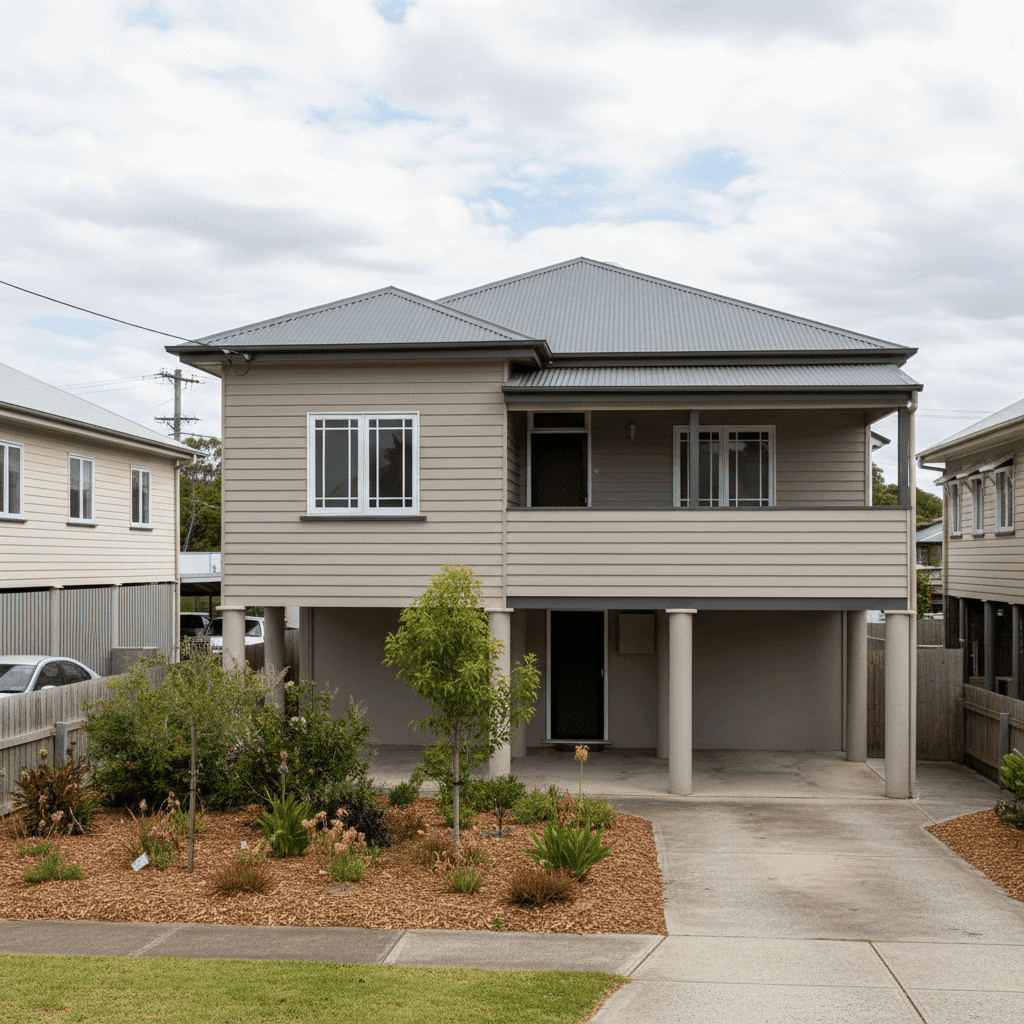
If you own a free standing home in North Mackay, QLD 4740, you already know that finding affordable building insurance in a cyclone-prone region can feel like an uphill battle. This article breaks down a real building-only insurance quote for a three-bedroom, one-bathroom weatherboard home in the suburb — and puts the numbers in proper context so you can judge whether you're getting a fair deal.
---
Is This Quote Fair?
The short answer: yes — very much so.
The quote in question comes in at $2,189 per year (or roughly $214 per month) for building-only cover on a home insured for $500,000, with a $2,000 building excess. CoverClub's pricing model rates this as CHEAP — meaning it sits well below the average for comparable properties in the area.
To put that in perspective, the suburb average premium in North Mackay is $4,200 per year, and the median sits at $3,913. Even the 25th percentile — the cheapest quarter of quotes collected — comes in at $3,145. This quote at $2,189 undercuts even that threshold, placing it among the most competitively priced policies seen in the postcode across our dataset of 74 quotes.
For homeowners in a region where insurance affordability is a genuine concern, a quote this far below the local average deserves serious attention.
---
How North Mackay Compares
To truly appreciate this quote, it helps to zoom out and look at the broader pricing landscape across QLD and the country.
| Benchmark | Premium |
|---|---|
| This Quote | $2,189/yr |
| North Mackay Suburb Average | $4,200/yr |
| North Mackay Suburb Median | $3,913/yr |
| QLD State Average | $4,547/yr |
| QLD State Median | $3,931/yr |
| National Average | $2,965/yr |
| National Median | $2,716/yr |
| Mackay LGA Average | $8,458/yr |
You can explore the full North Mackay suburb stats on CoverClub or browse the national home insurance data for broader context.
A few things stand out here. First, the Mackay LGA average of $8,458 per year is extraordinary — more than double the QLD state average and nearly four times this particular quote. This reflects the outsized cyclone and weather risk that insurers price into properties across the broader Mackay region. Second, this quote is actually cheaper than the national average, which is remarkable for a property in a declared cyclone risk zone. Third, it sits 48% below the North Mackay suburb average, suggesting this insurer has assessed the specific property characteristics favourably.
---
Property Features That Affect Your Premium
Several characteristics of this property are worth examining through an insurance lens.
Construction era (1977): Homes built in the 1970s predate modern cyclone-resistant building codes introduced after Cyclone Tracy devastated Darwin in 1974. While Queensland did begin strengthening its building standards in the years following, a 1977 build may not meet the same resilience benchmarks as homes constructed from the mid-1980s onward. This can push premiums higher — though clearly this insurer has priced it competitively regardless.
Weatherboard timber walls: Timber weatherboard is a classic Queensland construction material, but it carries higher risk in cyclone and storm events compared to brick or rendered masonry. It's also more susceptible to moisture ingress, termite damage, and general wear. Insurers typically factor this in, which is why many weatherboard homes attract elevated premiums in tropical and subtropical regions.
Steel/Colorbond roof: This is a positive from an insurer's perspective. Colorbond roofing is durable, lightweight, and performs well in high-wind events when properly installed and secured. It's also resistant to rust and requires less maintenance than older corrugated iron or tile roofing.
Stumped foundation: Homes on stumps are common in Queensland and offer practical advantages — good airflow, flood resilience for minor inundation, and easier access for under-floor maintenance. However, they can be more vulnerable to structural movement if stumps deteriorate, which insurers may consider.
Vinyl flooring: A practical, low-maintenance choice that is relatively straightforward and inexpensive to replace after a water or storm event — a minor positive from a claims cost perspective.
Standard fittings: No high-end kitchen appliances, luxury bathrooms, or bespoke joinery to inflate the rebuild cost. This keeps the sum insured realistic and the premium grounded.
No pool, solar panels, or ducted climate control: Each of these features adds complexity and cost to a rebuild. Their absence simplifies the risk profile and helps keep the premium lean.
Cyclone risk area: North Mackay sits within a designated cyclone risk zone, which is the single biggest factor driving insurance costs in this region. That this quote remains so affordable despite this designation is the standout finding.
---
Tips for Homeowners in North Mackay
1. Lock in competitive pricing while you can Insurance markets shift constantly, particularly in cyclone-prone regions where reinsurance costs fluctuate after major weather events. If you've received a quote this far below the suburb average, it's worth securing it promptly and reviewing annually to ensure it remains competitive.
2. Review your sum insured carefully A $500,000 building sum insured for a 214 sqm home works out to roughly $2,336 per square metre — a reasonable figure for a standard-fit weatherboard home in regional Queensland. However, rebuild costs can vary significantly based on local labour availability and material costs post-disaster. Consider getting a professional building valuation every few years to avoid being underinsured.
3. Understand your cyclone excess Many insurers apply a separate, higher excess specifically for cyclone-related claims — sometimes 1–2% of the sum insured. On a $500,000 policy, that could mean a $5,000–$10,000 out-of-pocket cost before your cover kicks in. Always read the Product Disclosure Statement (PDS) closely and factor this into your financial planning.
4. Consider the value of contents cover This quote covers the building only. If you haven't already arranged separate contents insurance, it's worth exploring. Even a modest three-bedroom home can accumulate $50,000–$80,000 worth of contents, and without cover, a storm or fire event could leave you significantly out of pocket on furniture, appliances, and personal belongings.
---
Ready to Compare?
Whether you're happy with your current policy or suspect you might be overpaying, it pays to compare. CoverClub makes it easy to benchmark your premium against real quotes from across the suburb, state, and country. Get a home insurance quote today and see how your current cover stacks up — you might be surprised at what's available.