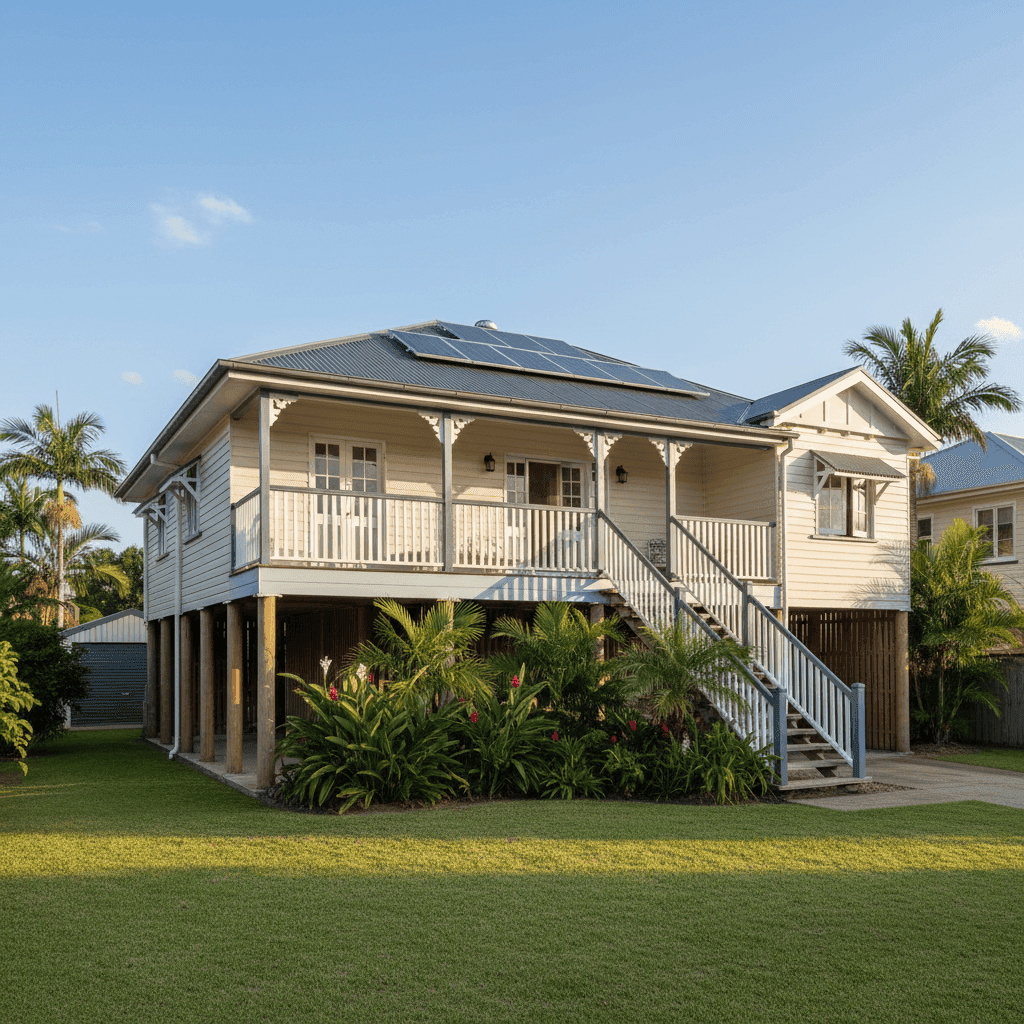
If you own a free standing home in North Mackay, QLD 4740, you already know that insuring your property comes with its own set of challenges. From tropical weather events to the ever-present threat of cyclones, this part of Queensland demands serious consideration when it comes to home and contents cover. In this article, we break down a real insurance quote for a 3-bedroom, 1-bathroom weatherboard home in North Mackay — and help you understand whether what you're paying stacks up.
---
Is This Quote Fair?
The quote in question comes in at $5,693 per year (or $546/month) for combined home and contents insurance, covering a building sum insured of $650,000 and contents valued at $130,000. The building excess sits at $2,000 and the contents excess at $1,000.
Our price rating for this quote is EXPENSIVE — above average for the North Mackay suburb.
To put that in context, the suburb average premium across 94 quotes collected for North Mackay sits at $3,682/year, with a median of $3,407/year. This quote is roughly 55% above the suburb average and well above the 75th percentile of $4,820/year — meaning it's more expensive than at least three-quarters of comparable quotes in the area.
That said, "expensive" doesn't automatically mean "wrong." A number of property-specific factors — which we'll explore below — can legitimately push a premium higher than the suburb norm. The key question is whether those factors fully justify the gap, or whether there's room to shop around.
---
How North Mackay Compares
Understanding where North Mackay sits within the broader insurance landscape is essential context for any homeowner.
| Benchmark | Average Premium | Median Premium |
|---|---|---|
| North Mackay (suburb) | $3,682/yr | $3,407/yr |
| Queensland (state) | $9,129/yr | $3,903/yr |
| Australia (national) | $5,347/yr | $2,764/yr |
| Mackay LGA | $8,458/yr | — |
A few things stand out here. First, the Queensland state average of $9,129/year is dramatically higher than the state median of $3,903/year — a sign that a relatively small number of very high-risk or high-value properties are pulling the average up significantly. North Mackay's suburb average of $3,682/year is actually below the Queensland median, which suggests the suburb, while in a cyclone-prone region, is not among the most heavily penalised postcodes in the state.
Interestingly, the Mackay LGA average of $8,458/year is considerably higher than the North Mackay suburb average, suggesting there may be higher-risk pockets within the broader Mackay region dragging that figure up.
Compared to the national average of $5,347/year, this quote of $5,693/year is slightly above the mark — but it's worth noting that the national median of $2,764/year reflects the many lower-risk, lower-premium properties across southern states. For a cyclone-zone property in Queensland, a premium in this range is not unusual.
---
Property Features That Affect Your Premium
Several characteristics of this particular property have a meaningful impact on its insurance cost. Here's what insurers are likely weighing up:
Weatherboard Timber Walls
Weatherboard timber construction is common in older Queensland homes and carries a higher risk profile than brick or rendered masonry. Timber is more susceptible to fire, termite damage, and storm-related deterioration — all of which can increase rebuild costs and claims likelihood.
Steel/Colorbond Roof
On the positive side, a Colorbond steel roof is generally well-regarded by insurers in cyclone-prone areas. It's durable, lightweight, and tends to perform better in high-wind events than some tile alternatives. This may provide a modest offset to other risk factors.
Elevated on Stumps
The home is elevated by at least one metre on stumps — a classic Queenslander-style design feature. Elevation can actually reduce flood and storm surge risk by keeping the living areas above ground level, which is a genuine positive in this region. However, stumped foundations do introduce their own maintenance considerations and can be costlier to repair or replace.
Construction Year: 1970
At over 50 years old, this home predates many modern building codes, including those introduced after Cyclone Tracy in 1974 and subsequent updates. Older homes are typically viewed as higher risk by insurers due to aging materials, outdated wiring, and lower resilience to extreme weather.
Solar Panels
The presence of solar panels adds replacement value to the building sum insured and may contribute marginally to the premium. Panels can be damaged in hailstorms or high winds, and their replacement cost is factored into the overall building valuation.
Ducted Climate Control
Ducted systems are more expensive to repair or replace than split-system units, and their presence can slightly increase the insured value of the home — which flows through to the premium.
Cyclone Risk Area
Perhaps the single biggest premium driver for this property is its location in a designated cyclone risk area. North Mackay sits in a region that can be directly impacted by tropical cyclones, and insurers price this risk explicitly. Cyclone cover typically attracts a separate excess in Queensland policies, and the underlying risk is baked into the base premium.
---
Tips for Homeowners in North Mackay
If your premium feels steep, there are practical steps you can take to manage your insurance costs without sacrificing meaningful protection.
- Shop around and compare multiple quotes. The spread between the 25th percentile ($2,361/year) and 75th percentile ($4,820/year) in North Mackay is substantial. That gap represents real money — and it shows that not all insurers price this suburb the same way. Using a comparison platform like CoverClub means you can see a range of options side by side.
- Review your sum insured carefully. A building sum insured of $650,000 for a 130 sqm home built in 1970 is on the higher end. Make sure your sum insured reflects the actual rebuild cost — not the market value — of your home. Overinsuring inflates your premium without improving your cover. A quantity surveyor or online building calculator can help you arrive at a more accurate figure.
- Consider your excess strategically. Opting for a higher voluntary excess can reduce your annual premium. If you have the financial buffer to absorb a larger out-of-pocket cost in the event of a claim, increasing your excess from $2,000 to $3,000 or more could yield meaningful savings over time.
- Maintain your property proactively. Insurers reward homes that are well-maintained and less likely to generate claims. Keeping your roof, gutters, and stumps in good condition — and documenting any upgrades — can support your case when negotiating premiums or disputing a quote.
---
Ready to Compare?
Whether you think your current quote is fair or you're convinced you're paying too much, the best next step is to see what else is available. At CoverClub, we make it easy to compare home and contents insurance quotes from multiple providers — so you can make an informed decision rather than just accepting the first number that lands in your inbox.