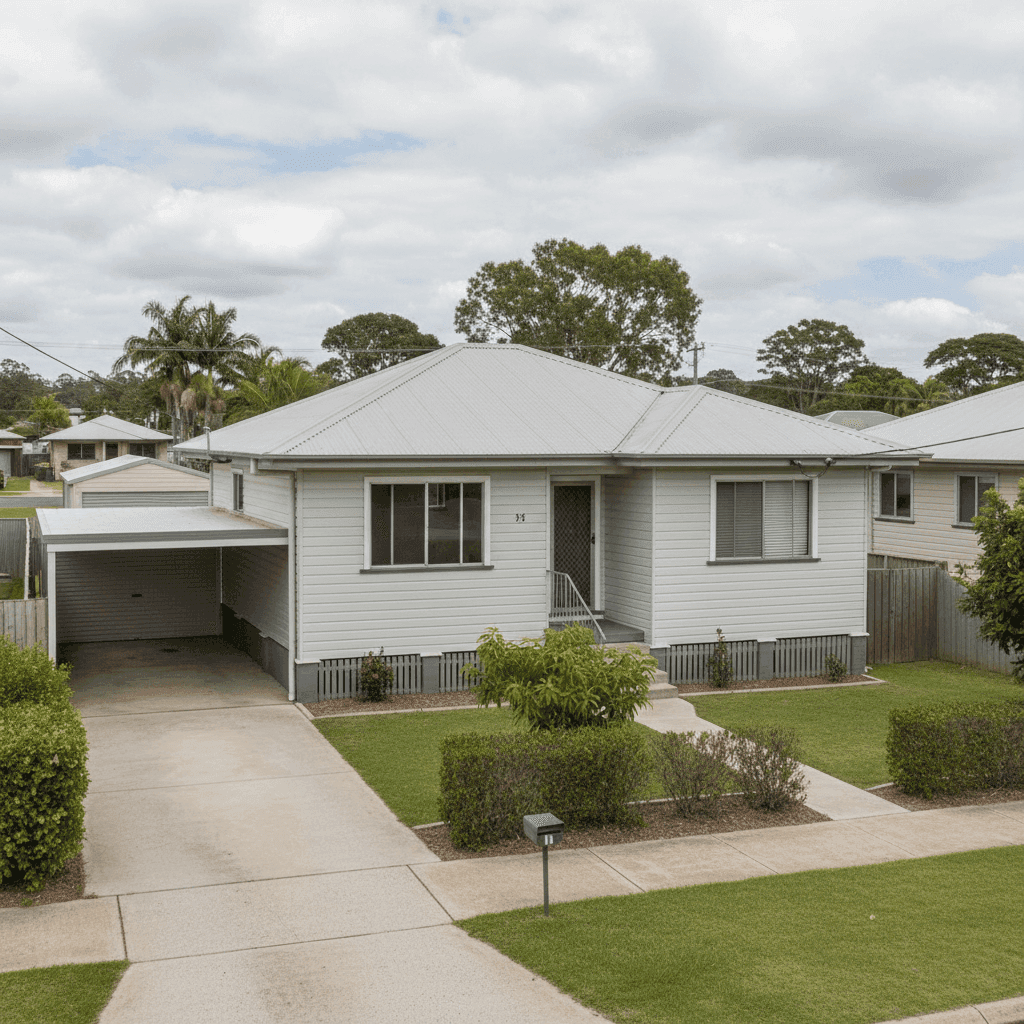
If you own a free standing home in North Mackay, QLD 4740, you already know that insurance isn't cheap — and a recent quote analysed through CoverClub makes that crystal clear. This article breaks down a home and contents insurance quote for a three-bedroom, one-bathroom weatherboard home in the suburb, compares it against local and national benchmarks, and offers practical advice for keeping your premiums as manageable as possible.
---
Is This Quote Fair?
The quote in question comes in at $5,620 per year (or $539 per month), covering a building sum insured of $444,000 and $50,000 in contents — with a $1,000 excess on both building and contents claims.
Our price rating for this quote is Expensive (Above Average). To understand why, it helps to look at what other homeowners in the same suburb are paying. According to CoverClub's North Mackay suburb data, based on a sample of 94 quotes:
- Suburb average: $3,682/yr
- Suburb median: $3,407/yr
- 25th percentile: $2,361/yr
- 75th percentile: $4,820/yr
At $5,620, this quote sits above the 75th percentile for the suburb — meaning it's more expensive than at least three-quarters of comparable quotes in North Mackay. That's a meaningful gap, and it warrants a closer look at what's driving the cost.
---
How North Mackay Compares
Zooming out to a broader view, the picture becomes more nuanced. Check out the Queensland state insurance stats and you'll find:
- QLD average premium: $9,129/yr
- QLD median premium: $3,903/yr
- LGA (Mackay) average: $8,458/yr
And at the national level:
- National average: $5,347/yr
- National median: $2,764/yr
A few things stand out here. The QLD state average is dramatically higher than the median ($9,129 vs $3,903), which tells us that a relatively small number of very high-risk properties — particularly in cyclone-prone coastal and regional areas — are pulling the average up significantly. The Mackay LGA average of $8,458 reflects this dynamic well, as the region carries elevated natural hazard risk.
Compared to the national average of $5,347, this quote of $5,620 is only modestly above the mark. But relative to the suburb median of $3,407, it represents a premium that is roughly 65% higher than what the typical North Mackay homeowner is quoted. That's where the "expensive" rating comes from — not because the quote is outrageous in an absolute sense, but because similar properties in the same postcode are being quoted considerably less.
---
Property Features That Affect Your Premium
Several characteristics of this particular property are likely contributing to the higher-than-median premium. Here's what insurers are paying close attention to:
Cyclone Risk Zone
This is arguably the single biggest factor. North Mackay sits within a designated cyclone risk area, and insurers price this risk heavily into premiums. Cyclone damage can be catastrophic, and the Mackay region has a well-documented history of severe weather events. This alone can add hundreds — or even thousands — of dollars to an annual premium compared to properties in lower-risk parts of Australia.
Weatherboard Timber Construction
The external walls on this property are weatherboard wood, which is a common construction style for homes built in the 1960s across regional Queensland. Timber-framed and clad homes are generally considered higher risk than brick veneer or double brick, as they are more susceptible to fire, termite damage, and wind uplift — all of which are relevant concerns in this region.
Age of the Property (Built 1966)
At nearly 60 years old, this home is considered an older dwelling by insurance standards. Ageing electrical wiring, plumbing, and structural components can increase the likelihood of a claim, and insurers typically factor this into their pricing. Homes built before modern building codes came into effect may also be less resilient to severe weather events.
Steel/Colorbond Roof
On the positive side, a steel Colorbond roof is generally viewed favourably by insurers compared to older tile or fibrous cement roofing. It's durable, lightweight, and performs well in high-wind conditions — which is particularly relevant in a cyclone-prone area.
Building Size and Sum Insured
At 130 sqm with a building sum insured of $444,000, the per-square-metre rebuild cost is approximately $3,415. This is on the higher end for a standard-quality home, which may suggest the sum insured could be worth reviewing with a quantity surveyor to ensure it accurately reflects current rebuild costs — neither over- nor under-insured.
---
Tips for Homeowners in North Mackay
If you're a homeowner in this area looking to get better value from your insurance, here are four practical steps worth considering:
- Compare multiple quotes. The spread between the 25th percentile ($2,361) and the 75th percentile ($4,820) in North Mackay is enormous. That means the market varies wildly, and shopping around can genuinely save you thousands. Use CoverClub to compare quotes side by side.
- Review your sum insured. Make sure your building sum insured reflects the actual cost to rebuild — not the market value of the property. An independent building valuation or quantity surveyor report can help you avoid over-insuring (and overpaying) or being dangerously underinsured after a major event.
- Ask about cyclone mitigation discounts. Some insurers offer premium reductions for homes that have been retrofitted or built to higher cyclone resilience standards. Roof tie-downs, cyclone shutters, and other structural upgrades may qualify your property for a better rate. It's worth asking your insurer directly.
- Consider a higher excess. If you're comfortable absorbing a larger out-of-pocket cost in the event of a claim, opting for a higher excess (say, $2,000 instead of $1,000) can meaningfully reduce your annual premium. Just make sure the savings justify the increased financial exposure.
---
Ready to Find a Better Deal?
A quote of $5,620 per year isn't necessarily the best available for a home like this in North Mackay. The data shows there's real room to move. At CoverClub, we make it easy to compare home and contents insurance quotes from multiple insurers in one place — so you can see exactly where your quote sits and whether a better option exists. Get a quote today and find out what you could be saving.