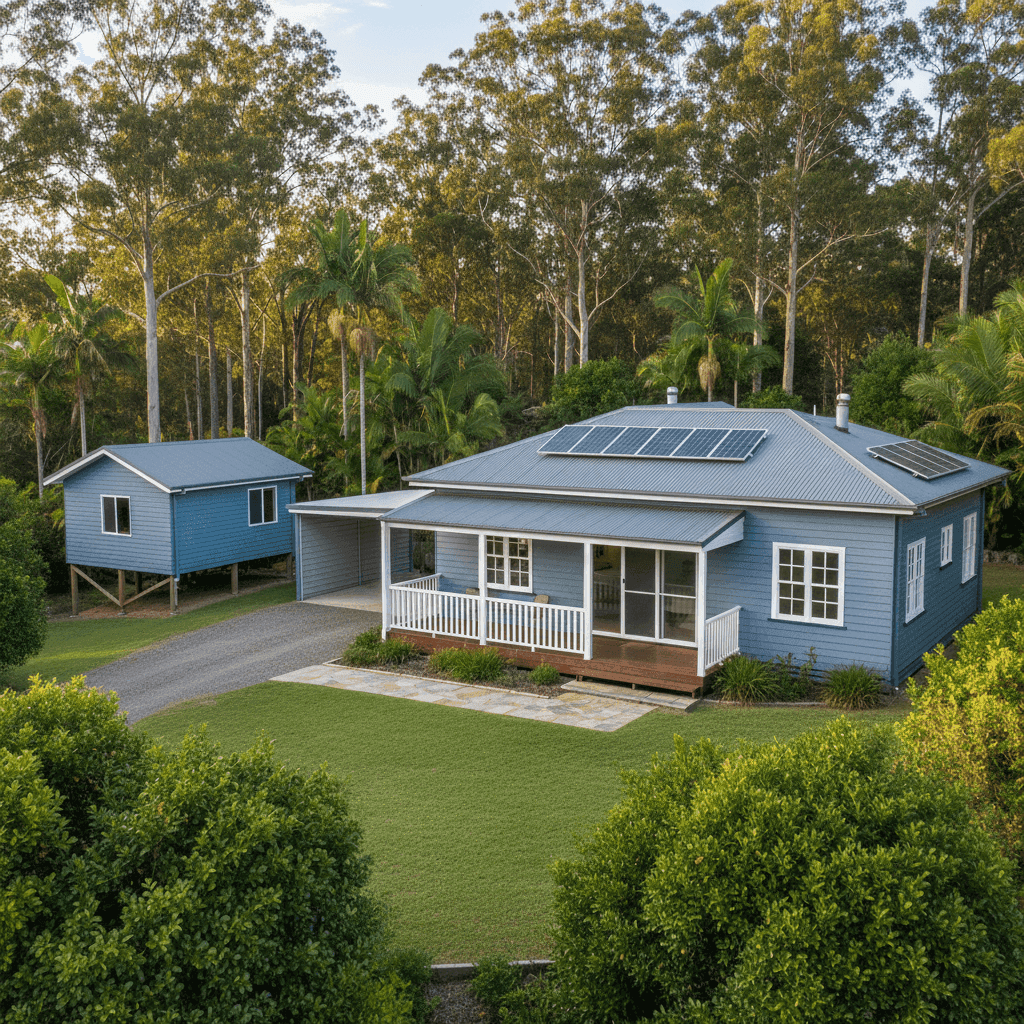
If you own a free standing home in North Macksville, NSW 2447, you already know the area offers a relaxed mid-north coast lifestyle — but what does it cost to protect your biggest asset? This article breaks down a real home and contents insurance quote for a five-bedroom weatherboard property in the suburb, comparing the premium against local, state, and national benchmarks so you can judge whether you're getting a fair deal.
---
Is This Quote Fair?
The annual premium for this quote comes in at $9,513 per year (or roughly $905 per month), covering a building sum insured of $1,236,000 and $60,000 in contents — with a $1,000 excess on each. Our price rating for this quote is CHEAP (Below Average), meaning it sits well below what most comparable properties in the suburb are paying.
To put that in perspective: the suburb average for North Macksville is a striking $40,944 per year, and the median sits even higher at $44,683. Even the cheapest quarter of quotes in the area (the 25th percentile) comes in at $34,990 — still nearly four times this premium. That's a significant gap, and it suggests this particular quote represents genuinely strong value for the level of cover provided.
Of course, premiums vary based on insurer, cover inclusions, and individual risk factors, so it's always worth shopping around to confirm you're comparing like-for-like policies.
---
How North Macksville Compares
Understanding where North Macksville sits in the broader insurance landscape helps put this quote in context. Here's a snapshot:
| Benchmark | Annual Premium |
|---|---|
| This Quote | $9,513 |
| North Macksville Suburb Average | $40,944 |
| North Macksville Suburb Median | $44,683 |
| Nambucca Valley LGA Average | $5,223 |
| NSW State Average | $9,528 |
| NSW State Median | $3,770 |
| National Average | $5,347 |
| National Median | $2,764 |
A few things stand out here. First, North Macksville's suburb-level premiums are dramatically higher than both the NSW state average and the national average — nearly four to eight times higher, depending on the metric you use. This is likely driven by localised flood and weather risk factors that push up pricing for many properties in the postcode.
Interestingly, this quote at $9,513 is almost exactly in line with the NSW state average of $9,528, and sits above the Nambucca Valley LGA average of $5,223. This suggests the quote reflects a moderate risk profile relative to the state as a whole, even though it's well below what many North Macksville neighbours are paying.
You can explore the full pricing picture for this postcode on the North Macksville suburb stats page.
> Note: The suburb sample size for this data is 8 quotes, so averages should be interpreted as indicative rather than definitive.
---
Property Features That Affect Your Premium
Several characteristics of this property have a meaningful influence on how insurers price the risk. Here's what matters most:
Age and Construction (1901 — Weatherboard Walls, Stump Foundation)
Built in 1901, this is a heritage-era home — and that matters a great deal to insurers. Older homes often carry higher rebuilding costs due to non-standard materials, craftsmanship, and compliance requirements. Weatherboard timber external walls are considered a higher fire risk than brick veneer or double brick, and stump foundations (common in older Queensland and NSW coastal homes) can be more susceptible to movement, moisture, and termite damage over time. These factors can push premiums upward.
Roof Type — Steel/Colorbond
On the positive side, a steel Colorbond roof is viewed favourably by most insurers. It's durable, fire-resistant, and performs well in high-wind events — a meaningful advantage in coastal NSW. This likely helps moderate the premium compared to older tile or fibrous cement roofing.
High Building Sum Insured ($1,236,000)
At 316 sqm, this is a substantial home. The $1,236,000 building sum insured reflects the cost of rebuilding a large, older-style property with quality finishes — and a higher sum insured naturally means a higher base premium. Ensuring your sum insured is accurate (not over- or under-insured) is critical.
Solar Panels
Solar panels are increasingly common on Australian homes, but they do add complexity for insurers. Panels represent an additional asset that can be damaged by hail, storms, or fire, and they can complicate roof repairs. Make sure your policy explicitly covers solar panels — not all standard policies do.
Granny Flat
The presence of a granny flat on the property adds both value and risk. Insurers will want to know whether it's owner-occupied, rented, or used for guests, as rental use can significantly affect your cover. Confirm with your insurer that the granny flat is included in your building cover.
Ducted Climate Control
Ducted air conditioning systems are a mechanical asset that can be costly to repair or replace. Most building policies cover fixed systems like ducted climate control, but it's worth confirming the specifics.
---
Tips for Homeowners in North Macksville
Whether you're renewing your policy or shopping for the first time, here are four practical steps to make sure you're properly covered without overpaying.
- Get multiple quotes — every time. The wide spread between the cheapest and most expensive quotes in this suburb (from $34,990 at the 25th percentile to $51,324 at the 75th) shows that insurers price North Macksville very differently. What one insurer considers high risk, another may not. Always compare at least three to five quotes before renewing.
- Check your building sum insured annually. Construction costs have risen sharply across Australia in recent years. A sum insured that was accurate two years ago may no longer be sufficient to fully rebuild your home today. Use a building cost calculator or speak with a quantity surveyor to validate your figure.
- Confirm granny flat and solar panel coverage. These are two features that can easily fall through the cracks in a standard policy. Ask your insurer directly whether both are covered, under what circumstances, and whether any additional premium applies.
- Ask about flood cover. Parts of the Nambucca Valley region have experienced flood events, and flood cover is not always included by default. Review your PDS carefully and, if flood is excluded, consider whether it's a risk you can afford to carry.
---
Compare Home Insurance Quotes for Your North Macksville Property
Whether this quote looks right for your situation or you're curious whether you could do better, the smartest move is to compare. At CoverClub, we make it easy to see how your premium stacks up and find competitive quotes tailored to your property. Get a quote today and take the guesswork out of home insurance.