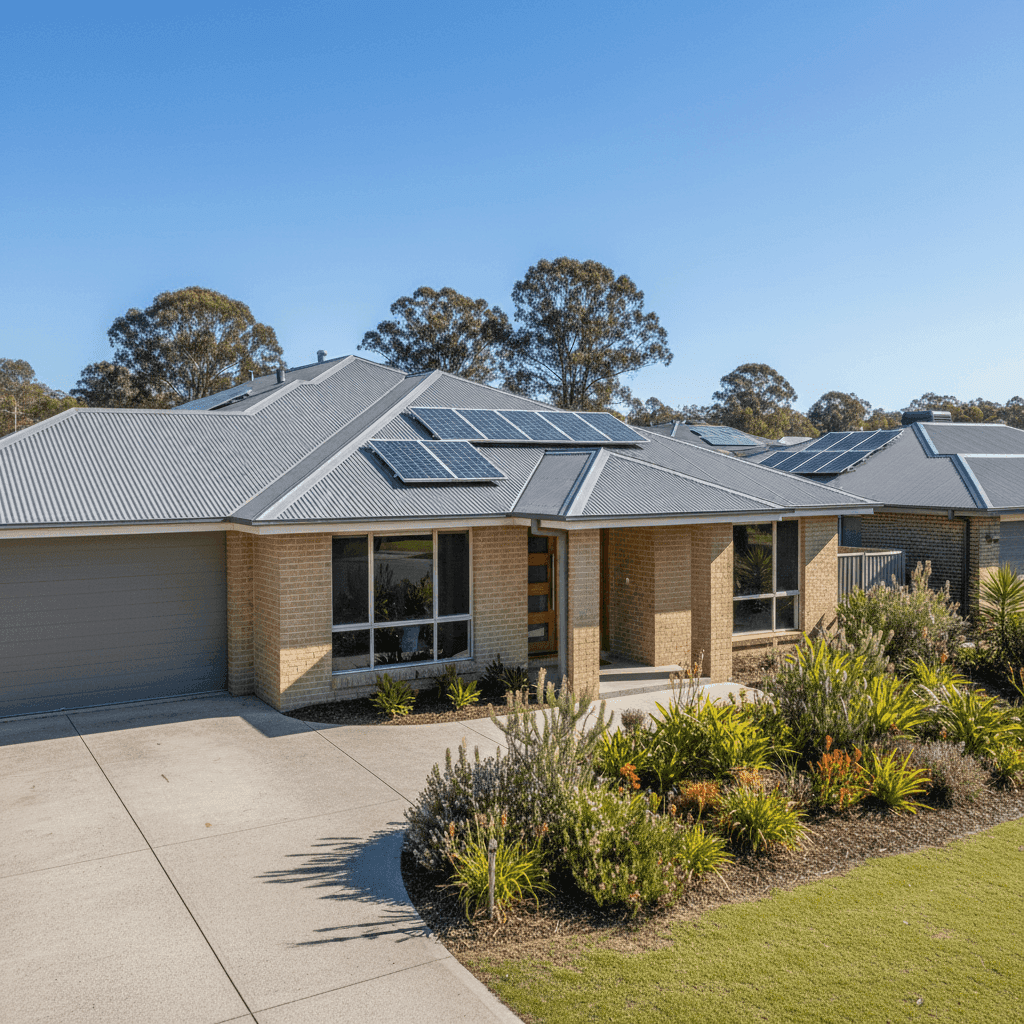
If you own a free standing home in North Maclean, QLD 4280, you've probably noticed that home insurance premiums in South-East Queensland can vary enormously from one street to the next. This article breaks down a real home and contents insurance quote for a four-bedroom, two-bathroom brick veneer home in North Maclean — and puts it in context using suburb, state, and national pricing data — so you can judge whether you're getting a fair deal.
---
Is This Quote Fair?
The annual premium for this quote comes in at $3,657 per year (or $344 per month), covering a building sum insured of $810,000 and $150,000 worth of contents, each with a $1,000 excess.
Based on CoverClub's pricing data, this quote has been rated Fair — Around Average. That's a reasonable result, but "average" doesn't necessarily mean optimal. Here's what the numbers actually look like when you zoom out:
- Suburb average (North Maclean): $3,164/yr
- Suburb median: $2,550/yr
- LGA average (Logan): $3,411/yr
- QLD state average: $4,547/yr
- National average: $2,965/yr
At $3,657, this quote sits above the suburb median and above the Logan LGA average, but it's comfortably below the Queensland state average by nearly $900 per year. Compared to the national average of $2,965, it's around $692 higher — though Queensland's elevated risk environment (more on that below) goes a long way toward explaining that gap.
The "Fair" rating reflects the fact that while this isn't the cheapest quote on the market, it's not out of line with what homeowners in this part of South-East Queensland are typically paying, particularly given the building sum insured of $810,000.
---
How North Maclean Compares
Understanding where your suburb sits in the broader pricing landscape is one of the most useful tools a homeowner has. You can explore the full data for this postcode at the North Maclean insurance stats page.
| Benchmark | Annual Premium |
|---|---|
| North Maclean – 25th percentile | $2,047 |
| North Maclean – Median | $2,550 |
| North Maclean – Average | $3,164 |
| North Maclean – 75th percentile | $3,896 |
| Logan LGA Average | $3,411 |
| QLD State Average | $4,547 |
| National Average | $2,965 |
Note: Suburb data is based on a sample of 14 quotes, so treat these figures as a guide rather than a definitive benchmark.
This quote of $3,657 falls between the suburb's 75th percentile ($3,896) and its average ($3,164) — meaning roughly a quarter of comparable homes in North Maclean are quoted higher, and around three-quarters are quoted lower. That's worth keeping in mind when you review your renewal.
One thing that stands out is just how much cheaper North Maclean is compared to the broader Queensland state average of $4,547. This is partly because much of Queensland carries elevated cyclone and flood risk, which pushes premiums up dramatically in coastal and far-north areas. North Maclean, situated in the Logan hinterland, benefits from being away from the most exposed coastal zones.
For a broader perspective, the national insurance stats show an average of $2,965 — but comparing Queensland properties to the national figure can be misleading, given that QLD's climate risk profile is significantly higher than states like Victoria or South Australia.
---
Property Features That Affect Your Premium
Insurers don't just look at your postcode — every physical characteristic of your home feeds into the final premium calculation. Here's how the features of this particular property are likely influencing the quote:
Brick Veneer Walls Brick veneer is generally viewed favourably by insurers. It offers solid fire resistance and durability, and tends to attract lower premiums compared to timber-framed or clad exteriors. It's one of the most common wall types in South-East Queensland for good reason.
Steel/Colorbond Roof A Colorbond steel roof is another positive from an insurance perspective. It's highly resistant to fire, performs well in high winds, and requires minimal maintenance. Compared to older tile roofs, it's less prone to storm damage — a meaningful factor in Queensland's storm season.
Slab Foundation Concrete slab foundations are considered low-risk by most insurers. They're structurally stable, resistant to termite ingress from below, and less susceptible to subsidence compared to older suspended timber floors.
Timber/Laminate Flooring While aesthetically popular, timber and laminate flooring can be more vulnerable to water damage than tiles. In the event of a burst pipe or flooding event, floor replacement costs can be significant — which is worth keeping in mind when setting your contents and building sums insured.
Solar Panels This property has solar panels installed, which adds replacement value to the building. It's important to confirm with your insurer that solar panels are explicitly covered under your building policy, as some policies treat them as an optional or separate item. The $810,000 building sum insured should ideally account for the cost of replacing the solar system.
Construction Year: 2004 A home built in 2004 benefits from construction standards that predate some older housing stock but is now over 20 years old. Roofing, plumbing, and electrical systems may be approaching the age where maintenance or replacement becomes relevant — something worth factoring into your sum insured.
No Cyclone Risk North Maclean is not classified as a cyclone risk area, which is a meaningful premium advantage compared to properties in North Queensland. This is one reason the quote sits well below the Queensland state average.
---
Tips for Homeowners in North Maclean
1. Review your building sum insured regularly With a 214 sqm home valued at $810,000, it's worth checking that your sum insured reflects current construction costs. Building costs have risen significantly in recent years, and being underinsured — even by 10–15% — can leave you seriously out of pocket after a major claim.
2. Confirm solar panel coverage Ask your insurer directly whether your solar panels are included in your building cover and to what value. If they're not explicitly listed, you may need to arrange an endorsement or top-up to ensure they're fully protected.
3. Don't overlook contents coverage $150,000 in contents cover is a reasonable starting point for a four-bedroom home, but it's easy to underestimate the replacement value of furniture, appliances, clothing, and personal items. Do a room-by-room audit every couple of years to make sure your figure is still accurate.
4. Compare at renewal time A "Fair" rating means this quote is in the ballpark — but it doesn't mean you can't do better. Premiums can vary significantly between insurers for the same property and coverage level. Shopping around at renewal (rather than simply accepting the rollover price) is one of the simplest ways to save.
---
Compare Your Options with CoverClub
Whether you're reviewing an existing policy or shopping for cover on a new home, CoverClub makes it easy to see how your quote stacks up. Get a home insurance quote today and find out whether you're paying a fair price — or whether there's a better deal waiting for you.