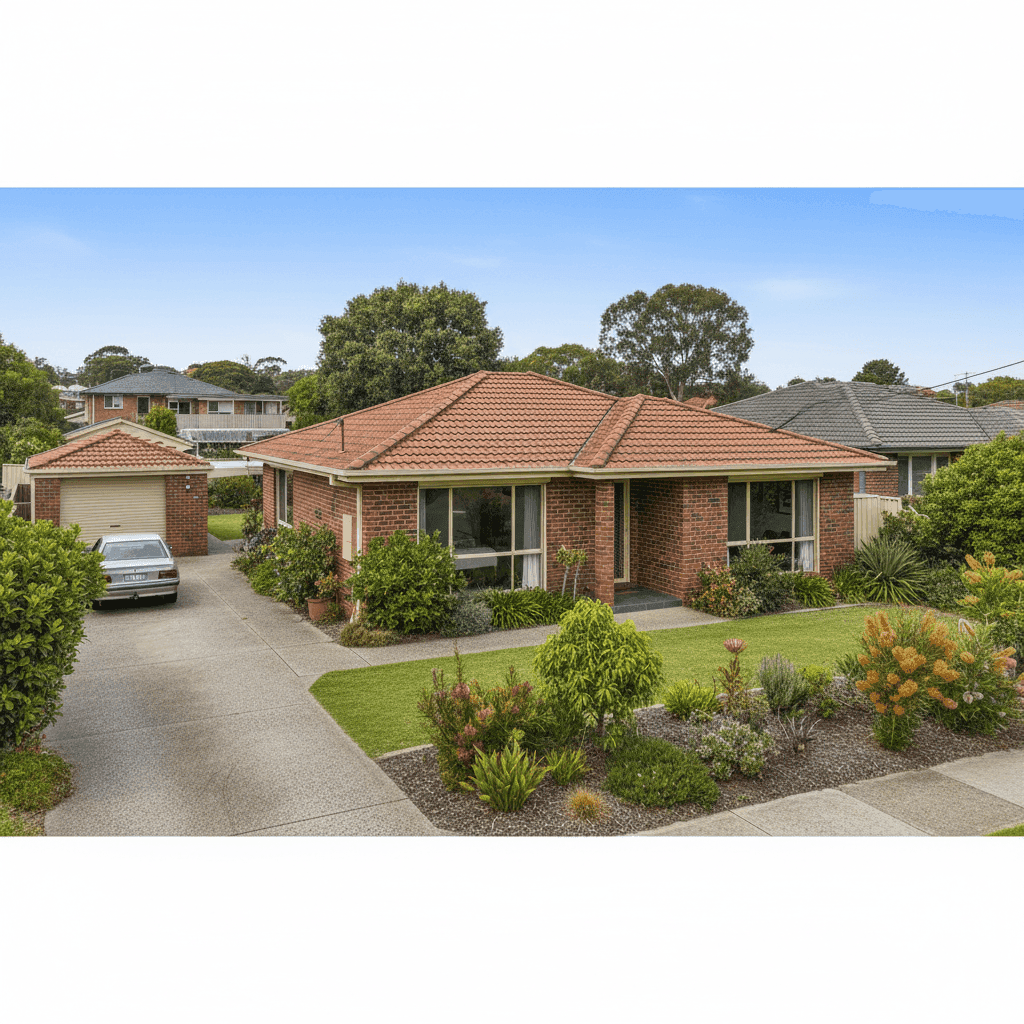
North Manly is one of Sydney's most sought-after northern suburbs — a leafy, relaxed pocket of the Northern Beaches just a short ride from the ocean. For homeowners here, protecting a free standing property is a serious financial consideration, and understanding whether you're paying a fair price for home and contents insurance is an important part of managing that investment. In this article, we analyse a recent quote for a 3-bedroom, 3-bathroom free standing home in North Manly (NSW 2100) and break down exactly what's driving the premium.
---
Is This Quote Fair?
The quote in question comes in at $3,002 per year (or $288/month) for combined home and contents cover, with a building sum insured of $637,000 and contents valued at $141,000. Both the building and contents excess are set at $1,000.
Our price rating for this quote is FAIR — around average. That's a reasonable outcome for a property of this type and age, and it means the homeowner isn't being significantly overcharged — but there may still be room to do better.
To put this in context: the suburb average for North Manly sits at $2,930/year, with a median of $2,964/year. This quote is slightly above both of those benchmarks, but it falls comfortably within the interquartile range — the 25th percentile is $1,957/year and the 75th percentile is $3,401/year. In other words, roughly half of comparable quotes in the area land between $1,957 and $3,401, and this one sits in the upper-middle portion of that band.
Given the property's age (built in 1953), its stump foundation, timber flooring, and the presence of a granny flat — all factors that can nudge premiums upward — landing at $3,002 is a reasonable result. It's not a bargain, but it's not an outlier either.
---
How North Manly Compares
Understanding your premium means looking beyond your own street. Here's how North Manly stacks up against broader benchmarks:
| Benchmark | Average Premium | Median Premium |
|---|---|---|
| North Manly (NSW 2100) | $2,930/yr | $2,964/yr |
| Northern Beaches LGA | $3,266/yr | — |
| New South Wales | $9,528/yr | $3,770/yr |
| National | $5,347/yr | $2,764/yr |
A few things stand out here. The NSW state average of $9,528/year looks alarming at first glance, but this figure is heavily skewed by high-risk and high-value properties across the state — the median of $3,770/year is a more representative number. North Manly's median of $2,964/year is notably below the NSW median, which reflects the suburb's relatively low exposure to catastrophic weather events like flooding and cyclones.
Compared to the national picture, North Manly is similarly positioned. The national median of $2,764/year is slightly below the suburb's median, which makes sense given that many regional and coastal areas of Australia carry significantly higher risk profiles. North Manly homeowners are, on balance, paying close to the national norm — a sign that insurers view the suburb as a moderate-risk location.
Within the Northern Beaches LGA, the average of $3,266/year is higher than North Manly's suburb average, suggesting that some neighbouring areas carry more risk or higher property values that push premiums up.
---
Property Features That Affect Your Premium
Every property tells its own story to an insurer. Here are the key features of this home and how they're likely influencing the premium:
Age of construction (1953): Older homes are a mixed bag for insurers. A 1953 build means the property has character and established materials, but it also means aging plumbing, wiring, and structural components that can be more expensive to repair or replace. This is one of the more significant factors pushing this premium toward the higher end of the suburb range.
Brick veneer external walls: Brick veneer is generally viewed favourably by insurers — it's durable, fire-resistant, and widely used across Australian suburbs. This construction type helps keep the premium from climbing too high.
Tile roof: Like brick veneer, a tiled roof is a standard and relatively low-risk roofing material. It performs well in storms and is straightforward to repair, which insurers tend to reward with more competitive pricing.
Stump foundation: Homes on stumps (also called pier foundations) can be more susceptible to subsidence, movement, and pest damage over time. For a 1953 build, this is worth monitoring — and insurers factor in this additional vulnerability.
Timber and laminate flooring: These materials can be more costly to replace than tiles or concrete, particularly in an older home where matching original timber may be difficult. This contributes modestly to the overall contents and building replacement cost.
Granny flat: The presence of a granny flat adds to the insurable value of the property and increases the complexity of any claim. It's a meaningful factor in the building sum insured of $637,000 and contributes to the premium sitting above the suburb average.
Ducted climate control: A ducted system is a significant fixed asset that adds to the building replacement cost. Its inclusion is appropriate in the building sum insured.
No pool, no solar panels: The absence of a pool and solar panels removes two common sources of additional risk and replacement cost, which is a modest premium-reducing factor.
---
Tips for Homeowners in North Manly
1. Review your building sum insured regularly. With a 1953 home that includes a granny flat, construction costs can vary significantly. Make sure your $637,000 sum insured reflects current rebuild costs — not just the market value of the land. Underinsurance is a common and costly mistake.
2. Consider your excess carefully. Both the building and contents excess are set at $1,000. Opting for a higher excess (say, $2,000 or $2,500) can reduce your annual premium meaningfully. If you have an emergency fund and are unlikely to make small claims, this trade-off can be worthwhile.
3. Shop around at renewal time. A "fair" rating means this quote is competitive, but it doesn't mean it's the best available. Insurers reprice regularly, and loyalty doesn't always pay. Use a comparison platform like CoverClub to benchmark your renewal quote before you accept it.
4. Maintain your older home proactively. Insurers look closely at maintenance history for pre-1960s homes. Keeping your roof, plumbing, and electrical systems in good condition not only reduces the risk of a claim but also positions you better when declaring your property's condition at renewal. Some insurers will also ask about stump condition — having a recent inspection on file can be helpful.
---
Compare Your Home Insurance Quote Today
Whether you're a long-time North Manly resident or new to the area, it pays to know what your neighbours are paying. CoverClub makes it easy to benchmark your premium against real data from your suburb, LGA, and across NSW. Get a quote or compare your current policy at CoverClub — it takes just a few minutes and could save you hundreds of dollars a year.