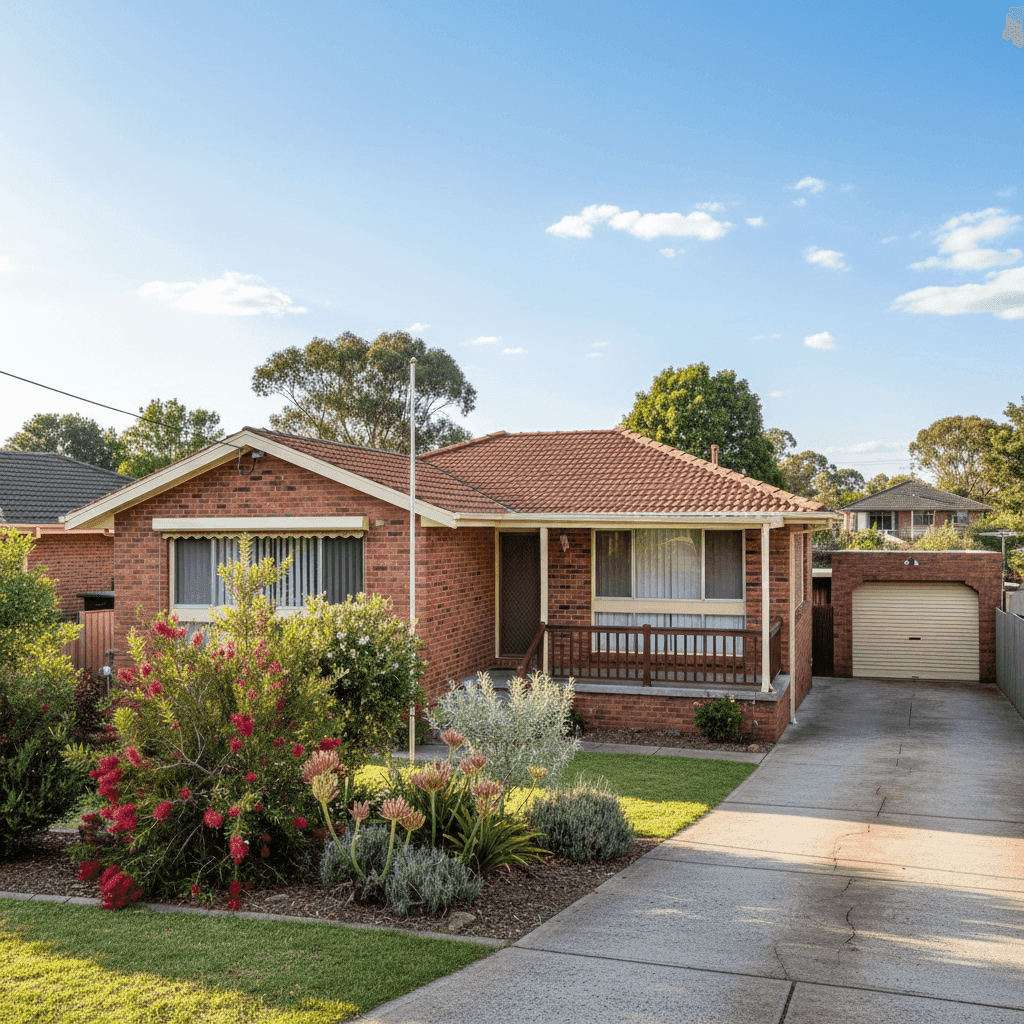
North Richmond is a leafy riverside suburb in the Hawkesbury local government area, sitting roughly 65 kilometres north-west of Sydney's CBD. It's a popular choice for families seeking space and a semi-rural lifestyle without straying too far from the city — and with that comes the very real need to protect what is, for most people, their most valuable asset. This article breaks down a real home and contents insurance quote for a four-bedroom, free-standing home in North Richmond (postcode 2754), examines how it stacks up against local, state and national benchmarks, and offers practical tips for getting the best value on your cover.
---
Is This Quote Fair?
The quote in question comes in at $2,138 per year (or $205 per month) for combined home and contents cover, with a $758,000 building sum insured and $50,000 in contents cover. Both the building and contents excess sit at $1,000.
Our pricing engine rates this quote as FAIR — Around Average, and the data backs that up. The suburb average premium for North Richmond is $2,302 per year, meaning this quote sits comfortably below the local average — a modest but meaningful saving of around $164 annually. It also falls between the suburb's 25th percentile ($1,559/yr) and 75th percentile ($3,047/yr), placing it squarely in the middle of the market for this area.
In short, this isn't a bargain-basement price, but it's not an outlier either. For a 1975-built brick veneer home of 214 sqm on stumps, with ducted climate control factored in, this premium reflects a reasonable market rate. Homeowners who shop around may find cheaper options, but they'd need to scrutinise the policy terms carefully to ensure equivalent cover.
---
How North Richmond Compares
To truly appreciate what this quote means, it helps to zoom out and look at the broader picture. You can explore the full data set on the North Richmond suburb stats page.
| Benchmark | Annual Premium |
|---|---|
| This Quote | $2,138 |
| Suburb Average (North Richmond) | $2,302 |
| Suburb Median | $1,959 |
| NSW Average | $9,528 |
| NSW Median | $3,770 |
| National Average | $5,347 |
| National Median | $2,764 |
| Hawkesbury LGA Average | $10,350 |
The numbers here tell an interesting story. While this quote sits close to the suburb median, it is dramatically lower than both the NSW state average of $9,528 and the national average of $5,347. The Hawkesbury LGA average of $10,350 is particularly striking — more than four times this quote — which likely reflects the significant flood and bushfire exposure that affects many properties across the broader Hawkesbury region.
North Richmond itself sits along the Hawkesbury River floodplain, and flood risk is a genuine consideration for many local properties. The fact that this particular quote lands well below LGA and state averages suggests the specific property's risk profile — including its elevation, construction type and location within the suburb — is being assessed more favourably than many of its neighbours. It's worth noting that the suburb sample size is relatively small (13 quotes), so these averages should be interpreted with some caution.
---
Property Features That Affect Your Premium
Several characteristics of this property play a role in shaping the premium:
Brick Veneer Construction & Tiled Roof Brick veneer walls paired with a tiled roof are generally viewed favourably by insurers. Brick veneer is more resistant to fire than timber-framed cladding, and tiles are a durable, low-maintenance roofing material. Together, they can contribute to a more competitive premium compared with homes featuring weatherboard or Colorbond cladding in high-risk areas.
Stump Foundation The home sits on stumps, which is common for properties built in the mid-twentieth century across NSW. Stumped foundations can be more susceptible to subsidence and movement over time, and some insurers factor this into their pricing. It's worth ensuring your policy explicitly covers foundation-related damage.
Construction Year: 1975 At approximately 50 years old, this home is well into middle age. Older homes can attract higher premiums due to the increased likelihood of ageing electrical wiring, plumbing, and roofing materials requiring repair or replacement. Ensuring your building sum insured ($758,000) accurately reflects current rebuilding costs — not just market value — is critical.
Ducted Climate Control The presence of ducted air conditioning adds replacement value to the home and is a factor insurers consider when assessing contents and building risk. It's a relatively minor loading, but it's worth confirming it's captured in your sum insured.
No Pool, No Solar Panels The absence of a pool and solar panels simplifies the risk profile slightly. Pools can introduce liability concerns, and solar panels — while increasingly common — can complicate roof claims. Neither applies here, keeping things straightforward.
Standard Fittings With standard-quality fittings throughout, there are no high-end fixtures or finishes that would push the rebuild cost — or the premium — higher. This is reflected in the competitive building sum insured relative to the property size.
---
Tips for Homeowners in North Richmond
1. Review Your Flood Cover Carefully The Hawkesbury-Nepean Valley has a well-documented history of flooding, and North Richmond is no exception. Standard home insurance policies in Australia are required to include flood cover, but the definition of "flood" and the extent of coverage can vary significantly between insurers. Read your Product Disclosure Statement (PDS) carefully and confirm exactly what flood scenarios are covered — river flooding, stormwater inundation, and flash flooding can be treated differently.
2. Validate Your Building Sum Insured Annually Construction costs in NSW have risen sharply in recent years. A sum insured of $758,000 for a 214 sqm home works out to roughly $3,542 per sqm — which is within a reasonable range for a standard brick veneer build, but worth revisiting each year at renewal. Underinsurance is one of the most common and costly mistakes homeowners make. Use an independent building cost calculator or speak to a quantity surveyor if you're unsure.
3. Consider Raising Your Excess to Lower Your Premium Both the building and contents excess on this policy sit at $1,000. If you have the financial buffer to absorb a higher out-of-pocket cost in the event of a claim, increasing your excess to $2,000 or more can meaningfully reduce your annual premium. Just make sure the saving justifies the added risk.
4. Bundle and Compare at Renewal Many insurers offer discounts for bundling home and contents cover — which this policy already does. However, loyalty doesn't always pay. Insurers frequently offer their best rates to new customers, so it pays to compare quotes at every renewal. Even a 10–15% saving on a $2,138 premium adds up to real money over time.
---
Compare Your Options with CoverClub
Whether you're renewing your existing policy or insuring a new home, comparing quotes is the single most effective way to ensure you're not overpaying. CoverClub makes it easy to see how your premium stacks up against real data from your suburb and across Australia. Get a home insurance quote today and find out if you could be paying less for the same level of protection.