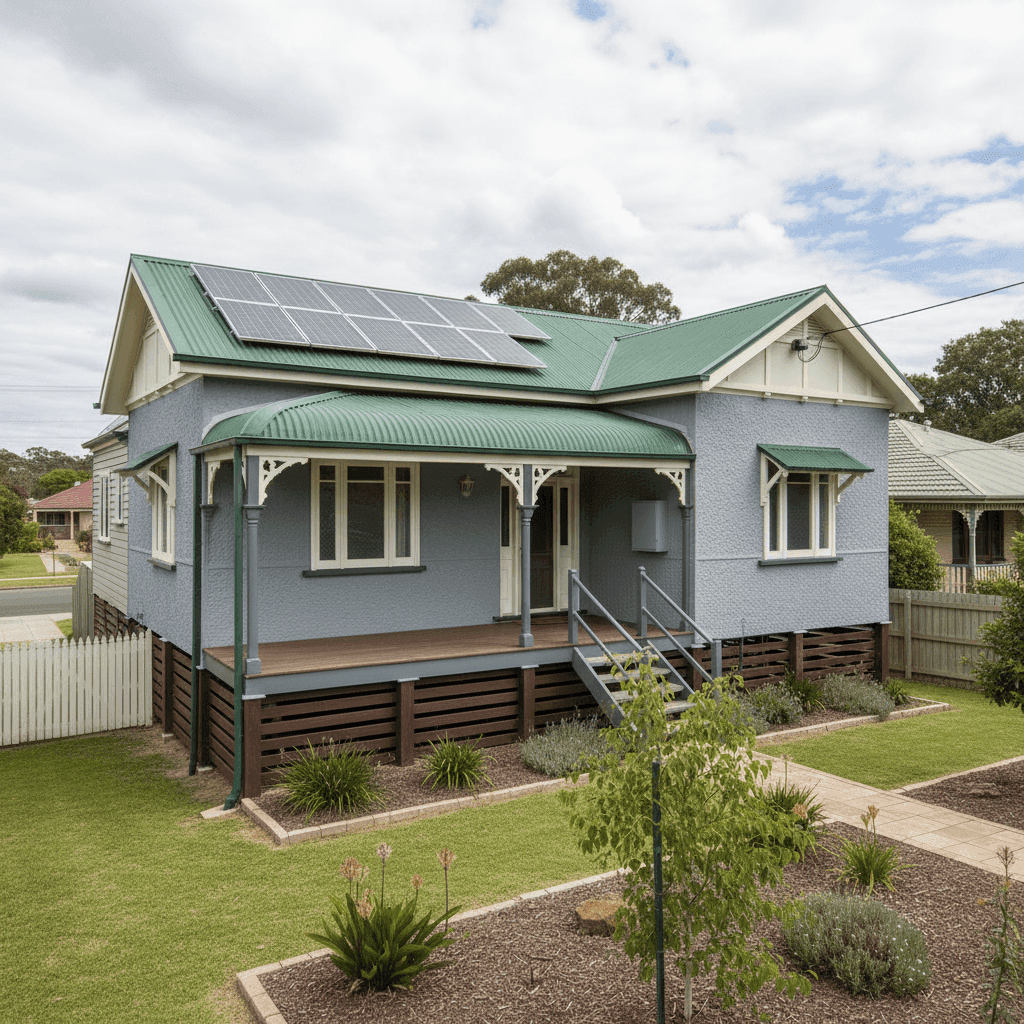
Nestled in the Hawkesbury region of New South Wales, North Richmond is a characterful suburb where older homes sit alongside the Hawkesbury River and its surrounding floodplains. If you own a free standing home here — particularly one built in the early 1900s — understanding what drives your home insurance premium is essential. This article breaks down a real home and contents insurance quote for a 2-bedroom, 1-bathroom free standing home in North Richmond (postcode 2754), comparing it against local, state, and national benchmarks to help you make an informed decision.
---
Is This Quote Fair?
The annual premium for this property came in at $3,172 per year (or $304/month), covering both building (sum insured: $520,000) and contents ($50,000), each with a $1,000 excess. Our price rating for this quote is Expensive — Above Average.
To put that in perspective, the suburb average premium in North Richmond sits at $2,302/year, with a median of $1,959/year. This quote lands above the 75th percentile for the suburb ($3,047/year), meaning it's pricier than roughly three-quarters of comparable quotes in the area. That's a meaningful gap, and it's worth understanding why before simply accepting the number.
That said, "expensive" doesn't always mean "wrong." Several features of this particular property — discussed below — legitimately push premiums upward, and the sum insured of $520,000 is a significant coverage amount for a home of this size. The key question is whether you're getting the right cover for the right price, not just the cheapest price available.
---
How North Richmond Compares
Zooming out reveals some interesting context. You can explore the full picture on the North Richmond suburb stats page.
| Benchmark | Premium |
|---|---|
| This quote | $3,172/yr |
| North Richmond suburb average | $2,302/yr |
| North Richmond suburb median | $1,959/yr |
| NSW average | $9,528/yr |
| NSW median | $3,770/yr |
| National average | $5,347/yr |
| National median | $2,764/yr |
| Hawkesbury LGA average | $10,350/yr |
At first glance, the NSW state average of $9,528/year looks alarming — but that figure is heavily skewed by high-risk coastal and flood-prone properties across the state. The NSW median of $3,770/year is a more representative yardstick, and this quote sits comfortably below it.
Similarly, the national average of $5,347/year and national median of $2,764/year show that home insurance costs vary enormously across Australia. This quote falls between those two national figures, which is broadly reasonable given the property's characteristics.
The Hawkesbury LGA average of $10,350/year is particularly striking. The Hawkesbury region carries elevated flood risk — the Hawkesbury-Nepean river system has a well-documented history of major flooding events — and insurers price this risk accordingly across the LGA. Compared to that LGA average, this quote of $3,172/year is actually quite competitive.
(Note: suburb sample size is 13 quotes, so suburb-level averages should be interpreted with some caution.)
---
Property Features That Affect Your Premium
Several characteristics of this property have a direct bearing on the premium quoted. Here's what insurers are likely factoring in:
Fibro Asbestos External Walls
This is one of the most significant premium drivers for this property. Homes with fibro asbestos cladding — common in Australian homes built before the 1980s, and especially prevalent in early Federation-era homes like this 1906 build — attract higher premiums because repairs and rebuilds require specialist licensed contractors, careful disposal procedures, and compliance with strict Work Health and Safety regulations. The cost to repair or replace asbestos-containing materials is substantially higher than standard brick or weatherboard.
Age of Construction (1906)
A home built over 120 years ago carries inherent risks around ageing infrastructure — plumbing, wiring, roofing fixings, and structural elements may all be near or past their serviceable life. Insurers view older homes as higher-risk propositions, particularly when it comes to escape of liquid, electrical faults, and storm damage.
Stump Foundation
Homes on stumps (also called pier or post foundations) can be more vulnerable to subsidence, movement, and pest damage than slab foundations. This adds a modest but real layer of risk that insurers account for in their pricing.
Solar Panels
The good news: solar panels are a relatively minor premium consideration, and many insurers include them under standard building cover. However, they do add replacement value to the building, which is reflected in the sum insured.
Ducted Climate Control
Ducted systems are expensive to repair or replace and are typically covered under building insurance. Their presence adds to the overall replacement cost of the home, supporting the $520,000 sum insured.
Steel/Colorbond Roof
Colorbond roofing is generally viewed favourably by insurers — it's durable, low-maintenance, and performs well in storms compared to terracotta or concrete tiles. This may be a modest offsetting factor against some of the higher-risk features.
Timber/Laminate Flooring
Timber floors in older homes can be susceptible to water damage, warping, and termite activity. While not a major premium driver on its own, it contributes to the overall risk profile.
---
Tips for Homeowners in North Richmond
1. Get multiple quotes — especially with fibro walls Not all insurers price asbestos-clad homes the same way. Some have more experience with these properties and may offer more competitive rates. Using a comparison platform like CoverClub makes it easy to see multiple options side by side without filling in the same form repeatedly.
2. Review your sum insured carefully At $520,000 for a 105 sqm home, the building sum insured works out to roughly $4,952/sqm — which is on the higher end but may be justified given the specialist rebuild costs associated with asbestos remediation. Use a building cost calculator or speak with a quantity surveyor to confirm your sum insured is accurate. Being over-insured costs you in premiums; being under-insured could leave you exposed when you need to claim.
3. Ask about flood cover specifically North Richmond and the broader Hawkesbury region have experienced significant flooding, most recently in 2021 and 2022. Confirm whether your policy includes flood cover (not just storm or rainwater damage) and what the specific flood excess is. Some insurers apply separate, higher excesses for flood events.
4. Consider your excess strategically Both the building and contents excess on this quote are set at $1,000. Increasing your excess — say, to $2,000 or $2,500 — can meaningfully reduce your annual premium. If you have sufficient savings to cover a higher out-of-pocket cost in the event of a claim, this is often a smart trade-off.
---
Ready to Compare?
Whether this quote stacks up or you think you can do better, the smartest move is to compare. Home insurance pricing varies significantly between providers, and a few minutes on CoverClub could reveal a more competitive option for your North Richmond property. Enter your address, answer a few questions about your home, and see real quotes side by side — no obligation, no pressure.