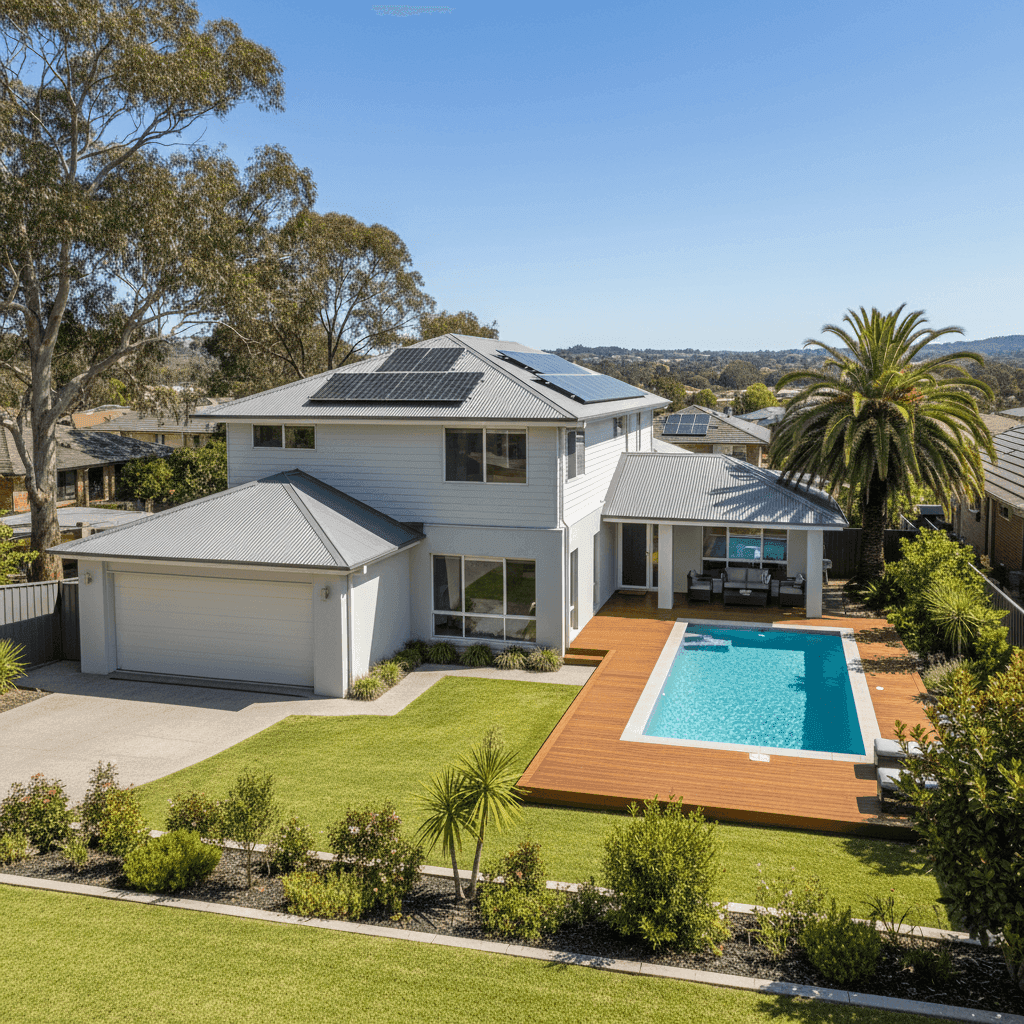
North Rocks is a well-established suburb in Sydney's Hills District, known for its leafy streets, spacious family homes, and strong community feel. If you own a free standing home here — particularly a larger one with five bedrooms, a pool, solar panels, and quality finishes — understanding what you should be paying for home and contents insurance is an important part of managing your household finances. This article breaks down a real quote for a property in North Rocks (NSW 2151) and puts it in context against local, state, and national benchmarks.
---
Is This Quote Fair?
The quote in question comes in at $4,137 per year (or $390/month) for a combined home and contents policy, covering a building sum insured of $899,000 and $100,000 in contents. Both the building and contents excess are set at $2,000.
Our pricing analysis rates this quote as Expensive — Above Average. That's a meaningful flag worth taking seriously. While no two properties are identical and insurers weigh risk differently, a premium sitting well above the local suburb average warrants a closer look before you simply renew or accept the figure at face value.
That said, "expensive" doesn't automatically mean "wrong." A large, five-bedroom home with above-average fittings, a swimming pool, solar panels, and ducted climate control carries more replacement risk than a modest three-bedroom brick veneer. The $899,000 building sum insured reflects a significant asset, and insurers price accordingly. Still, the gap between this quote and the suburb benchmark is notable enough to suggest that shopping around could yield meaningful savings.
---
How North Rocks Compares
Here's where the numbers get interesting. According to data from North Rocks suburb insurance statistics, the local benchmarks look like this:
| Benchmark | Premium |
|---|---|
| This Quote | $4,137/yr |
| Suburb Average | $2,728/yr |
| Suburb Median | $2,818/yr |
| Suburb 75th Percentile | $3,097/yr |
| Suburb 25th Percentile | $2,277/yr |
| LGA (The Hills) Average | $2,440/yr |
This quote sits above the 75th percentile for the suburb — meaning it's more expensive than at least three-quarters of comparable quotes gathered in North Rocks. Even accounting for the size and features of this particular property, that's a significant premium loading.
Zooming out to a NSW state level, the picture is a little more nuanced. The NSW average premium is a hefty $9,528/yr — heavily skewed by high-risk properties in flood and storm-prone regions — while the NSW median sits at $3,770/yr. Against the median, this quote is actually somewhat reasonable for NSW. But North Rocks isn't a high-risk postcode, so comparing against the state median may be flattering the insurer's pricing.
At a national level, the average premium is $5,347/yr and the national median is $2,764/yr. This quote is above both figures, reinforcing the "expensive" rating in a broader context.
The key takeaway: North Rocks is not a particularly high-risk suburb, and local quotes tend to be more affordable than the NSW or national average. A premium of $4,137 is on the higher end for this area, and homeowners should feel empowered to seek alternatives.
---
Property Features That Affect Your Premium
Several characteristics of this property will be influencing the premium, some pushing it higher and others potentially keeping it in check.
Building size and sum insured — At 244 sqm and a rebuild value of $899,000, this is a substantial home. Larger buildings cost more to replace, and insurers price that risk directly into the premium. This is one of the most significant drivers of cost here.
Hardiplank/Hardiflex external walls — Fibre cement cladding like Hardiplank is generally viewed favourably by insurers. It's durable, fire-resistant, and low-maintenance compared to weatherboard or older asbestos-containing materials. This factor may actually help moderate the premium.
Steel/Colorbond roof — Metal roofing is considered a lower-risk material. It handles hail, wind, and fire better than terracotta or concrete tiles in many scenarios, and most insurers regard it positively.
Slab foundation — Concrete slab foundations are stable and widely used across NSW. They don't carry the same subsidence or pest-related risks as older pier-and-beam constructions, which is a neutral-to-positive factor.
Swimming pool — Pools increase both the replacement cost of the property and liability exposure. Most insurers factor in pool cover as part of the building sum insured, and the associated risk of accidental damage or liability can nudge premiums upward.
Solar panels — Solar systems are now a standard feature on many Australian homes, but they do add to the replacement cost of the building. A quality solar installation can represent $10,000–$20,000 or more in rebuild value, and insurers increasingly account for this.
Ducted climate control — Ducted air conditioning is an above-average fitting that adds to the overall replacement cost. Combined with the "above average" fittings quality rating, this contributes to a higher sum insured — and therefore a higher premium.
Construction year (1970) — Homes built in the early 1970s can attract slightly higher premiums due to older electrical wiring, plumbing, and structural elements that may not meet current building codes. Renovations and upgrades can help, but the original build year remains a consideration for underwriters.
---
Tips for Homeowners in North Rocks
1. Compare at least three quotes before renewing The most effective way to reduce your premium is simply to shop around. With this quote sitting above the 75th percentile for the suburb, there's a real chance a competing insurer could offer comparable cover for less. Use CoverClub's free quote comparison tool to benchmark your options quickly.
2. Review your sum insured carefully Underinsurance is a genuine risk, but so is over-insurance. Make sure your $899,000 building sum insured reflects a realistic rebuild cost — not the market value of the property. Consider commissioning a professional building valuation if you haven't done so recently, particularly given how construction costs have shifted since 2020.
3. Ask about discounts for security and safety features Many insurers offer premium reductions for homes with monitored alarm systems, deadbolt locks, and smoke detectors. If your home has these features, make sure they're declared when getting quotes — they can make a measurable difference.
4. Consider your excess level Both the building and contents excess on this policy are set at $2,000. Opting for a higher excess can reduce your annual premium, provided you're comfortable covering that amount out of pocket in the event of a claim. For a home of this value, it's worth modelling the trade-off.
---
Ready to Find a Better Deal?
Whether you're reviewing an existing policy or insuring a North Rocks property for the first time, comparing quotes is the single best step you can take. CoverClub makes it easy to see what multiple insurers would charge for your specific home — no obligation, no jargon.
Get a home insurance quote for your North Rocks property →
You can also explore detailed insurance pricing data for your area on the North Rocks suburb stats page, or browse NSW-wide insurance trends to understand how your postcode fits into the broader picture.