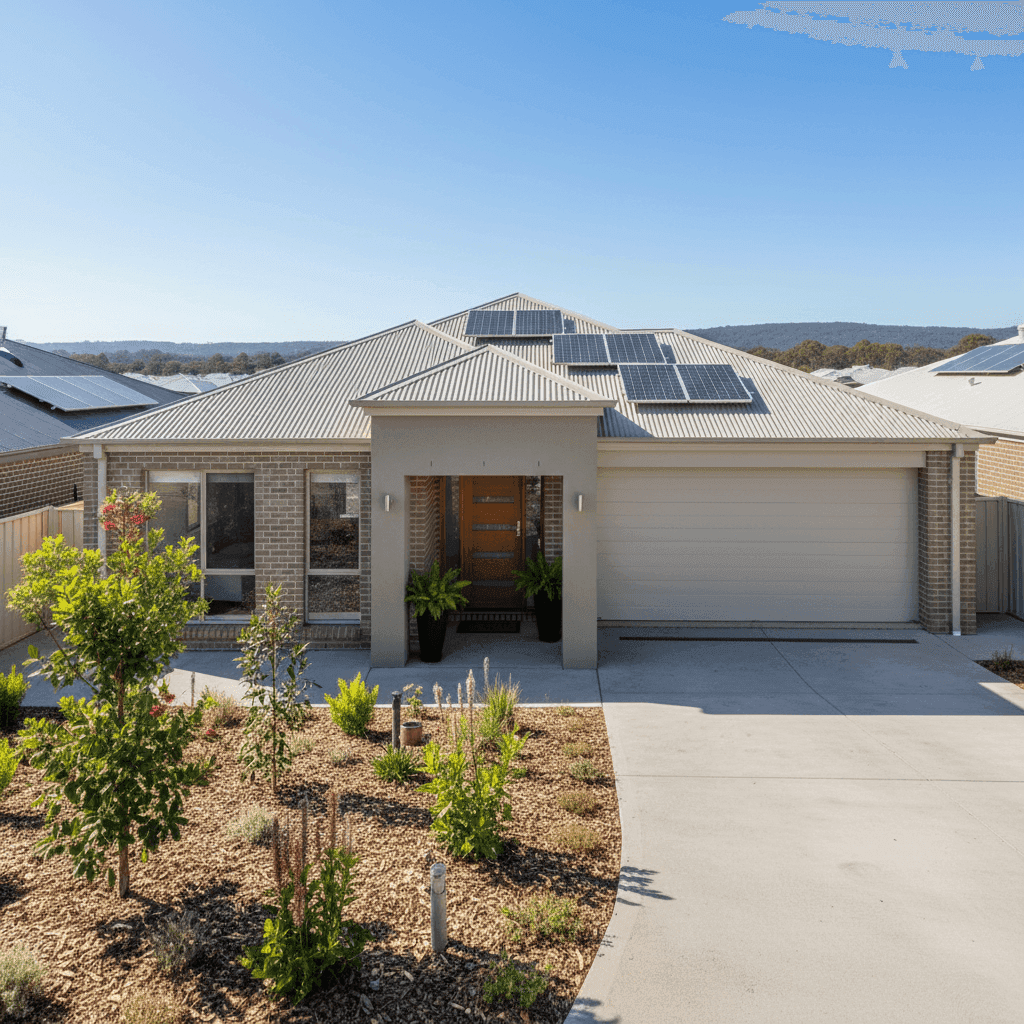
If you own a free standing home in North Rothbury, NSW 2335, you've probably wondered whether you're paying a fair price for home insurance — or quietly overpaying year after year. This article breaks down a real home and contents insurance quote for a four-bedroom, two-bathroom brick veneer home in North Rothbury, comparing it against suburb, state, and national benchmarks so you can make a more informed decision.
---
Is This Quote Fair?
The quote in question comes in at $2,492 per year (or $241/month) for combined home and contents cover, with a building sum insured of $580,000 and contents valued at $50,000. Both the building and contents excess are set at $1,000.
Our price rating for this quote is FAIR — Around Average.
That assessment holds up when you look at the numbers. The suburb average for North Rothbury sits at $2,246/year, with a median of $1,970/year. This quote lands above both of those figures, but it's right on the doorstep of the 75th percentile at $2,494/year — meaning roughly three-quarters of comparable quotes in the area come in at this price or lower.
So while it's not the sharpest price on the market, it's far from excessive. For a relatively new, well-constructed home with a healthy sum insured, paying close to the suburb average is a reasonable outcome. That said, there's still room to shop around, particularly if you're willing to compare a few insurers side by side.
---
How North Rothbury Compares
Context matters enormously when evaluating an insurance premium, and the broader comparison data here tells an interesting story.
| Benchmark | Annual Premium |
|---|---|
| This Quote | $2,492 |
| Suburb Average (North Rothbury) | $2,246 |
| Suburb Median | $1,970 |
| Suburb 25th Percentile | $1,753 |
| Suburb 75th Percentile | $2,494 |
| LGA Average (Maitland) | $13,875 |
| NSW Average | $9,528 |
| NSW Median | $3,770 |
| National Average | $5,347 |
| National Median | $2,764 |
The figures for the Maitland LGA and NSW as a whole look startling at first glance — but those averages are heavily skewed by high-value properties, flood-prone areas, and homes in bushfire zones that attract significantly higher premiums. The national average of $5,347/year tells a similar story; it's pulled upward by coastal and disaster-prone regions across Queensland, Western Australia, and parts of regional NSW.
North Rothbury, by contrast, is a relatively modern residential area in the Hunter Valley, and the suburb's median premium of $1,970/year reflects that lower risk profile. This quote at $2,492/year sits comfortably within the normal range — above median, but not an outlier by any stretch.
It's also worth noting that this analysis is based on a sample of 18 quotes from the suburb, which is a reasonable dataset for a developing residential area, though a larger sample would give even greater confidence in these benchmarks.
---
Property Features That Affect Your Premium
Several characteristics of this particular home influence how insurers price the risk. Here's what's most relevant:
Construction year (2021): A home built in 2021 benefits from modern building codes, which typically means better structural integrity, improved fire resistance, and compliance with current safety standards. Insurers generally view newer homes more favourably, which can translate to lower premiums compared to older dwellings.
Brick veneer walls and Colorbond roof: Brick veneer is one of the most common and well-regarded external wall materials in Australia. It offers solid fire and weather resistance. Paired with a steel/Colorbond roof — which is durable, lightweight, and resistant to corrosion — this combination is considered low-to-moderate risk by most insurers.
Concrete slab foundation: Slab foundations are standard for modern Australian homes and are generally considered structurally sound. They're less susceptible to pest damage and moisture issues than older pier-and-beam foundations, which can work in your favour at claim time.
Timber and laminate flooring: While aesthetically popular, timber and laminate floors can be more costly to repair or replace than tiles following water damage. This is worth keeping in mind when setting your contents and building sum insured.
Solar panels: The presence of solar panels adds value to the property and can also add complexity to insurance. Some insurers include solar panels under building cover automatically, while others require you to confirm they're listed. It's worth double-checking your policy wording to ensure your system is fully covered.
Ducted climate control: Ducted air conditioning is a significant fixed asset in the home. Like solar panels, it should be accounted for in your building sum insured to avoid being underinsured if you ever need to make a claim.
No pool, no cyclone risk zone: The absence of a pool removes a common liability concern, and North Rothbury's location outside designated cyclone risk areas keeps the premium from attracting the loading that affects parts of Queensland and northern WA.
---
Tips for Homeowners in North Rothbury
1. Review your sum insured regularly With a building sum insured of $580,000 on a 214 sqm home built in 2021, the per-square-metre rebuild cost works out to roughly $2,710/sqm. Given rising construction costs across Australia in recent years, it's worth checking this figure annually against current builder rates in the Hunter region to avoid underinsurance.
2. Confirm solar panels and ducted systems are covered Don't assume these are automatically included. Read your Product Disclosure Statement (PDS) carefully and contact your insurer to confirm that both your solar panel system and ducted climate control are explicitly covered under your building policy.
3. Compare quotes before renewal Insurance loyalty rarely pays off. Insurers often reserve their sharpest pricing for new customers. With your renewal approaching, use a comparison platform like CoverClub to see what other insurers are offering for the same level of cover — you may find a meaningfully better deal without sacrificing protection.
4. Consider your excess carefully Both the building and contents excess on this policy are set at $1,000. A higher excess can reduce your annual premium, but make sure it's an amount you could comfortably cover out of pocket in the event of a claim. Conversely, if cash flow is a concern, a lower excess with a slightly higher premium might offer better peace of mind.
---
Find a Better Deal with CoverClub
Whether you're renewing an existing policy or shopping for cover on a new home, comparing quotes is the single most effective way to ensure you're not overpaying. At CoverClub, we make it easy to see how your premium stacks up against real quotes from across your suburb and state. Get a home insurance quote today and find out if you could be paying less for the same — or better — cover.