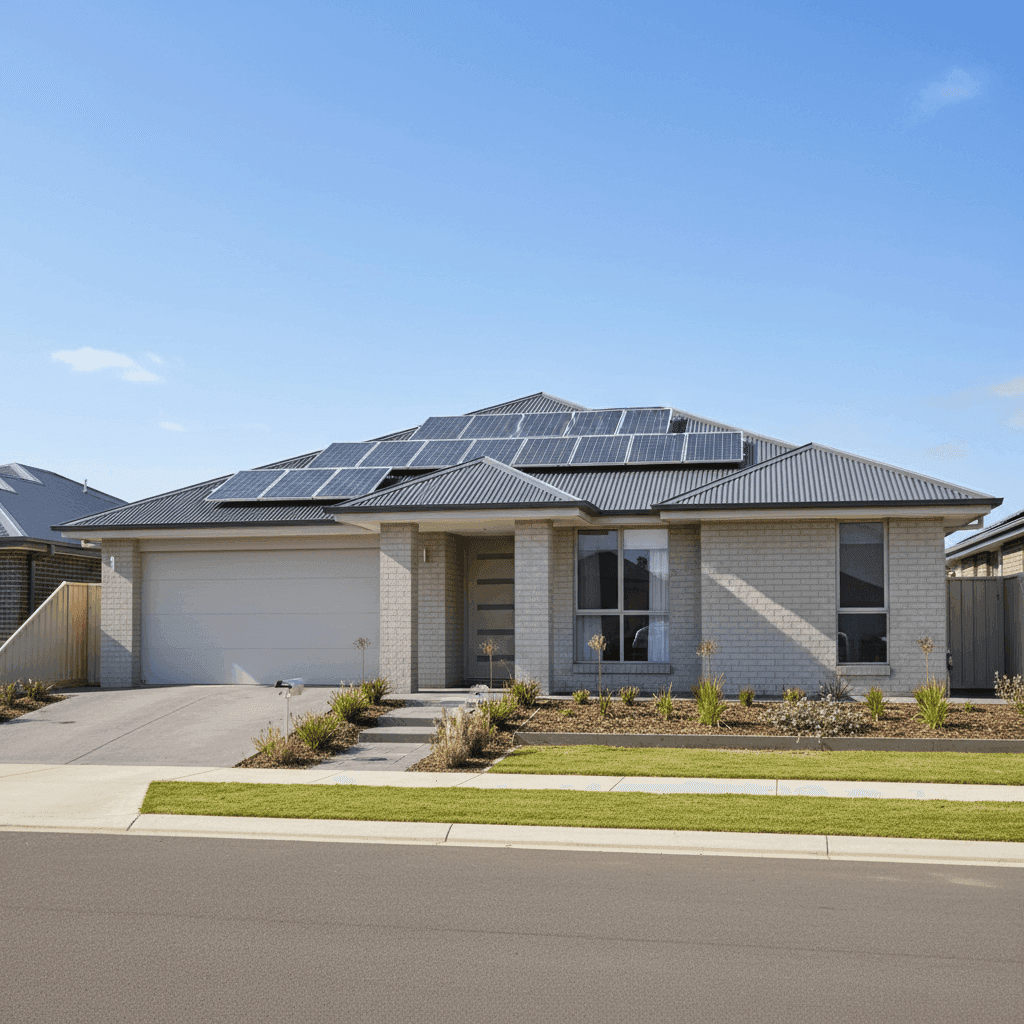
If you own a free standing home in North Shore, VIC 3214, you might be wondering whether you're paying a fair price for your home and contents insurance — or leaving money on the table. In this article, we break down a real insurance quote for a 3-bedroom, 2-bathroom brick veneer home in North Shore and stack it up against suburb, state, and national benchmarks to give you a clear picture of where you stand.
---
Is This Quote Fair?
The short answer? Yes — and then some. This quote comes in at $804 per year (or just $75 per month) for combined home and contents cover, with a building sum insured of $674,000 and contents valued at $98,000. Our price rating for this quote is CHEAP — below average for the area.
To put that in perspective, the average home and contents premium in the North Shore suburb sits at $1,224 per year, with a median of $1,259. That means this policyholder is paying roughly $420 less per year than the typical North Shore homeowner — a saving of around 34% compared to the local average.
Even when compared against the suburb's 25th percentile (the cheapest quarter of quotes), which sits at $866 per year, this quote still comes in below that threshold. In other words, this is genuinely one of the more competitive premiums you'll find in the postcode.
---
How North Shore Compares
To fully appreciate how favourable this quote is, it helps to zoom out and look at the broader picture. Based on data from quotes across Victoria and nationally:
| Benchmark | Average Premium | Median Premium |
|---|---|---|
| North Shore (3214) | $1,224/yr | $1,259/yr |
| Greater Geelong LGA | $1,852/yr | — |
| Victoria (VIC) | $2,921/yr | $2,694/yr |
| Australia (National) | $2,965/yr | $2,716/yr |
A few things stand out here. First, North Shore is considerably more affordable to insure than the Victorian state average — local premiums run at less than half the state figure. Second, even within the Greater Geelong LGA, North Shore sits well below the local government area average of $1,852 per year.
At the national level, the gap is even more striking. The average Australian homeowner pays $2,965 per year for home and contents insurance — more than three and a half times what this particular quote costs. Whether that reflects North Shore's relatively low risk profile, the property's construction characteristics, or simply a competitive insurer, it's a result worth noting.
You can explore more localised data on the North Shore suburb stats page.
---
Property Features That Affect Your Premium
Insurance premiums aren't pulled from thin air — they're calculated based on dozens of property-specific factors. Here's how the features of this particular home likely influence its pricing:
Brick Veneer Walls & Colorbond Roof Brick veneer is one of the most common and well-regarded external wall materials in Australian residential construction. It offers solid fire resistance and structural durability, both of which insurers view favourably. Paired with a steel Colorbond roof — known for its longevity, resistance to corrosion, and performance in extreme weather — this combination typically attracts more competitive premiums than older or timber-framed alternatives.
New Build (2025) A home built in 2025 benefits from modern building codes, updated fire safety standards, and contemporary construction practices. Newer homes generally carry lower risk of structural failure or hidden defects, which can translate directly into lower premiums.
Slab Foundation Concrete slab foundations are stable, low-maintenance, and widely used in Victoria. They're not prone to the subsidence or pest-related issues sometimes associated with older stumped or pier foundations, making them a neutral-to-positive factor for insurers.
Solar Panels Solar panels are increasingly common on Australian rooftops, but they do add replacement value to a property. This home includes solar panels, which should be factored into the building sum insured to ensure they're adequately covered in the event of damage or total loss.
Ducted Climate Control Ducted heating and cooling systems are a meaningful addition to a home's value and contents. Like solar panels, these systems should be accounted for when calculating both building and contents cover to avoid being underinsured.
No Pool, No Cyclone Risk The absence of a swimming pool removes a common liability risk from the equation. And sitting outside a designated cyclone risk zone means this property avoids the significant premium loading that applies to homes in northern Australia.
Slight Elevation (Less Than 1m) The property is noted as slightly elevated — less than one metre — which can offer modest flood mitigation benefits compared to homes at ground level, though the effect on premiums at this elevation is generally minimal.
---
Tips for Homeowners in North Shore
Whether you're renewing your policy or shopping around for the first time, here are four practical steps to make the most of your home insurance in North Shore:
- Review your sum insured annually. Building costs have risen sharply across Victoria in recent years. A sum insured that was accurate when you first took out your policy may no longer reflect the true cost to rebuild your home. Use a building cost calculator or speak to a local builder to sense-check your coverage.
- Don't overlook your solar and climate control systems. As noted above, solar panels and ducted systems add real value to your home. Make sure these are explicitly covered under your policy and that their replacement cost is included in your building sum insured.
- Compare quotes before renewal. Insurers regularly reprice their books, and loyalty doesn't always pay. Even if you're already on a competitive premium — as this quote demonstrates — it's worth running a comparison at renewal to ensure you're still getting good value.
- Consider your excess carefully. This policy carries a $2,000 building excess and a $600 contents excess. Opting for a higher excess can reduce your annual premium, but make sure the excess is an amount you could comfortably cover out of pocket if you needed to make a claim.
---
Compare Your Own Quote
Curious how your own premium stacks up? CoverClub makes it easy to benchmark your home insurance against real quotes from across your suburb, state, and the country. Whether you're in North Shore or anywhere else in Australia, you can get a quote and compare in minutes. With transparent data and no sales pressure, it's the smarter way to shop for home insurance.