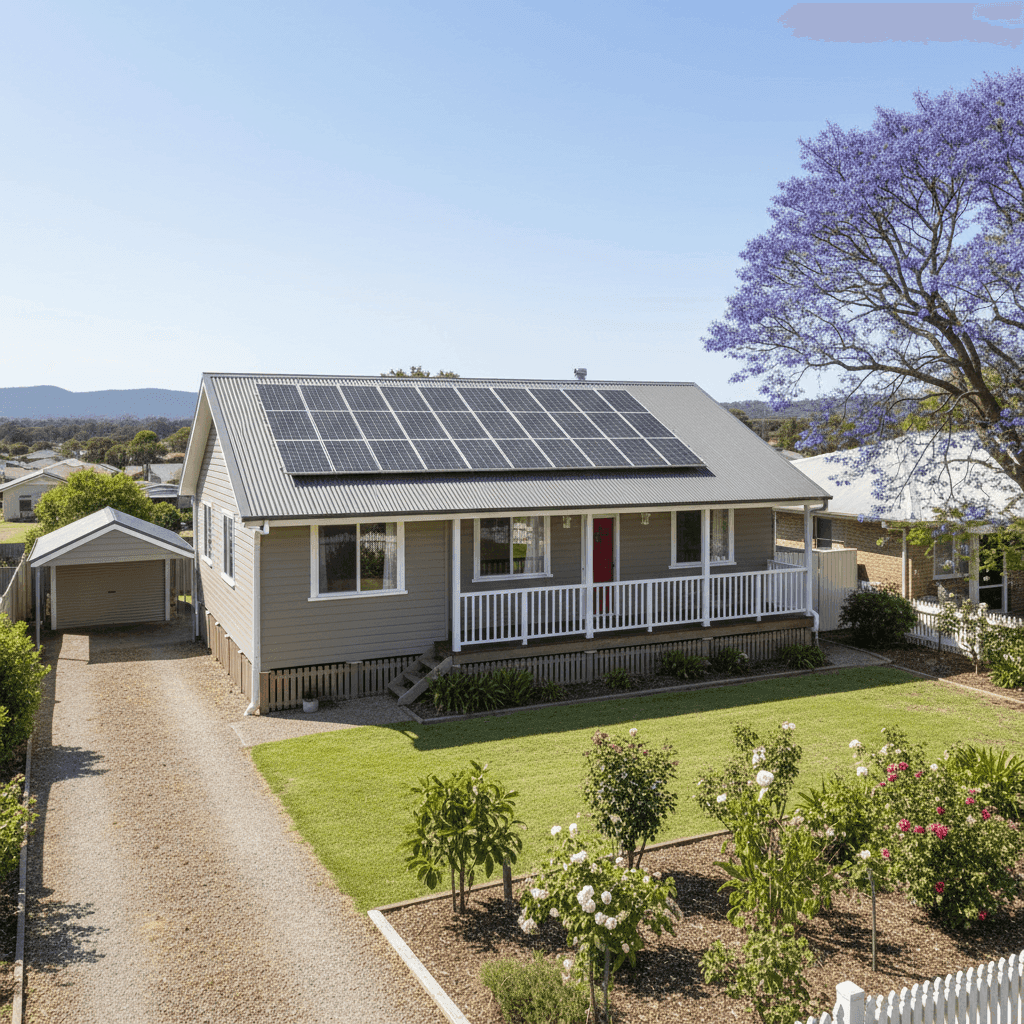
If you own a free standing home in North Tamworth, NSW 2340, you're probably wondering whether you're paying a fair price for home and contents insurance — or leaving money on the table. This analysis breaks down a real quote for a four-bedroom, two-bathroom property in the suburb, benchmarking it against local, state-wide, and national data so you can make a more informed decision at renewal time.
---
Is This Quote Fair?
The quote in question comes in at $2,561 per year (or $263 per month) for combined home and contents cover, with a building sum insured of $750,000 and contents valued at $60,000. The building excess is set at $3,000, with a separate $1,000 excess applying to contents claims.
Our price rating for this quote is FAIR — Around Average, and the numbers back that up. The suburb average for North Tamworth sits at $2,572 per year, meaning this quote lands almost exactly on par with what other homeowners in the area are paying. It's marginally below the local average, which is a mildly positive sign, though it does sit above the suburb median of $2,282 per year.
In practical terms, "fair" doesn't necessarily mean "the best available." It means the quote is competitive within its market context — not an outlier in either direction. For a property of this size, age, and construction type, a premium in this range is broadly consistent with what insurers are pricing in the area.
---
How North Tamworth Compares
To put this quote in proper perspective, it helps to zoom out and look at the broader pricing landscape. You can explore the full data on the North Tamworth insurance stats page, but here's a snapshot:
| Benchmark | Premium |
|---|---|
| This quote | $2,561/yr |
| Suburb average (North Tamworth) | $2,572/yr |
| Suburb median | $2,282/yr |
| Suburb 25th percentile | $1,957/yr |
| Suburb 75th percentile | $3,286/yr |
| LGA average (Liverpool Plains) | $2,851/yr |
| NSW average | $9,528/yr |
| NSW median | $3,770/yr |
| National average | $5,347/yr |
| National median | $2,764/yr |
(Based on 41 quotes collected for the North Tamworth suburb.)
A few things stand out here. First, North Tamworth is significantly more affordable than the broader NSW average of $9,528 per year — a figure heavily skewed by high-value properties and flood-prone or coastal areas across the state. Even the NSW median of $3,770 is notably higher than what this quote is offering.
Compared to the national average of $5,347 and a national median of $2,764, this quote is sitting comfortably below the national average and just a touch under the national median. That's a reasonably strong position for a regional NSW property.
It's also worth noting that the Liverpool Plains LGA average comes in at $2,851 — about $290 more per year than this quote — suggesting this particular property may be priced slightly more favourably than the broader local government area.
---
Property Features That Affect Your Premium
Several characteristics of this property will be influencing how insurers calculate the risk — and therefore the premium.
Construction era and materials Built in 1950, this home is on the older side, which can sometimes push premiums upward due to the increased likelihood of wear-related claims. However, the use of Hardiplank/Hardiflex cladding on the external walls is a positive factor. This fibre cement product is fire-resistant, durable, and widely regarded by insurers as a lower-risk external wall material compared to weatherboard or asbestos-based alternatives common in homes of that era.
Steel/Colorbond roof A steel Colorbond roof is generally viewed favourably by insurers. It's resilient in high-wind conditions, resistant to ember attack, and has a long service life — all of which can help moderate premiums compared to older tile or corrugated iron roofing.
Stump foundation The home sits on stumps, which is typical for older Queensland and northern NSW homes. This foundation type can be a mixed signal for insurers — it allows for good airflow and some flexibility in movement, but older timber stumps may require periodic inspection and replacement. If the stumps are in good condition or have been updated, this shouldn't significantly inflate the premium.
Solar panels The presence of solar panels adds replacement value to the building sum insured, and insurers factor this in. Solar systems can be expensive to replace after storm, hail, or fire damage, so it's important to ensure the building sum insured adequately covers their value — which at $750,000 for a 244 sqm home, it likely does.
Ducted climate control Ducted air conditioning systems add to the rebuild cost of a home and can also be a source of claims (e.g., from water leaks or electrical faults). Insurers typically account for this in their pricing, particularly for above-average-quality fittings.
Above-average fittings quality The fittings in this home are rated above average, which is reflected in the higher building sum insured. Better-quality fixtures, appliances, and finishes cost more to repair or replace, and insurers price accordingly.
---
Tips for Homeowners in North Tamworth
1. Review your building sum insured regularly At 244 sqm with above-average fittings and solar panels, a $750,000 sum insured seems reasonable — but construction costs have risen sharply in regional NSW in recent years. Use a building cost calculator annually to make sure you're not underinsured, particularly as labour and materials costs continue to fluctuate.
2. Consider your excess carefully This quote carries a $3,000 building excess, which is on the higher side. A higher excess generally reduces your annual premium, but it means you'll need to fund more out-of-pocket in the event of a claim. If your emergency fund is solid, this trade-off can make sense — but if cash flow is a concern, it may be worth requesting a lower excess option.
3. Don't overlook your contents cover At $60,000, the contents value is relatively modest for a four-bedroom home with above-average fittings. Take the time to do a proper contents audit — walk through each room and add up the replacement cost of furniture, electronics, clothing, appliances, and valuables. Many homeowners underestimate their contents and face a shortfall at claim time.
4. Compare quotes at renewal, not just once Insurance markets shift constantly. The fact that this quote is around the suburb average today doesn't mean it will remain competitive at next year's renewal. Shopping around — even with the same insurer — can surface better pricing or improved policy terms.
---
Ready to Compare?
Whether you're reviewing your current policy or shopping for the first time, comparing quotes is the simplest way to make sure you're getting value. Get a home insurance quote at CoverClub and see how your premium stacks up against the market in seconds.