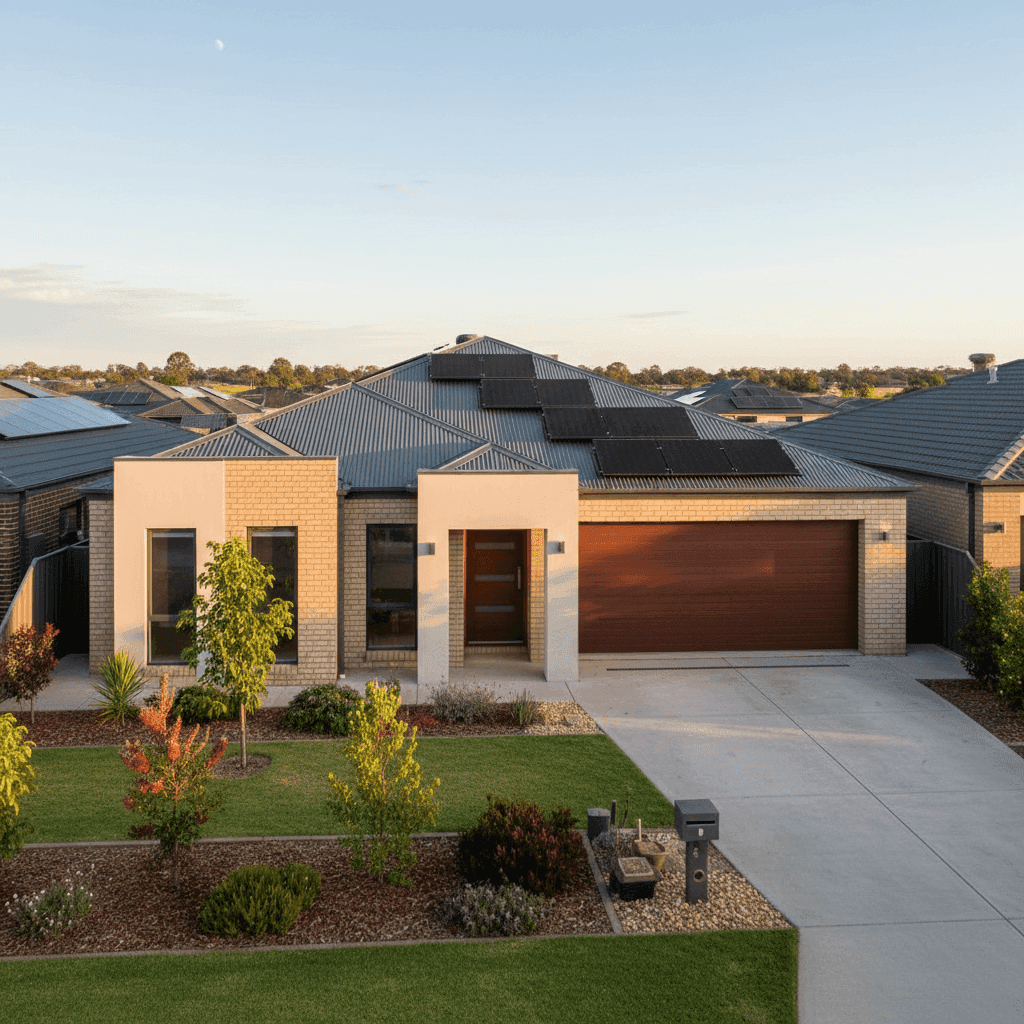
If you own a free standing home in North Tamworth, NSW 2340, you've probably wondered whether you're paying a fair price for your home and contents insurance — or whether there's a better deal waiting. This article breaks down a recent quote for a three-bedroom, two-bathroom brick veneer home in the suburb, compares it against local, state, and national benchmarks, and offers practical tips to help you make the most of your cover.
---
Is This Quote Fair?
The quote in question comes in at $2,861 per year (or around $290 per month) for combined home and contents cover, with a building sum insured of $662,000 and contents valued at $60,000. The building excess sits at $4,000, while the contents excess is $1,000.
Our price rating for this quote is FAIR — around average. That's a meaningful result. It doesn't mean this is the cheapest option on the market, but it does suggest the premium is broadly in line with what other homeowners in the area are paying for comparable cover.
To put it in context: the suburb average for North Tamworth sits at $4,014 per year, and the median is even higher at $4,371. This quote comes in well below both figures — and it's also just above the 25th percentile of $2,807, meaning it's sitting in the more affordable tier of quotes seen in the area. That's a solid position to be in.
---
How North Tamworth Compares
Understanding where your premium sits relative to broader benchmarks is one of the best ways to gauge value. Here's how the numbers stack up:
| Benchmark | Annual Premium |
|---|---|
| This quote | $2,861 |
| North Tamworth suburb average | $4,014 |
| North Tamworth suburb median | $4,371 |
| NSW state average | $3,801 |
| NSW state median | $3,410 |
| National average | $2,965 |
| National median | $2,716 |
| Liverpool Plains LGA average | $2,851 |
A few things stand out here. First, this quote is significantly below both the suburb average and the NSW state average — by more than $1,100 in both cases. Second, it's also just slightly below the national average of $2,965, which is notable given that North Tamworth premiums tend to run higher than the national norm.
The Liverpool Plains LGA average of $2,851 is the closest benchmark to this quote, suggesting it's well-aligned with what similarly situated properties across the broader local government area are attracting.
You can explore more detailed pricing data for this postcode at the North Tamworth suburb stats page, compare it against NSW state-wide insurance data, or see how it stacks up against national home insurance averages.
> Note: The suburb sample size for this analysis is 13 quotes, so while the data is directionally useful, a larger sample would provide even greater confidence in the averages.
---
Property Features That Affect Your Premium
Every home is different, and insurers price risk based on a range of property-specific factors. Here's how the key features of this particular home are likely influencing its premium:
Brick Veneer Walls & Colorbond Roof
Brick veneer is one of the more insurer-friendly wall materials in Australia. It offers solid fire resistance and durability, which typically translates to more competitive premiums compared to timber-framed or weatherboard homes. The steel Colorbond roof is similarly well-regarded — it's lightweight, resistant to corrosion, and performs well in extreme weather events. Together, these materials suggest a structurally sound home with manageable risk.
Slab Foundation
A concrete slab foundation is standard for homes of this era and generally considered low-risk from an insurance perspective. It eliminates the underfloor moisture and pest-related concerns that can affect older homes on stumps or piers.
Construction Year: 2008
A home built in 2008 benefits from relatively modern building codes and construction standards. It's new enough to avoid many of the maintenance concerns associated with older properties, yet established enough that any early construction defects would likely have surfaced by now.
Solar Panels
This property includes solar panels, which are worth noting from an insurance standpoint. Not all standard policies automatically cover rooftop solar systems at full replacement value — it's worth confirming with your insurer that the panels are included in your building sum insured, particularly given their replacement cost.
Ducted Climate Control
Ducted air conditioning systems are a significant fixture and can add meaningfully to the cost of a full rebuild. Ensuring your building sum insured accounts for this system is important — underinsurance is a common issue when large fixed installations aren't factored into the calculation.
No Pool, Standard Fittings
The absence of a pool removes one common source of liability and maintenance risk. Standard-quality fittings also keep the replacement cost estimate more straightforward, reducing the likelihood of a shortfall at claim time.
---
Tips for Homeowners in North Tamworth
1. Review Your Building Sum Insured Carefully
At $662,000, the building sum insured needs to reflect the full cost of rebuilding your home from the ground up — not its market value. This includes labour, materials, demolition costs, and any fixed inclusions like solar panels and ducted air conditioning. Use a building cost calculator or speak with a quantity surveyor if you're unsure whether your figure is accurate.
2. Consider Your Excess Trade-Off
This quote carries a relatively high building excess of $4,000. While a higher excess typically reduces your annual premium, it also means a larger out-of-pocket cost if you need to make a claim. Make sure you could comfortably cover that amount if the need arose — and if not, it may be worth comparing quotes with a lower excess to find the right balance.
3. Shop Around Annually
Insurance premiums can shift significantly from year to year, and loyalty doesn't always pay. Given that the suburb average is over $1,100 higher than this quote, it's clear that pricing varies widely across providers. Make a habit of comparing quotes at renewal time rather than simply auto-renewing.
4. Check Your Contents Cover Is Adequate
With $60,000 in contents cover, it's worth doing a rough stocktake of your belongings — furniture, appliances, clothing, electronics, and valuables. Many Australians underestimate the replacement cost of their contents. A shortfall here can be costly if you experience a significant loss event such as a fire or flood.
---
Compare Your Home Insurance Today
Whether you're renewing your current policy or shopping for the first time, comparing quotes is the single most effective way to ensure you're getting fair value. CoverClub makes it easy to see what multiple insurers are offering for your specific property — so you can make a confident, informed decision.
Get a home insurance quote for your North Tamworth property →